Picture white sand beaches, overwater bungalows, and luxury resorts. That is what people picture today when they hear the word Maldives. But underneath the high-end tourism lies a history far more complex than a mere brochure quote. The island nation recently marked 900 Hijri years since its conversion to Islam, a milestone celebrated with official state ceremonies. Yet behind the neat government timelines and modern branding sits a much rougher historical reality.
For centuries before the shift, the archipelago was a vibrant Buddhist center. Coral stone stupas and monasteries dotted the atolls, connected deeply to the religious traditions of Sri Lanka and India. How did a collection of isolated islands swap ancient Buddhist traditions for an Islamic sultanate? The answer involves a legendary sea monster, medieval trade routes, and copper plates that tell a surprisingly brutal story.
The Legend of the Sea Demon and the Visiting Saint
If you ask about the conversion, locals will often point to a famous narrative recorded by the Moroccan traveler Ibn Battuta during his travels in the fourteenth century. According to the tale, the islands were terrorized once a month by a malignant maritime spirit known as Rannamaari. To appease the entity, the islanders were forced to sacrifice a young maiden every month, chosen by lot and left alone in a coastal temple overnight, only to be found dead the next morning.
Enter a traveler named Abu al-Barakat Yusuf al-Barbari. Accounts differ on whether he hailed from North Africa or Somalia, but the story holds that he volunteered to take the place of the doomed maiden. Spent inside the temple, he reportedly passed the night reciting verses from the Quran. The recitation drove the spirit away.
When the king and his subjects arrived the next morning expecting to find him dead, they found him calmly chanting scripture instead. Stunned by this miracle, the last Buddhist monarch—traditionally named King Dhovemi—abandoned his faith, converted to Islam, and commanded his subjects to follow suit. Upon conversion, he adopted the title Sultan Muhammad al-Adil.
The Real Economics Behind the Royal Conversion
Legends make great folklore, but geopolitics and commerce drove the actual transition. By the twelfth century, Muslim merchant networks dominated the Indian Ocean trade. The Maldives sat squarely on vital maritime routes connecting Arabia, India, and Southeast Asia.
More importantly, the islands held a monopoly on a bizarre form of currency: cowrie shells. Harvester communities gathered these tiny mollusks, left them in pits until the flesh decayed, and exported clean shells across Asia and Africa. They were used as cash everywhere from Bengal to the Mali Empire. Aligning the islands with the dominant economic and religious power of the Islamic world made practical sense for a seafaring trading post. Embracing Islam pulled the local rulers directly into a massive, trusted commercial network.
What the Stones and Copper Plates Actually Reveal
Official state narratives often frame the conversion as a peaceful, uniform event. Physical evidence tells a different story.
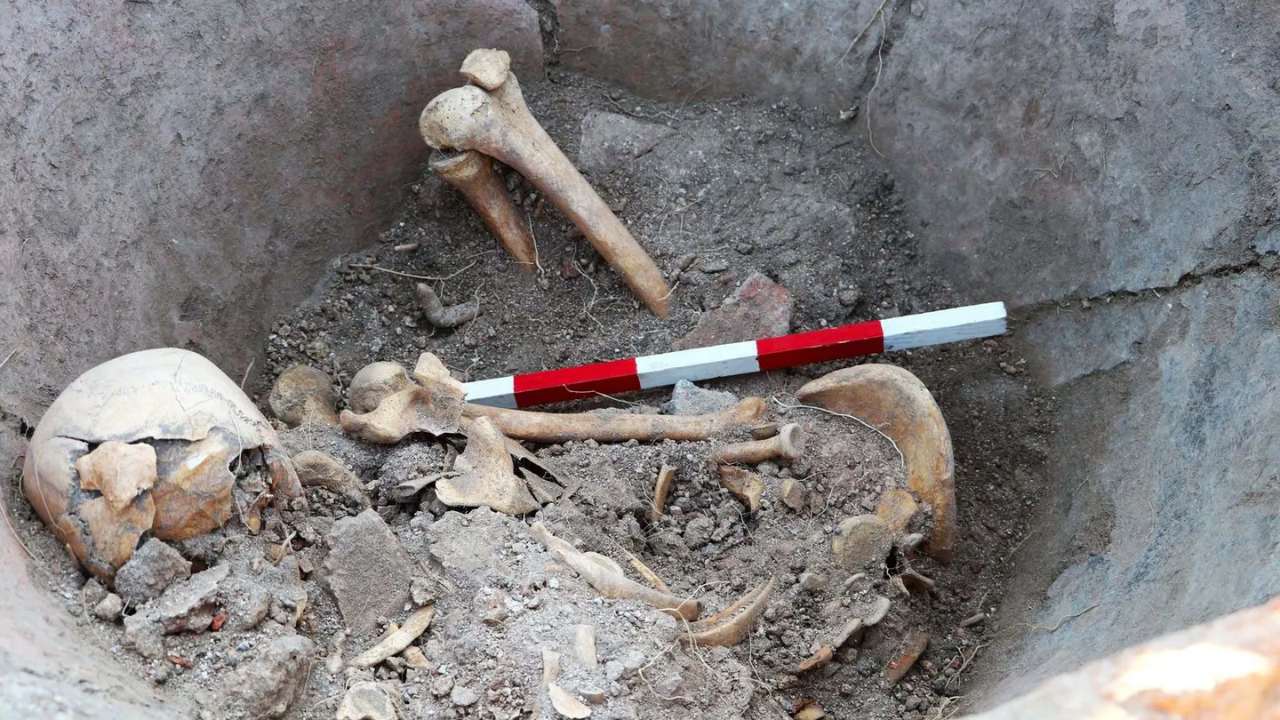
British civil servant H.C.P. Bell first investigated ancient Maldivian ruins in the late nineteenth century after a shipwreck, uncovering mounds known locally as havittas. These were the remains of Buddhist stupas. Later excavations at sites like Kaashidhoo and Gan proved that Mahayana, Vajrayana, and Theravada Buddhist practices once thrived across the territory.
Far more revealing are medieval copper-plate grants, known as lomafanu. Records from the late twelfth century, decades after the royal court supposedly converted, document violent crackdowns on Buddhist monasteries in the southern atolls. Monks were beheaded, sanctuaries were dismantled, and mosques were erected directly over the rubble of old temples. The transition was messy, contested, and enforced from the top down.
Life Under the Sultans Through Foreign Eyes
Once established, the Islamic sultanate survived through shifting tides of history. Dynasties rose and fell. European powers tried their hand at control; the Portuguese occupied the islands in the sixteenth century before local resistance threw them out, followed later by Dutch protectorate arrangements and British dominance.
When Ibn Battuta lived in the islands during the 1340s, he found a society utterly unique. He served locally as a qadi (Islamic judge) and frequently clashed with local customs. He was scandalized by the traditional dress of Maldivian women, who went topless in public—a practice his judicial scoldings failed to change. He also documented unique marital customs where foreign traders married local women for the duration of their stay, only to divorce amicably when their ships set sail again.
The Legacy That Survives Today
The sultanate finally ended in 1968 when the country transitioned into a republic, but the religious identity forged nine centuries ago remains absolute. Today, the nation maintains a strictly 100 percent Muslim populace by law, and citizenship requires adherence to Islam.
If you travel there, look past the beach resorts. Recognize that beneath the luxury lies an ancient layer of Buddhist coral carvings, medieval political upheaval, and a resilient island culture that transformed itself to survive in a changing world.