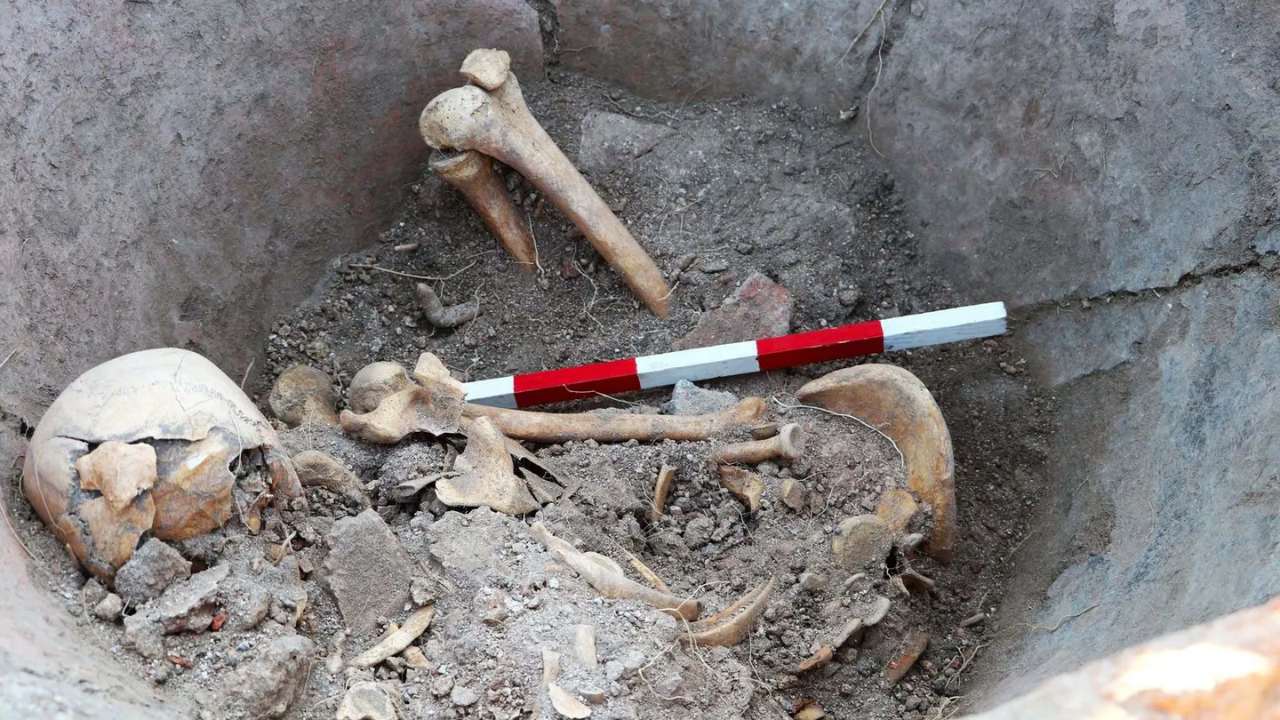
Most ancient tombs found in South America have one depressing thing in common: looters got there centuries ago. Gold gets stolen, pottery gets smashed, and context vanishes forever. That is why the recent unearthing of a 600-year-old mausoleum at Chan Chan in northern Peru has experts calling it the discovery of the decade.
Peruvian archaeologists working in the Utzh An complex—once known as the Gran Chimú Palace—found a funerary platform that stayed completely sealed for six centuries. It wasn't robbed by Spanish conquistadors, and it wasn't picked clean by modern thieves. It's an intact snapshot of pre-Inca power.
What’s Actually Inside the Chan Chan Tomb
The scale of this find goes beyond a few cool artifacts. Inside the structure, researchers uncovered the remains of at least 38 individuals. The complex is laid out with a deep central chamber flanked by two side rooms, creating an elaborate layout designed for someone very important.
Lead archaeologist Jorge Meneses and his team found a wealth of items buried alongside the dead:
- Metal weapons and emblems tucked into a side chamber that held no human bones.
- Ornate jewelry, including shell and quartz necklaces, fine metal ear ornaments, and intricate headdresses.
- Carved wooden boxes decorated with metal appliqués.
- Hundreds of ceramic vessels sporting black finishes and red pigment.
The main individual resting in the central chamber had a skull bearing traces of red pigment, likely cinnabar. In Chimú culture, treating a body or objects with mercury sulfide wasn't just decorative; it marked elite status and sacred protection.
Breaking Down the Chimú Empire
If you haven't studied pre-Inca history, you might wonder why the Chimú kingdom matters. Before the Incas swept down the coast and conquered the region in the mid-15th century, the Chimú built the largest adobe city in the world.
Chan Chan covered roughly 20 square kilometers at its peak, housing an estimated 30,000 to 60,000 people across ten massive walled palaces. Each ruler built a fresh palace when they took power, incorporating a royal funerary platform where they would eventually be laid to rest alongside retainers.
Yet, despite the immense size of the capital, archaeologists have barely scratched the surface. Experts estimate that no more than 7 percent of Chan Chan's total area has been excavated. Most of what science understood about elite Chimú burials previously came from sites gutted during the colonial era. Fragmented contexts made it nearly impossible to map out who was buried with whom, or how social hierarchies operated in death.
The Mystery of the Extended Skeleton
Not everything in the new mausoleum fits standard archaeological expectations. While most bodies found in Chimú contexts are arranged in flexed or seated positions, one skeleton near the back of a chamber was laid out completely flat and extended.
That single detail has sparked intense debate among researchers. An extended burial deviates sharply from normal Chimú custom, leading some anthropologists to suggest the individual might have been a sacrificial victim or someone who held a distinct social role outside traditional norms.
The presence of multiple bodies packed into side chambers—around 20 in one room and 18 spread across other areas—points directly toward retainer sacrifice. When a high-ranking Chimú ruler died, servants, guards, and court members often joined them in death to serve in the afterlife. Having an intact platform lets scientists study how those bodies were arranged relative to the principal elite figure, offering concrete data on power dynamics that text-heavy history books can't replicate.
What Happens Next for the Site
Excavating an ancient ruin in coastal Peru isn't as simple as brushing off sand. Coastal humidity makes organic materials and fragile bones degrade rapidly when exposed to air.
Because of this, conservation teams are using high-precision 3D photogrammetry to record every millimeter of the tomb before moving any bones or artifacts to a lab. Officials also face a ticking clock against upcoming seasonal rains, meaning parts of the excavation trenches will likely be temporarily closed and reinforced to protect the ruins.
If you want to track how this discovery changes our understanding of South American history, keep an eye on upcoming bulletins from Peru's Ministry of Culture. The lab results determining the exact ages, sexes, and genetic ties of the 38 individuals will drop over the next year, giving us a clearer picture of the people who built an empire in the desert.