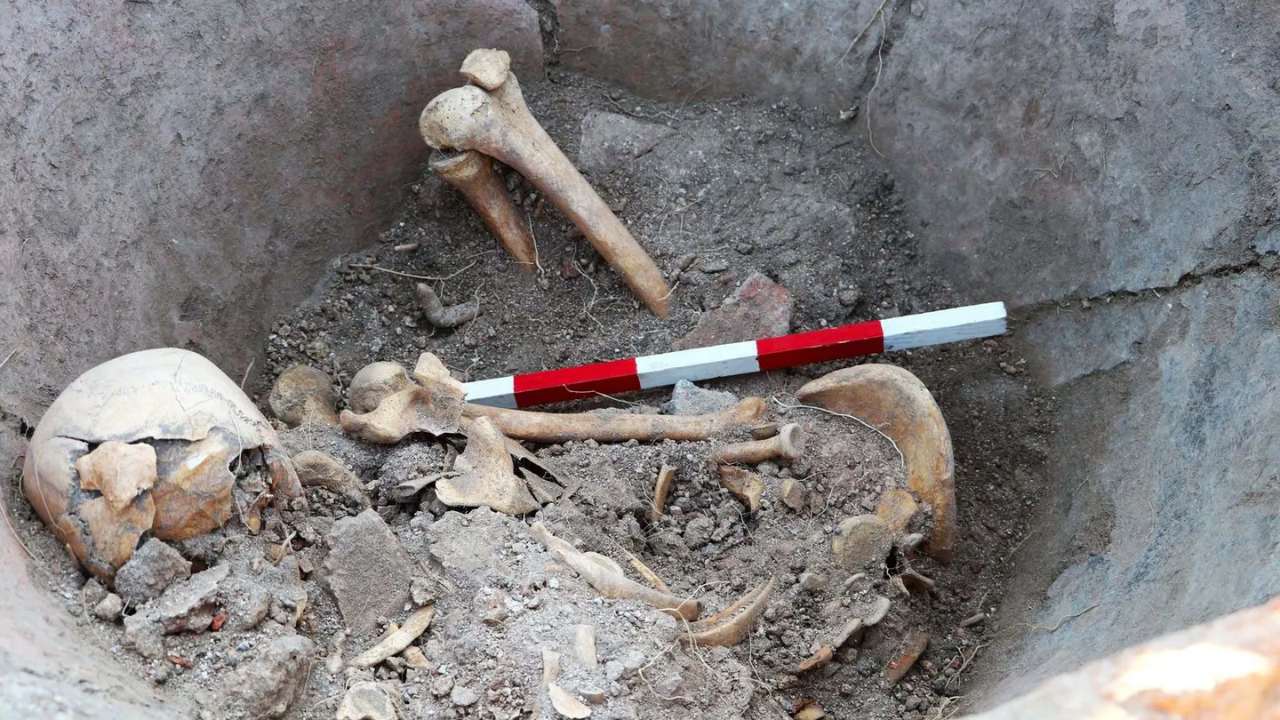
Sixteen centuries ago, chaos consumed a Roman settlement in what is now southeastern Bulgaria. Flames tore through buildings, brick and tile collapsed, and an unnamed man made a desperate choice. He scrambled inside a massive ceramic storage jar, curling up at the bottom in a frantic bid to survive.
He never came out.
Archaeologists excavating the ancient Roman colony of Deultum uncovered his skeletal remains inside a massive dolium—a type of giant vessel normally reserved for holding hundreds of litres of wine or olive oil. When you look closely at the physical evidence pulled from the site, the story turns from a dry academic report into a raw snapshot of human panic.
Uncovering the Tragic Secret of Deultum
The find came to light during digs at a Late Roman turret, part of the western gate of Deultum. Finding human remains trapped right inside city walls is rare. Ancient Romans usually buried their dead outside municipal boundaries. But rules vanish when a settlement burns to the ground.
Excavation leader Lyudmil Vagalinski, working with the Bulgarian Academy of Sciences, faced a site choked with destruction. Ash, charcoal, melted glass, broken roof tiles, and scattered bronze coins filled the area. During the fourth and fifth centuries, Deultum faced wave after wave of attacks from groups like East Germanic tribes and Huns. While researchers haven't pinned down the exact raiding party responsible for this specific disaster, the physical markers point straight to a violent catastrophe around A.D. 400.
You might wonder how archaeologists know he didn't just store grain or wine in that jar before disaster struck. The proof lies directly beneath his bones.
The Clues Left Behind in the Ashes
Layers of ash rested underneath the man's skeleton. That single detail completely changes the timeline of his final moments. He didn't wander over to an empty pot during a routine afternoon. He crawled inside after the fire had already erupted and spread through the turret.
He brought company, too. Two iron knives accompanied his remains. One sat attached to his belt, while the other rested deliberately between his legs. This wasn't a soldier outfitted for official combat; it reads like a terrified local civilian clutching whatever makeshift weapons he had available, preparing to fight for his life if someone pulled him out of his ceramic shelter.
The fire raged hot enough to shatter glass and bake the surrounding stone. Once the attack ended, survivors didn't dig out the ruins. Instead, they levelled the collapsed tower and poured a brand-new floor right over the top. That construction seal locked the man inside his pottery tomb, keeping him hidden for over 1,600 years until modern trowels scraped away the dirt.
What This Discovery Tells Us About Roman Border Realities
History textbooks love talking about grand emperors, sweeping troop movements, and grand architectural feats. They rarely show you the human cost of a frontier collapsing. Deultum wasn't just a dot on a map. It was a bustling colony where real people lived, worked, and occasionally had to make split-second choices about where to hide when the walls were breached.
Anthropological examinations in Sofia will eventually reveal more data about his age, health, and physical build. Yet his identity will likely remain anonymous forever. What matters more than his name is the stark reminder he left behind. When an empire starts fracturing from the outside, grand strategies mean nothing compared to a man, a clay jar, and a desperate hope that nobody looks inside.