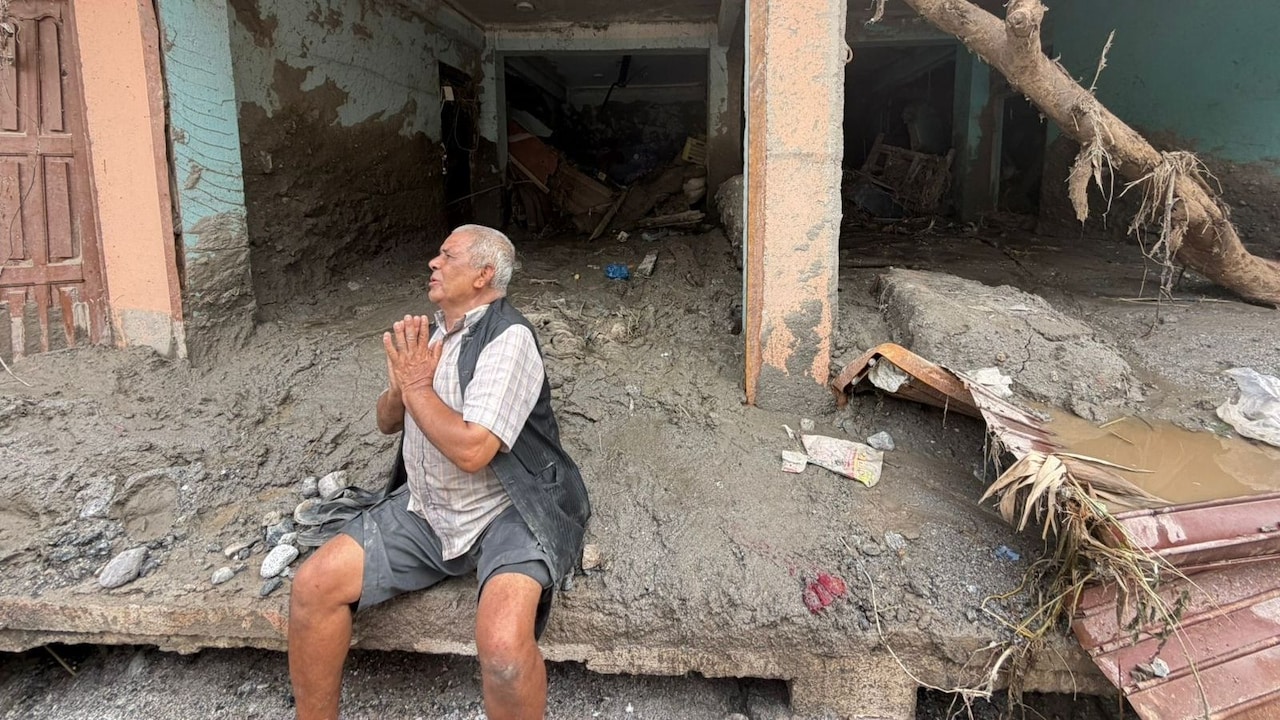
Age seventy-one is supposed to mean sitting on a porch. It is supposed to mean watching grandchildren, tending a small garden, or simply resting after decades of work. For Govind Prasad Dahal, that resting place vanished in minutes.
When a violent flash flood tore down the Bhote Koshi river system in late August, it didn't just wash away dirt and trees. It erased a lifetime of sweat, wiping out a business valued at roughly ten crore Nepali rupees and turning a lifetime of asset building into an empty shell of mud. He walked away with a pair of slippers, his son Kedar by his side, and a mountain of unpaid debt.
Stories like this surface after every major climate disaster, but they usually stop at the tragedy. They show the tear-stained face, count the bodies, and move on. They rarely ask what happens to an older adult who wakes up bankrupt with no pension, no functioning insurance market for flash floods, and a liability sheet that outlives his earning years.
The Anatomy of Sudden Financial Ruin
We talk about climate displacement in terms of hectares lost and millions displaced. We rarely look at the balance sheets of micro-entrepreneurs in South Asia. Dahal’s enterprise wasn't a multinational corporation. It was a localized, family-driven livelihood tied entirely to geography.
When the waters surge through Rasuwa and Nuwakot districts, they destroy physical inventory, structural real estate, and commercial creditworthiness all at once. Commercial banks in Nepal don't write off business loans simply because a glacial-fed river turned into a battering ram.
The numbers coming out of the National Disaster Risk Reduction and Management Authority paint a grim picture. Nearly six hundred people are dead. Over nineteen hundred remain missing. Thousands of families are crammed into temporary shelters or living with relatives. Yet the quiet crisis is the financial trap ensnaring survivors who survived the physical onslaught only to face debtor's prison in all but name.
If you owe money for business expansion, and the business asset is now a mound of silt twenty feet deep, your creditors don't disappear when the floodwaters recede.
Why Traditional Relief Misses the Elderly Entrepreneur
Disaster response systems are built for triage. They hand out tents, water purification tablets, and emergency food packets. That keeps people alive for week one. Week twelve is where the system breaks down entirely.
A seventy-one-year-old man cannot easily retrain for the digital gig economy. He cannot pack up and move to Kathmandu to start a brand-new retail shop from scratch. His collateral was his brick-and-mortar presence, his local reputation, and his physical shop. With those gone, his credit score is zero, and his liabilities are maximized.
Government compensation packages in developing nations hit by extreme weather events typically offer nominal relief funds—often enough to buy groceries for a month, maybe two. They are never scaled to replace a multi-million-rupee business or service commercial debts incurred over decades of expansion.
Insurance penetration remains exceptionally low across rural and semi-urban Himalayan regions. Parametric insurance or micro-insurance products that payout automatically based on rainfall or river gauge data are still experimental or unavailable to small shopkeepers. People rely on informal loans, local cooperatives, and personal savings. When the flood hits, those informal networks drown too because everyone in the village is broke.
The Broader Regional Vulnerability
What happened in Devighat and Rasuwa isn't an isolated anomaly. The Himalayan arc is undergoing rapid hydrological stress. Glacial lakes are expanding behind unstable moraine dams. Monsoon patterns are erratic, dumping a month's worth of rain in a few hours.
Communities that have stood safely for generations are finding themselves sitting in high-risk deposition zones. Small business owners building near riverbanks for transport access and trade find that their locational advantage is now an existential death sentence.
Yet people keep rebuilding. Why? Because alternative economic opportunities in rural Nepal are scarce. Migration to the Gulf states or Malaysia draws young men like Kedar Dahal away, leaving aging parents to manage family storefronts. When disaster strikes, the generational contract fractures. The father loses his life's work, and the son loses his inheritance and his safety net abroad.
Moving Beyond Pity to Structural Reform
Watching a man weep on camera with his hands folded changes nothing if policy doesn't shift. Humanitarian reporting loves a tearful elder, but systemic reform requires looking at how debt forgiveness operates post-disaster.
We need specialized disaster-debt moratoriums for small businesses in high-risk climate zones. When an act of God destroys an entire commercial district, commercial banks should not be legally permitted to hound survivors for standard interest payments while reconstruction is stalled.
Furthermore, international climate finance must start trickling down to individual livelihood recovery. Billions get pledged at global climate summits, but very little of that capital reaches a seventy-one-year-old shopkeeper in Nuwakot trying to figure out how to pay back a business loan for a building that is now fish habitat.
Govind Prasad Dahal is currently dealing with the immediate reality of survival—shelter, dry clothes, and grief. But the real reckoning will arrive when the relief camps empty out, the cameras turn off, and the lenders come calling for money that was washed down the Bhote Koshi.