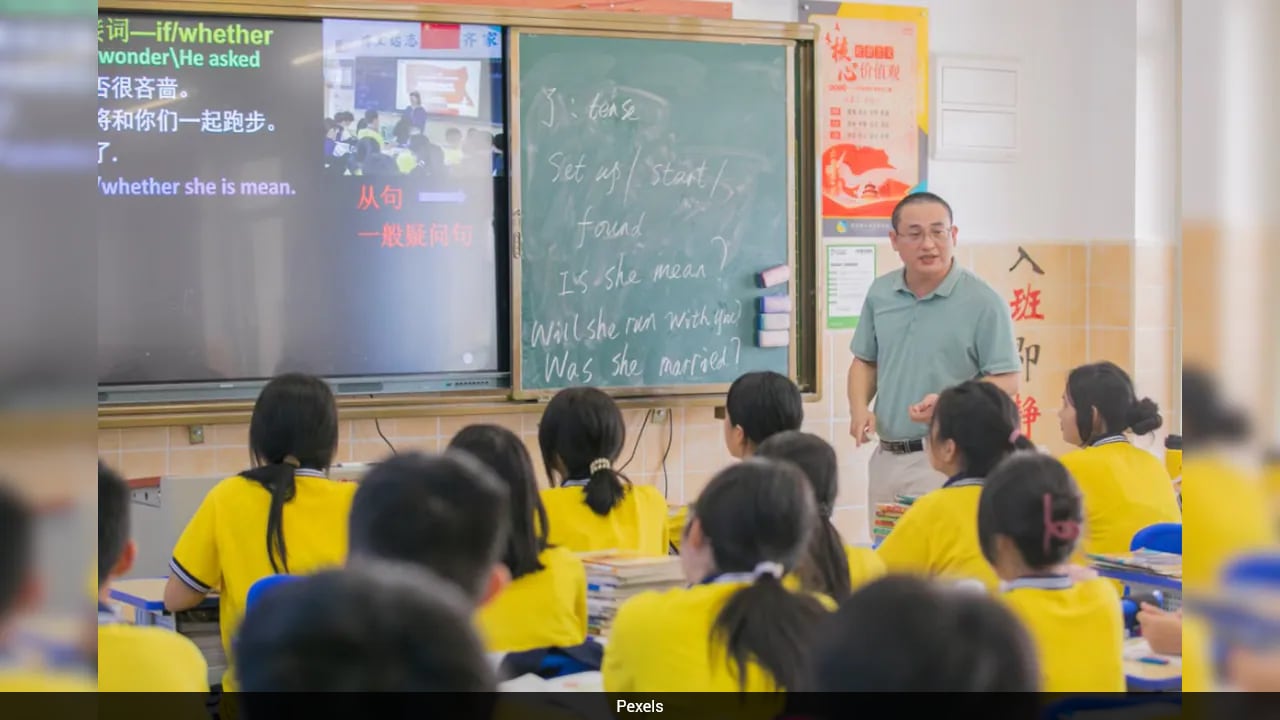
You spend years memorizing obscure grammar rules and vocabulary lists, only to realize you can barely order a cup of coffee abroad. That frustrating reality sits at the center of a fresh national debate in China, where a prominent mathematics teacher just threw a match into an already smoldering cultural fire.
Tang Jiafeng, a math teacher and online influencer known for coaching students through postgraduate entrance exams, recently posted a blunt public demand on social media. He argued that English should be stripped of its status as a core subject in elementary schools, secondary schools, and universities. Right now, English shares the highest educational tier in China alongside Chinese and mathematics, a position it has held for decades. Tang thinks it is time for that to change.
The Case Against Core Status
Why target English? Tang pointed to the staggering amount of time, emotional energy, and financial capital poured into a subject that most people never truly use in their daily professional lives.
Kids are pushed into intensive foreign language classes before they have even fully grasped the nuances of their native language. To Tang and his supporters, English is just a functional tool, not a badge of intellectual superiority. He argued that the long-standing tradition of revering Western cultures through heavy academic weighting needs to end, especially as domestic cultural confidence grows.
This argument did not appear in a vacuum. It gained traction right after local exam reforms in places like Liaoning province reduced the weight of history in certain tests. Tang noted that if any subject deserved a downgrade, it should be English rather than history, which teaches young people valuable lessons about past hardships and national values.
The Pushback and the Real Inequality Risk
Not everyone agrees with dropping the hammer on foreign languages. Critics were quick to push back against what they viewed as a narrow-minded, nationalist stance.
Hu Xijin, the former editor-in-chief of the state-run Global Times, jumped into the fray to defend the language's position. He argued that dismissing English as an unnecessary foreign influence misses the broader point of globalization. English remains the primary gateway to international scientific research, global trade, and cross-border opportunities.
More importantly, Hu highlighted a glaring equity issue. If public schools water down or downgrade English education, wealthy families will simply bypass the change by paying for expensive private tutoring. Students from less privileged backgrounds would lose their only free ticket to global literacy, widening the gap between social classes.
Education scholar Xiong Bingqi also pointed out that tinkering with exam score weights misses the forest for the trees. The real culprit isn't the English language itself. It's an aggressive, single-track examination system that prioritizes test scores over practical, well-rounded learning. As long as schools judge students purely on high-stakes entrance exams, parents will keep stressing over whichever subjects carry the most weight.
Where AI and Mute English Fit In
The debate also taps into a broader modern frustration. Millions of students across China suffer from what educators call "mute English." They spend years passing difficult reading and writing tests without ever developing the confidence to speak fluently.
Coupled with the rapid rise of artificial intelligence translation tools, many everyday citizens wonder why they should invest thousands of hours into learning a second language when an earpiece or an app can translate text in real time. Yet, researchers and scientists warn that relying entirely on AI misses the deep cognitive and cultural connections that come from actually knowing a language.
Ultimately, this clash is about more than just a school curriculum. It touches on how a rising superpower defines its identity, educates its youth, and prepares them for an interconnected world without losing its own cultural roots.
Review your own priorities when learning a second language. Stop treating tests as the final destination and start treating communication as the actual goal.