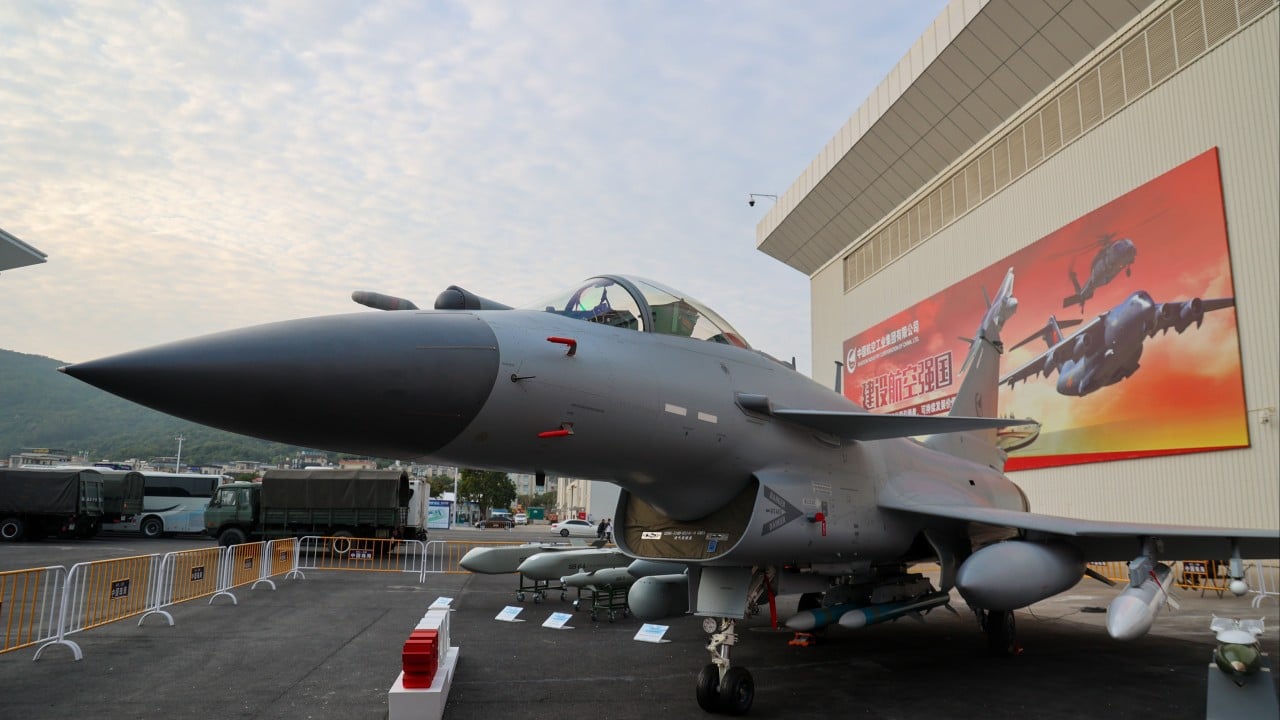
Military procurement in South Asia just shifted. Bangladesh has officially confirmed a draft agreement to acquire 20 Chinese J-10CE fighter jets in a program valued at roughly $2.3 billion. If finalized, Dhaka will become only the second foreign operator of the aircraft after Pakistan.
Why now? Government officials in Dhaka aren't hiding their reasoning. They're pointing directly to the reported combat performance of the Chengdu J-10CE against French-made Rafale jets during last year's India-Pakistan border clashes.
For decades, Beijing struggled to find export buyers for its high-end military aircraft. Western and Russian hardware dominated the market. One disputed battlefield engagement changed the entire calculation.
The Reality of the Bangladesh J 10CE Proposal
Zahed Ur Rahman, the information and broadcasting adviser to the prime minister of Bangladesh, confirmed that a draft proposal has been submitted to the Ministry of Finance and the Armed Forces Division. The package covers more than just airframes. It includes attack helicopters, VIP transport helicopters, and unmanned aerial vehicle systems.
Budgetary allocation for the current fiscal year will dictate how fast this moves. If funds clear, the execution happens immediately. If not, it rolls into the next budget cycle.
Let's look at the financial weight of this decision. The bare airframe cost sits around $62.7 million per unit. Once you factor in training, operational essentials, logistical support, technical freight, VAT, and infrastructure construction, the effective cost per aircraft pushes closer to $115 million. You aren't just buying twenty jets. You are building an entire operational ecosystem from scratch.
Why the Rafale Performance Claim Matters
The core catalyst behind this purchase is the narrative coming out of the May 2025 conflict between India and Pakistan. Pakistan deployed J-10C fighters equipped with active electronically scanned array radars and long-range air-to-air missiles. Pakistani authorities claimed multiple kills against Indian assets, including French-built Rafales.
While India hasn't officially confirmed those specific losses and independent verification remains thin, the commercial impact of the claim is undeniable.
When you're running an air force built on aging assets like Bangladesh's 36 legacy F-7MG fighters, combat credibility matters. Dhaka's leadership looked at the data from the India-Pakistan theater and saw a medium-weight multirole fighter holding its own against more expensive Western alternatives.
Military analysts note that the export variant of the J-10 offers a modern AESA radar and multi-target tracking capabilities at a fraction of the cost of American or European hardware. That price difference is impossible to ignore for developing economies balancing defense needs with tight national budgets.
What This Means for Regional Power Dynamics
Buying twenty J-10CEs represents the single largest capability upgrade in the history of the Bangladesh Air Force. It introduces advanced beyond-visual-range missile capabilities and modern avionics into a service that desperately needed a generational leap.
Does this create military parity in the Bay of Bengal? Absolutely not. India operates a vastly superior and larger air force with sophisticated multi-tiered air defense networks. Dhaka isn't looking to start an arms race. They are modernizing an obsolete fleet while keeping financial constraints in check through a structured ten-year payment schedule stretching toward 2036.
China remains Bangladesh's primary defense supplier, having provided naval vessels, tanks, and missile systems over the past two decades. This jet deal solidifies that industrial relationship.
Watch how other developing air forces respond. If a budget-conscious military like Bangladesh's can pivot to Chinese 4.5-generation hardware based on combat-tested marketing claims, traditional Western defense exporters are going to lose market share across Asia and Africa.
Review your procurement timelines, track the final Ministry of Finance sign-offs in Dhaka, and monitor how Beijing scales its export support infrastructure.