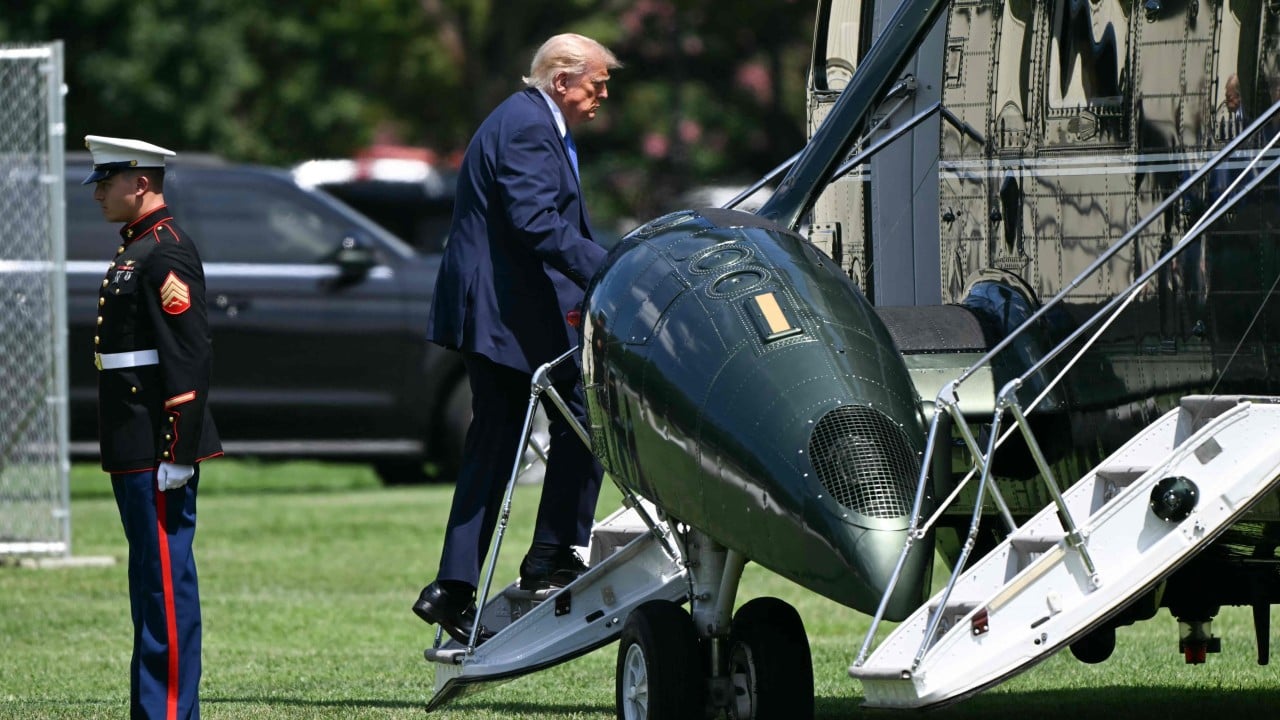
Major infrastructure overhauls in the nation's capital rarely go smoothly, but nobody expected a presidential flight to hang in the balance. Federal investigators recently pointed the finger at ongoing White House construction after a terrifying close call between Marine One and a commercial airliner. When you mess with the layout of the executive mansion, the ripple effects can reach all the way to busy airport runways.
The Breakdown in Communication
The National Transportation Safety Board laid out the facts in a preliminary report. In May, helicopter operations shifted from the traditional South Lawn to the nearby Ellipse park because of heavy construction projects. That relocation changed the routine.
Pilots flying Marine One are required to give air traffic controllers three minutes of notice before liftoff. This protocol allows Ronald Reagan Washington National Airport to pause commercial departures. On August 4, the crew tried twice to radio the tower and failed.
Spotty signals are frustrating on a smartphone. In aviation, they create immediate danger.
According to safety investigators, the Marine One crew attempted to use backup channels via a facility at Joint Base Anacostia-Bolling, but that failed too. The helicopter took off anyway. Just one minute later, an American Airlines subsidiary jet carrying passengers to Florida lifted off from the nearby airport.
Close Proximity in the Skies
The result was a textbook loss of separation. Federal Aviation Administration rules mandate that aircraft keep a horizontal distance of at least 1.5 miles and a vertical gap of 500 feet near airports.
At their closest point during this incident, Marine One and the commercial Embraer E170 jet sat just 0.82 nautical miles apart laterally, though they maintained a 700-foot vertical buffer. The airliner had to be rerouted out of an abundance of caution.
While the FAA initially downplayed the danger by claiming the aircraft were not converging on a collision course, the incident rattled safety officials. It follows heightened anxieties in Washington airspace after a fatal January 2025 collision between a commercial airliner and an army Black Hawk helicopter over the capital that claimed 67 lives.
Fixing the Blind Spots
Fixing communication blackouts requires more than paperwork. Following the close call, the FAA relocated an antenna and updated procedures. Subsequent checks showed improvements, though minor glitches still popped up during later flights.
Construction at the White House remains a moving target. Projects include a helipad redesigned to accommodate a newer, larger version of the presidential helicopter, alongside a massive ballroom construction project approved by the Supreme Court. When security, architecture, and dense urban air traffic collide, small miscalculations create massive risks.
Check your local airspace safety protocols and stay updated on how ground infrastructure changes impact transit corridors.
White House construction contributed to air traffic controller issues
This video provides a detailed look at how federal investigators traced the communication breakdowns during the presidential helicopter incident back to ongoing White House construction.


