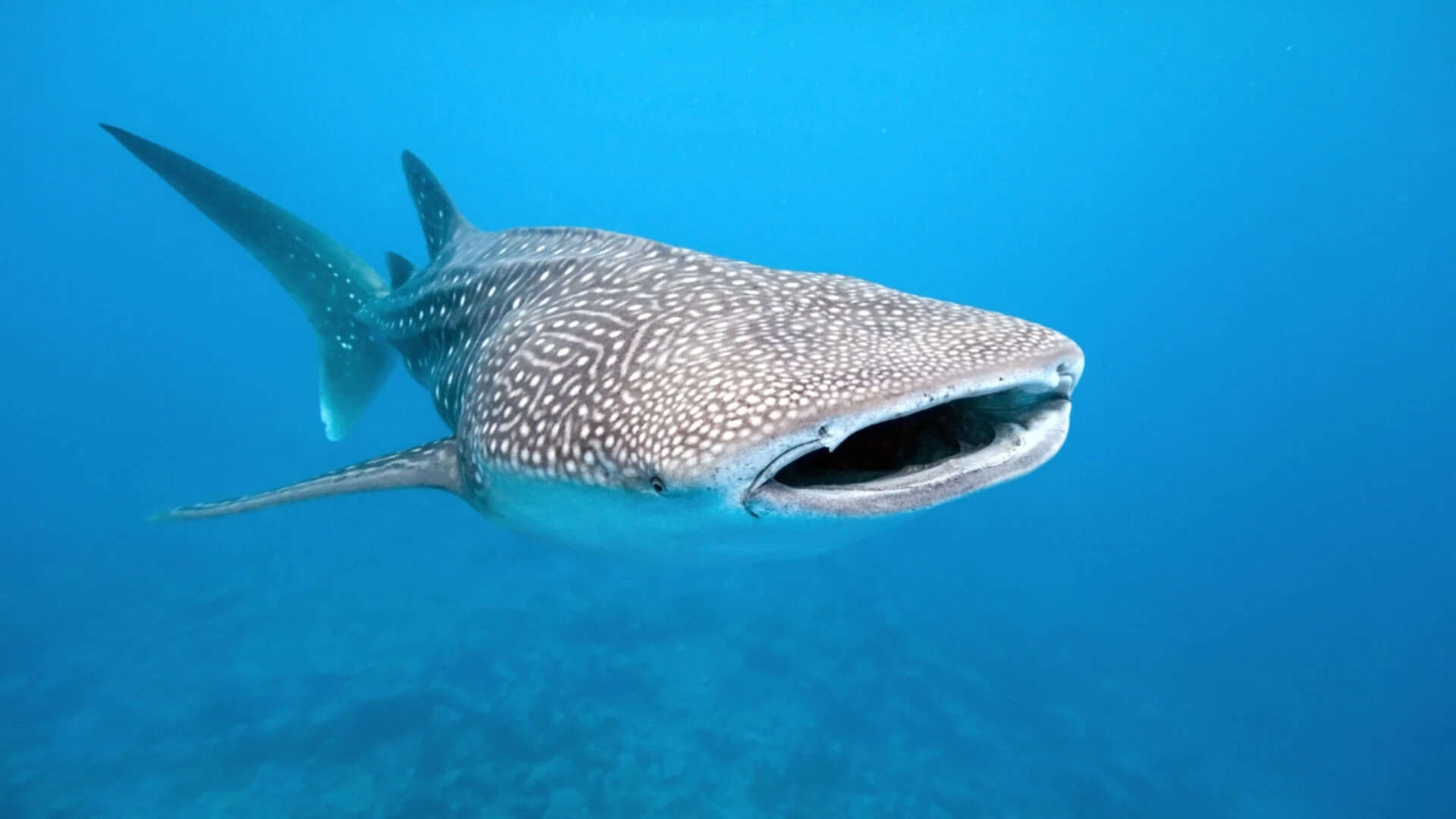
For decades, marine scientists assumed whale sharks were essentially giant ocean vacuum cleaners floating along the surface with their mouths wide open. It made sense at first glance. If you've ever snorkeled with a whale shark off the coast of Ningaloo Reef or South Ari Atoll, you've seen them cruising near the top of the water column, calmly filtering plankton like slow-moving underwater buses.
That neat little picture was completely wrong.
Researchers attached high-resolution camera tags directly to the dorsal fins of whale sharks to see what happens when humans aren't around. The resulting data, paired with a massive review of over 100 marine behavior papers, shattered the old assumptions. The study was published in Marine Biology by Christine Barry from Murdoch University and Luciana C. Ferreira from the Australian Institute of Marine Science.
It turns out whale sharks don't just hang out near the top of the sea. They're calculated foragers, diving deep into dark waters, hunting on the ocean floor, and changing their tactics based on what kind of prey shows up.
The Snacking Strategy of the Ocean's Biggest Fish
Whale sharks (Rhincodon typus) face a massive energy problem every single day. They can grow up to 40 feet long and weigh thousands of pounds, yet they survive mostly on microscopic plankton, tiny krill, and small fish. Tropical ocean waters aren't rich in food everywhere. Food is patchy and spread thin. Swimming constantly to filter empty water would burn more energy than the food provides.
So how do they survive? They snack smartly.
The camera footage revealed that whale sharks spend most of their time using six low-effort feeding methods. They cruise slowly through the water, taking small, effortless bites when minor patches of food appear. Think of it as opening the fridge every 20 minutes to grab a single chip while deciding what to make for dinner. They save their real physical effort for dense krill swarms, where they suddenly switch into high gear, actively chasing prey and gulping down massive quantities.
Going 70 Meters Deep Beyond Human Sight
Observing a whale shark from a boat only gives you a tiny slice of reality. Whenever a shark dives deep, human observers lose track. Electronic tags track where an animal swims, but coordinates don't tell you what the animal is actually doing.
By placing camera-equipped tags on the sharks' top fins while snorkeling alongside them at Ningaloo Reef in Western Australia, researchers gained a front-row seat. The cameras sat on a non-invasive clamp programmed to detach automatically after 24 hours. The devices popped up to the surface without leaving a mark on the shark, leaving scientists with rich video footage right from the animal's perspective.
The video showed sharks dropping down to 70 meters below the surface and swimming along the seafloor. Down in the cold shadows, they glided with open mouths, sweeping over benthic sediments to catch prey hiding near the bottom.
Scientists catalogued 36 distinct behaviors during the project. That's the most comprehensive behavioral list ever compiled for the species. The variation ranges from slow, energy-conserving sea-floor glides to aggressive surface chases.
What This Means for Whale Shark Conservation
Understanding where whale sharks feed is a massive practical issue. Whale sharks are listed as Endangered on the IUCN Red List. They face persistent threats from boat strikes, plastic pollution, climate-driven changes in ocean currents, and entanglement in commercial fishing gear.
If managers assume whale sharks only feed at the surface, conservation policies focus exclusively on surface-level protections like speed limits for boats. But if these animals spend significant chunks of their day hunting 70 meters down along the seabed, they face completely different hazards, including deep-water trawl nets and bottom-disrupting industrial activities.
Protecting a species requires protecting its entire feeding range, not just the parts humans happen to see on a weekend boat tour.
Practical Next Steps for Marine Eco-Tourists and Researchers
If you're planning to swim with whale sharks or support ocean conservation, here's how to apply these new findings:
- Choose Certified Ethical Operators: Look for tour outfits that strictly follow local wildlife regulations. In Western Australia's Ningaloo region, rules require boats and swimmers to keep safe distances, minimizing stress on the animals while they feed.
- Support Non-Invasive Research: Back organizations that use camera tags, satellite telemetry, and drone monitoring. These tools gather vital behavioral data without harming or stressing marine life.
- Log Sighting Data: If you swim with whale sharks, upload photos of the spot pattern behind their gills to public databases like Wildbook for Whale Sharks. Individual spot patterns act like fingerprints, helping scientists trace movement patterns across oceans.