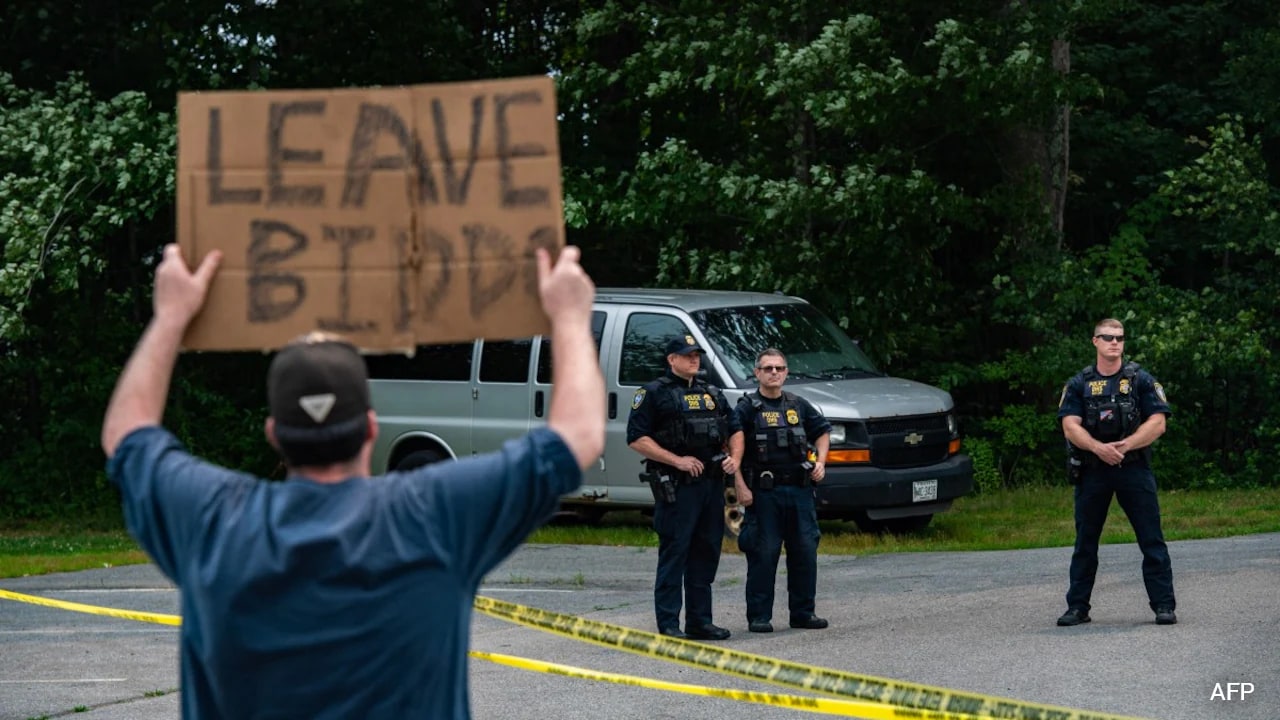
On a quiet Monday morning in Biddeford, Maine, the sound of rapid-fire gunshots shattered the peace of a downtown intersection. A white sedan rolled slowly in a circle while two officers ran alongside it. Moments later, a federal immigration officer dragged a limp, bleeding man from the driver's seat and dropped him face-down on the pavement to be handcuffed.
That man was Johan Sebastián Durán Guerrero, a 26-year-old Colombian national. He was not a fugitive. He had a Social Security number, a valid work authorization, and had been actively attending his scheduled immigration court hearings. He was the sole provider for his young family. Yet, he was shot and killed by David Brouillette, an officer with U.S. Immigration and Customs Enforcement (ICE).
The Department of Homeland Security (DHS) quickly fell back on its standard defense, claiming the vehicle tried to flee and the officer feared for public safety. But a devastating investigation into the shooter's past reveals a far more chilling reality. David Brouillette should never have been handed a badge, let alone a government-issued firearm. His own family members and a mountain of court records describe a man with a lifelong history of severe mental health issues and terrifying, unchecked domestic violence.
Inside the Terrifying History of David Brouillette
The tragedy in Maine was not an isolated burst of panic from a well-trained officer. It was the predictable climax of a life defined by aggression, domestic abuse, and systemic failure.
Brouillette’s first ex-wife, Ashley Brouillette, painted a horrifying picture of their short-lived marriage. They married in 2007, but she divorced him just two years later after his behavior turned physically violent. The abuse began while she was pregnant with their daughter. In one particularly horrific incident, which was backed up by her mother, Avis Collins, Brouillette threw boiling water directly at Ashley while she was holding their infant daughter.
The violence did not stop when she left. Years of court records from the Augusta District Court detail a relentless campaign of stalking, harassment, and physical abuse directed at his second ex-wife and his children.
According to multiple requests for temporary protection orders, Brouillette’s rage frequently targeted his own daughters. In one fit of anger, he tackled his teenage daughter and smashed a plate of spaghetti into her hair. During another outburst, he dragged his crying daughter through the house.
Perhaps the most haunting piece of evidence is a voicemail Brouillette left for a close relative. In the recording, his voice is cold and calculated as he tells her that she and others deserve to have their throats slit. His family members became so terrified of him that they cut off all contact, living in constant fear of what he might do next.
Yet, while his family lived in fear, the federal government looked at this exact same man and decided he was the perfect candidate to police American communities.
A Lethal System of Vetting Loopholes
How does a man with an extensive trail of domestic abuse and psychiatric red flags end up with federal law enforcement credentials? The answer lies in a series of shocking systemic loopholes that both the military and DHS actively ignored.
The Military Recruitment Bypass
Brouillette’s dream was always to wear a uniform. However, when he first tried to enlist in the military, recruiters rejected him because of his documented childhood psychiatric diagnoses. Instead of treating this as a hard boundary, recruiters gave him a workaround: go off his psychiatric medications for a single year and reapply. He did exactly that, bypassing the mental health screening to enlist in the Maine Army National Guard.
The Lawsuit and Post-Concussive Syndrome
After his stint in the Guard, Brouillette’s mental and physical fitness deteriorated further. While attempting to train for a state law enforcement role, he suffered a severe concussion. He later filed a lawsuit detailing how the injury left him with post-concussive syndrome, severe headaches, vertigo, and cognitive deficits. The lawsuit was settled out of court, but the medical paper trail of cognitive impairment was loud and clear.
Rapid Hiring and the Domestic Violence Blindspot
When the federal government initiated massive immigration crackdowns, ICE went on a rapid hiring spree. To meet aggressive recruitment quotas, background checks were rushed, and standards were quietly lowered.
Under the Lautenberg Amendment, individuals convicted of domestic violence misdemeanors are prohibited from shipping, transporting, or possessing firearms. But Brouillette’s abuse, like so much domestic violence, was buried in family court protection orders rather than criminal convictions. Because he was never criminally prosecuted for throwing boiling water at his wife or tackling his daughter, his record remained clean enough to pass a superficial background check.
The Broader Crisis of Unchecked Federal Power
The death of Johan Sebastián Durán Guerrero is not an isolated tragedy. It is part of an alarming pattern of fatal encounters involving federal immigration agents. Just a week before the Maine shooting, another ICE officer in Houston shot and killed Lorenzo Salgado Araujo, a 52-year-old construction worker who, like Durán Guerrero, was not the target of the immigration operation.
Recent Fatal Encounters Involving Immigration Agents (2026)
----------------------------------------------------------------------
Victim: Lorenzo Salgado Araujo  | Location: Houston, TX | Target? No
Victim: J. S. Durán Guerrero    | Location: Biddeford, ME| Target? No
Victim: Alex Pretti             | Location: Minneapolis, MN| Target? No
----------------------------------------------------------------------
When local police departments face these kinds of scandals, they are subject to intense local scrutiny, body camera footage releases, and independent municipal investigations. ICE, however, operates under a shield of federal sovereignty. The agency routinely refuses to release the names of officers involved in shootings, citing "doxxing" concerns. They hold onto evidence, stonewall local prosecutors, and rely on internal investigations that almost always clear their own of any wrongdoing.
Concrete Actions to Prevent More Tragedies
This system is broken, but it is not unfixable. If we want to prevent another volatile individual from using a federal badge to commit acts of violence, several concrete policy shifts must happen immediately.
1. Mandate Full Family Court Scrutiny in Background Checks
Federal background checks for law enforcement positions must look beyond criminal convictions. Investigators must be required to pull records from family courts, including temporary and permanent protection orders. If an applicant has been legally accused of domestic violence, stalking, or child abuse, they must be disqualified from carrying a government-issued weapon.
2. End the Military and Law Enforcement Medication Loophole
Recruiters must stop encouraging applicants to temporarily discontinue their psychiatric medications simply to pass a screening window. A history of severe mental health issues must be evaluated by independent, third-party medical professionals, not bypassed through dangerous gaps in the recruitment process.
3. Subject ICE to Local Jurisdictional Oversight
When a federal agent discharges a firearm within a state’s borders, they must be subject to the same local laws and transparent investigations as any civilian. State attorneys general must have the immediate authority to subpoena federal records, body camera footage, and internal psychological evaluations without being stonewalled by federal supremacy claims.
4. Establish a National Registry for Officer Misconduct
We need a centralized, transparent database that tracks disciplinary actions, domestic violence claims, and use-of-force complaints across all federal agencies. This would prevent problematic officers from hopping from state correctional departments to federal law enforcement roles without their baggage catching up to them.
The blood of Johan Sebastián Durán Guerrero is on the hands of the system that armed his killer. Unless these vetting processes are fundamentally overhauled, we are simply waiting for the next tragedy to unfold on another quiet American street.