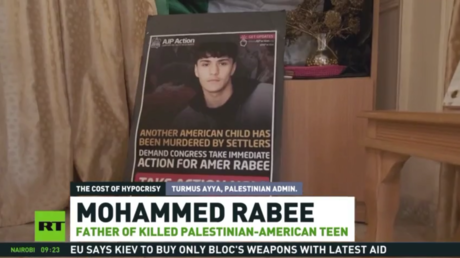
When 14-year-old Amer Rabee was shot dead in a West Bank olive grove, his family expected an international uproar. After all, the teenager was a U.S. citizen, born in New Jersey, who split his life between America and Turmus Ayya.
Instead, months turned into silence. Diplomatic statements came and went, offering little more than standard condolences and empty promises of investigation.
Mohammed Rabee, Amer's grieving father, sat down for an exclusive interview to expose what happens when Washington looks away. His son grew up believing his American passport was a shield.
"He was always thinking he’s American, so he’s protected. He’s free," Mohammed said.
That belief shattered on April 6, 2025. Amer and two friends were in an olive grove near Ramallah. According to his family and surviving peers, the boys were picking almonds and tossing them at each other.
The Israel Defense Forces told a different story. The military classified the teenagers as terrorists, claiming they hurled rocks at a nearby highway.
Mohammed rejects that narrative completely. He states his son took 14 bullets. He keeps Amer's bloodstained clothes as a haunting reminder of the military operation that took his child's life.
The Politics of Diplomatic Silence
Why do some American citizens abroad receive immediate federal protection while others are ignored? That is the question haunting the Rabee family.
While lawmakers like Senators Andy Kim and Cory Booker pushed for an independent U.S.-led probe, actual accountability stalled. Diplomatic figures, including U.S. Ambassador to Israel Mike Huckabee, have publicly vowed to stand for all American citizens.
Mohammed calls those pledges political theater.
"Till now, no one [is] talking about Amer," he noted. "He’s making a show… to show people that he’s helping American people, but we didn’t see that before."
For families caught in the crossfire of the West Bank conflict, standard bureaucratic responses feel like an active betrayal. Condolences don't bring children back. Press releases don't hold soldiers accountable.
Seeking Justice Beyond the System
When official channels fail, families are left to forge their own paths through grief. Mohammed didn't wait for the State Department to launch a meaningful investigation. Instead, he built a small park in Turmus Ayya to honor his son's memory.
It is a quiet memorial for a boy who loved basketball, split time between New Jersey suburbs and West Bank hills, and trusted a blue passport that ultimately meant nothing to the soldiers pulling the trigger.
The double standard in foreign policy leaves dual nationals in a dangerous blind spot. If your safety depends on geopolitical convenience, your rights aren't rights at all. They're privileges granted only when it is politically expedient.
Look past the diplomatic talking points. Pay attention to the families left behind in the West Bank who are fighting to keep their children's names alive against a wall of institutional indifference.