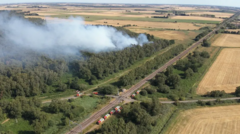
You smell smoke miles away, but you can’t see an open flame. That is the frustrating reality of peatland fires like the ones that recently gripped Cambridgeshire's Holme Fen Nature Reserve. When more than 40 firefighters or even upwards of 80 personnel deploy to a woodland blaze, citizens often assume the danger passes once the dramatic orange glow disappears from the tree line.
It does not.
Underground peat fires burn slowly, invisibly, and stubbornly for days or even weeks. If you have ever wondered why a patch of damp woodland can turn into a multi-day emergency, the answer lies right beneath your feet. Peat is basically compressed, ancient organic matter built up over thousands of years. It stores carbon, moisture, and plenty of trouble.
The Underground Beast
Surface fires grab headlines because they crackle and leap. Peat fires do the exact opposite. They smolder beneath the soil at low temperatures, completely out of sight.
When a fire starts at a place like Holme Fen—spanning hundreds of acres of rich fenland—the flames drop beneath the leaf litter and ignite the carbon-rich soil. Because peat is packed with organic material and lacks large open air pockets, it doesn't burn with a bright flame. It cooks internally like a slow-burning charcoal briquette.
You can dump thousands of gallons of water on top, and the surface will look safe. Dig down two feet, and you will find glowing embers trapped in the dense soil matrix. That is why emergency crews spend days turning over earth and monitoring thermal hotspots long after the initial emergency call.
Why Dry Conditions Change Everything
Holme Fen sits 2.75 meters below sea level, making it the lowest land point in Great Britain. Historically, this area was a vast lake. Humans drained the surrounding land generations ago for agriculture, drying out ancient wetlands that should naturally stay waterlogged.
When a heatwave hits and rainfall drops, that drained peat acts like a dried-out kitchen sponge. It becomes exceptionally flammable.
Local fire services face brutal conditions during these dry spells. Cambridgeshire Fire and Rescue Service reported handling over 120 separate outdoor incidents in just a few days during peak heat, stretching resources thin. When multiple fires break out simultaneously, keeping crews stationed at a single smoldering nature reserve for nearly a week drains local emergency budgets and exhausts personnel.
The Human Element and Public Impact
Nature reserves are fragile ecosystems. Holme Fen holds Site of Special Scientific Interest (SSSI) status because it protects unique habitats, rare fungi, and crucial ground-nesting wildlife. When a deliberate fire or accidental ignition occurs, the ecological damage stretches far beyond the scorched birch trees.
Smoke blankets nearby roads, air quality drops, and local residents are told to keep windows shut. Worse yet, investigations often reveal human carelessness or deliberate arson. Fire authorities regularly remind visitors that barbecues and campfires are strictly banned in these reserves for a reason. One stray spark is all it takes to trigger an underground monster that requires weeks of intensive labor to kill.
What Firefighters Actually Do to Stop It
You cannot just spray water on top of a peat fire and walk away. Firefighters have to systematically dig trenches, turn the burning peat over with specialized tools, and drench every single layer until the core temperature drops to zero.
If you live near vulnerable fenlands or rural woodlots, stay alert during dry summer months. Obey local fire bans, report unattended smoke immediately, and keep vehicles away from narrow access tracks so water carriers and 4x4 specialist units can reach the danger zone without delay.
Stop underestimating how fragile dried-out peat landscapes are. Respect local fire warnings, stay clear of active incident zones, and let the professionals finish the invisible battle happening under the dirt.