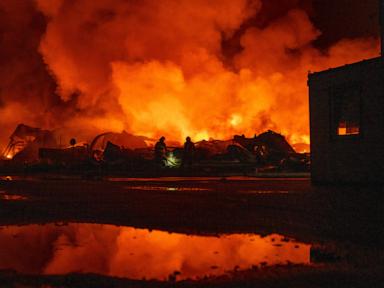
Long-range drone warfare has shifted deeper into Russian territory. Warehouses belonging to Wildberries, Russia's dominant e-commerce giant often dubbed the country's Amazon, are burning.
This isn't happening by accident. Kyiv has systematically altered its strategic playbook, moving past purely military sites to target the logistical backbone of the Russian consumer economy. When a massive logistics hub goes up in flames thousands of kilometers from the border, it sends a loud message to both the Kremlin and everyday Russian citizens.
Why Wildberries Became a Target
For years, the war felt abstract to many citizens living deep inside Russia. Frontline updates on state television seemed distant.
That changed when Ukrainian drones began striking deep-interior infrastructure. Wildberries and its top competitor Ozon handle massive shares of consumer goods, moving products equivalent to a significant slice of the nation's economic output.
Ukraine's leadership argues these massive distribution networks do double duty. While they ship clothes, electronics, and household goods, officials in Kyiv allege parts of the logistics web are leveraged to handle components for military hardware and drone navigation tools. Moscow denies these accusations, maintaining that the retailer is purely civilian.
Regardless of the military utility, the economic impact is immediate. Thousands of independent merchants rely entirely on Wildberries to store their inventory. When a depot burns down in Yekaterinburg, Elektrostal, or near St. Petersburg, small businesses lose their stock overnight.
The Logistics of Deep-Interior Strikes
Hitting targets thousands of kilometers away requires serious technological adaptation. Ukraine has invested heavily in scaling up domestic drone production, bypassing traditional military supply chains to build cheap, long-range systems.
Consider the distance. Striking the Ural Mountains or western Siberia means drones must travel upwards of 2,000 to 2,500 kilometers past dense layers of air defense.
Even though Russian defense ministries routinely claim to shoot down hundreds of drones nightly, the sheer volume means getting past radar is inevitable. A single successful strike on a roof can ignite millions of dollars worth of commercial goods, triggering multi-day fires that drain local emergency resources.
The Toll on Small Businesses
Large corporations absorb shocks differently than independent sellers do. The wave of summer warehouse fires has devastated mom-and-pop vendors who use the platform.
Sellers take to social media after every major strike, posting videos of burned inventory and lamenting the lack of compensation or insurance recovery. Economic analysts note that while the broader macroeconomic impact on Russia's state budget might be manageable, the micro-level disruption for independent merchants is brutal.
What Comes Next
Moscow continues to ramp up its own aerial barrages against Ukrainian energy grids and urban centers, ensuring that neither side is backing down.
As long-range capabilities evolve on both fronts, civilian and commercial infrastructure will remain heavily exposed. The burning warehouses aren't just an operational setback for a retail titan; they are a sign that geographic distance no longer shields domestic supply chains from the realities of the conflict.