Donald Trump just declared a major diplomatic breakthrough, but Benjamin Netanyahu's government is refusing to buy what the White House is selling.
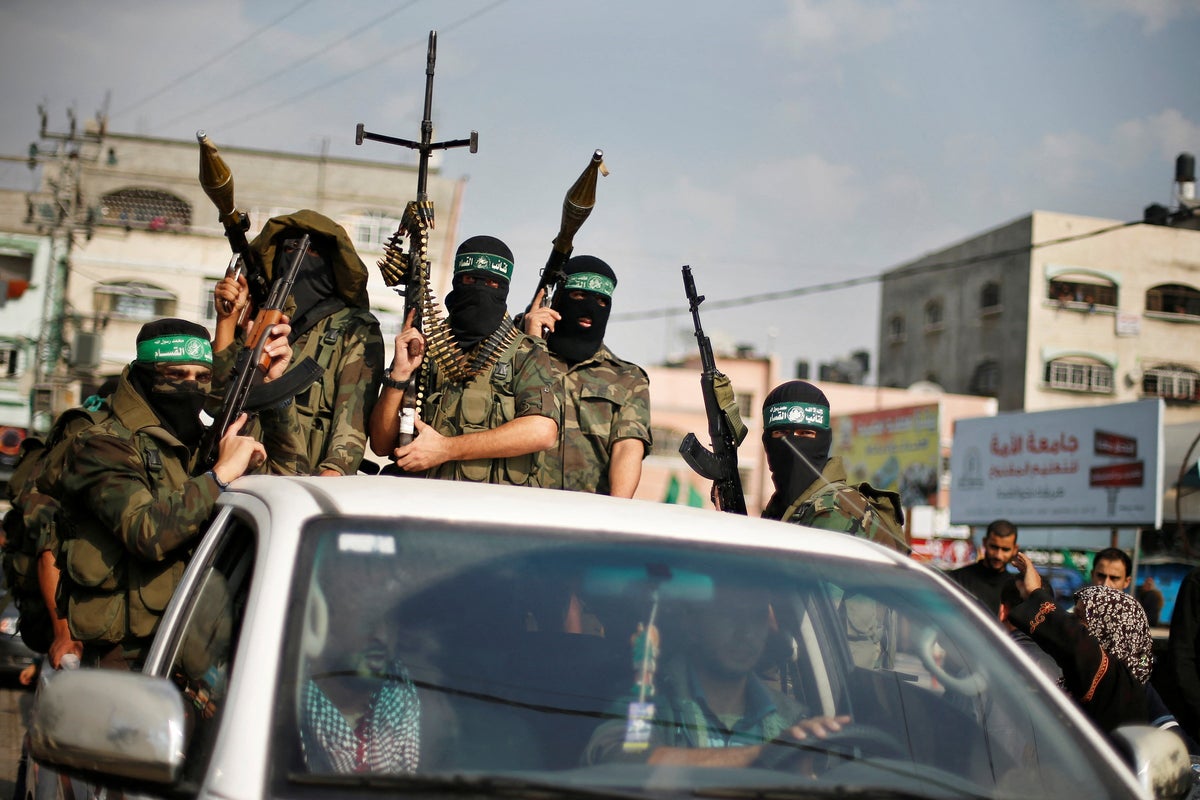
If you look past the celebratory headlines coming out of Washington regarding the newly minted Board of Peace, reality on the ground tells a very different story. The Trump administration claims an agreement has been reached for Hamas to completely disarm in phases, prompting a conditional buy-in from Palestinian factions. Jerusalem's reaction? Total pushback. Israeli officials are drawing a hard line, stating explicitly that the Israel Defense Forces will not pull back an inch from their positions along the Yellow Line until every single weapon is cleared from the Gaza Strip.
The Sequencing Trap That Threatens the Entire Deal
At the heart of this standoff lies a classic diplomatic chicken-and-egg problem. Who moves first?
The text brokered via international mediators—including former British Prime Minister Tony Blair acting as a key envoy—envisions a staggered process. Under this blueprint, a transition of civilian administration to a technocratic body, the deployment of an international stabilization force, and phased military pullbacks are supposed to happen in tandem with the gradual storage and decommissioning of militant arsenals.
Hamas insists that its compliance is tied directly to firm guarantees of a full Israeli withdrawal and the long-term prospect of Palestinian statehood. Meanwhile, Israel's security establishment views any phased approach as a tactical trap. Netanyahu's government insists that leaving troops behind a partial boundary while Hamas retains elements of its command structure or underground infrastructure is a non-starter.
Why Jerusalem Doesn't Trust the Roadmap
Experience dictates policy here. Israeli leadership points out that previous frameworks often left militant infrastructure intact under the guise of transition periods.
The current 15-point proposal under discussion in Cairo fails to satisfy Jerusalem's core security doctrine, which demands total demilitarization as an absolute prerequisite rather than a late-stage milestone. Netanyahu is also facing intense domestic pressure from right-wing coalition partners who view the Trump-backed roadmap as premature appeasement. For the current Israeli cabinet, trading tangible territorial control for unverified promises of disarmament is a bad bet.
At the same time, international relations experts remain deeply skeptical that Hamas will genuinely part with the weaponry that defines its structural identity. Handing over heavy arms, rockets, and tunnel networks to an external committee means relinquishing the only real leverage the group holds.
What Happens Next
The next fourteen days will determine whether this high-profile peace architecture survives or collapses under the weight of its own contradictions. Negotiators are racing to establish a rigid implementation timeline, but the fundamental gap between Washington's optimism and Jerusalem's skepticism remains wide open.
Expect mounting diplomatic friction between the US administration and the Israeli government as Washington attempts to force momentum. Unless the sequencing guarantees absolute security for Israel from day one, expect Netanyahu to keep the troops exactly where they are.