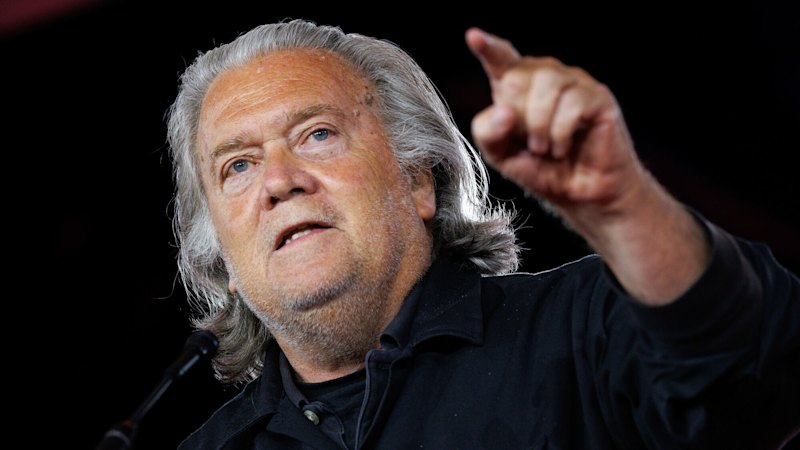
Steve Bannon is beating the war drums again. On his podcast and across right-wing media networks, the former White House strategist has been insistently pitching a radical strategy: Donald Trump needs to declare a national emergency right before the 2026 midterm elections.
Why? Bannon and a group of loyalist activists claim that sweeping executive power is the only way to prevent widespread foreign interference and secure the vote. But if you look past the hyperbole, the real strategy becomes glaringly obvious. It isn't about protecting the ballot box. It's about setting up a legal pretense to reshape how Americans vote just months before Republicans face a tough electoral map.
The Draft Order and the National Emergency Plan
For months, a 17-page draft executive order has floated around Washington political circles. Developed by conservative legal activists and heavily promoted by Bannon, the proposal urges the president to invoke the National Emergencies Act alongside the International Emergency Economic Powers Act.
The rationale hinges on claims that foreign powers—specifically China—tampered with American election machinery during previous cycles. Despite official assessments from the U.S. National Intelligence Council showing no technical alteration of votes by foreign powers, Bannon and his allies continue pushing the narrative.
If signed, the proposed emergency order would attempt several unprecedented federal actions:
- Ban mail-in voting for the vast majority of voters, limiting it strictly to overseas military personnel and those with verified medical conditions.
- Mandate hand counts of all physical paper ballots nationwide, effectively sidelining electronic voting machines.
- Invalidate existing state voter rolls, forcing every eligible citizen to re-register in person with strict proof of citizenship before polling day.
- Deploy federal law enforcement, including Department of Homeland Security agents, to monitor polling places.
The constitutional problem with this approach is immediate and stark. Article I, Section 4 of the U.S. Constitution explicitly grants state legislatures—not the executive branch—the primary authority to set the "Times, Places and Manner" of holding congressional elections. Congress holds oversight power, but the presidency enjoys no constitutional right to manage, nationalize, or alter state-level voting procedures by decree.
What Trump Has Actually Said
The White House response to Bannon’s crusade has been characteristically erratic. When reporters directly asked Trump about the 17-page draft order following leaks, he initially dismissed the proposal, asking, "Who told you that?" and claiming he wasn't considering an emergency declaration.
Yet, Trump's public statements on social media tell a somewhat different story. He has repeatedly urged Republicans to "take over the voting" in key districts and publicly declared that eliminating mail-in ballots and voting machines through executive action would guarantee massive legislative gains. In mid-July, during a primetime address, Trump declassified select intelligence reports regarding foreign influence, a move former White House attorneys described as laying the rhetorical groundwork for a future emergency declaration if political momentum demands it.
Political analysts note that Trump often tests controversial policy proposals by letting surrogates like Bannon floats them first. If the public backlash is severe, the White House maintains plausible deniability. If the base rallies around the idea, the policy moves from fringe podcast chatter to executive action.
Legal Walls and Practical Bottlenecks
Even if Trump eventually decides to sign such an executive order ahead of November, legal experts across the political spectrum agree it would face instant court injunctions.
Organizations like the Brennan Center for Justice and various state attorneys general have already prepared emergency court filings to block any federal effort to seize control of election machinery. Federal courts, including conservative-leaning benches, have consistently held that emergency executive powers cannot overrule specific constitutional allocations of authority to the states.
Beyond the legal hurdles, the operational reality makes Bannon's plan practically impossible to execute on a tight timeline:
- Machine Certification: Outlawing certified voting machines months before an election would leave local precincts without the equipment or trained personnel required to process tens of millions of paper ballots by hand.
- Logistical Chaos: Forcing over 150 million registered voters to re-register in person would collapse county clerk offices, creating massive backlogs that would disenfranchise voters across all political parties.
- State Resistance: Both Democratic and Republican secretaries of state have expressed firm opposition to federal interference in local administration, emphasizing that election operations are governed strictly by state statute.
The Broader Electoral Strategy
So why push an emergency declaration that is legally dubious and operationally unfeasible?
The objective isn't necessarily full implementation. Instead, Bannon and his allies are building a narrative. By repeatedly claiming that the current election system is vulnerable to foreign actors and that drastic measures are required, they create a framework to contest unfavorable midterm results.
If Republicans retain control of the House and Senate, the rhetoric will be praised by supporters as a successful pressure tactic. If Democrats make significant gains, the pre-existing narrative of an "unsecured election" will be invoked to challenge the legitimacy of the outcomes and drive immediate pushback against the new Congress.
For voters and local officials, the practical response is clear: focus on established state guidelines, verify voter registration early through official state portals, and rely on certified precinct workers rather than political rhetoric. The noise coming out of media channels will continue to escalate, but the legal framework governing American elections remains firmly anchored in state law.