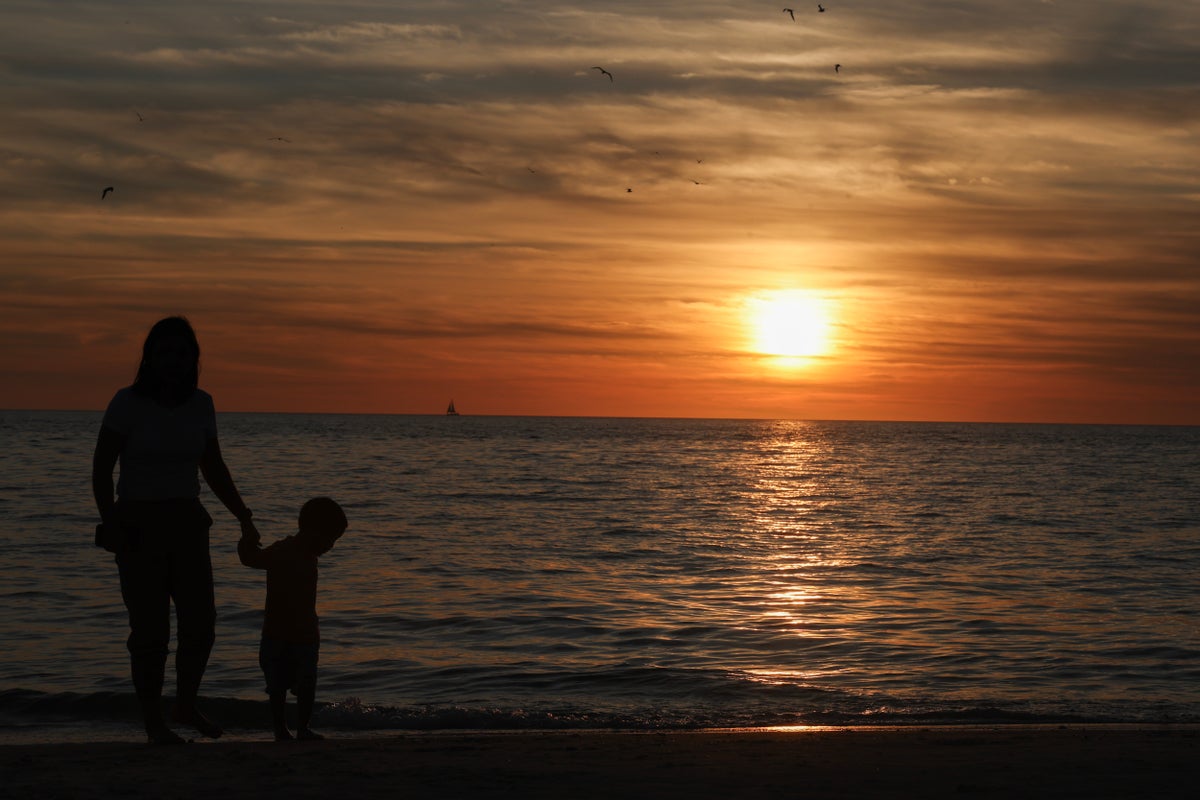
Summer is officially dying on the vine. If you walked outside yesterday evening and noticed the shadows creeping in a little earlier, you aren't imagining things. September hits us with a brutal seasonal whammy.
US daylight is vanishing at a dizzying pace right now, and it catches people off guard every single year.
We talk endlessly about the time change in November, but that is just administrative clock-shifting. The real astronomical sucker punch happens weeks before you ever touch your bedside alarm clock. September steals sunlight faster than any other month on the calendar.
The Brutal Math of September Sun Loss
AccuWeather data shows that the rate of daylight loss isn't a slow, gentle slope. It is a steep cliff. Where you live dictates how hard the blow hits.
If you are sunbathing down on the coast of Florida or hanging out by the beaches in Texas, you might think you are escaping the worst of it. You aren't safe. Even southern states are watching about 40 minutes of daylight evaporate over the course of the month.
Move up the map, and the numbers get depressing fast.
- San Diego and Charleston are shedding 50 minutes.
- Los Angeles and Raleigh are losing a full hour.
- New York City and Eureka are waving goodbye to roughly 70 minutes.
- Seattle, the Great Lakes, and Bangor are staring down a loss of 90 to 100 minutes.
That is an hour and a half of sunshine yanked right out of your evening routine before you even unpack your heavy sweaters.
Blame the Planet's Ancient Collision
Why does this happen so aggressively right now? You can thank a planetary collision from 4.5 billion years ago.
NASA scientists explain that a rocky body the size of Mars, named Theia, slammed into the early Earth. That catastrophic impact knocked our world off its vertical axis. We now sit at a fixed tilt of about 23.5 degrees.
As we orbit the sun, that tilt stays pointed in the exact same direction in space. In June, the northern hemisphere leans directly toward the star at the center of our solar system. That gives us the summer solstice, long days, and lazy evening barbecues.
Once we slide past June 21, the tilt starts working against us. The Earth slowly leans away from the sun. The sun's arc across the sky flattens out and drops lower. Sunrises crawl later into the morning, while sunsets slam shut hours ahead of schedule.
September is the steep slope of that planetary rollercoaster. The geometry of our orbit means the rate of change hits its maximum velocity right during this equinox month.
How to Handle the Sun Shock
The sudden loss of light wrecks human biology. Circadian rhythms do not care about your work schedule. When your eyes stop seeing bright evening light, your brain starts pumping out melatonin way too early.
You feel tired at 7 PM. You want to crawl into bed instead of going to the gym. Moods dip because the sudden darkness triggers seasonal fatigue long before winter even sets in.
Fight back with actual strategy. Stop hiding indoors just because the sun goes down earlier.
Get outside for a lunch walk while the rays are still pounding overhead. Swap your indoor lightbulbs for brighter, daylight-spectrum LEDs to trick your brain into staying alert through the evening slump. Plan your hardest tasks for the morning when your biology naturally handles the transition better.
Summer is packing its bags. Stop mourning the long nights of June and adjust your routine before the darkness catches you completely unprepared.