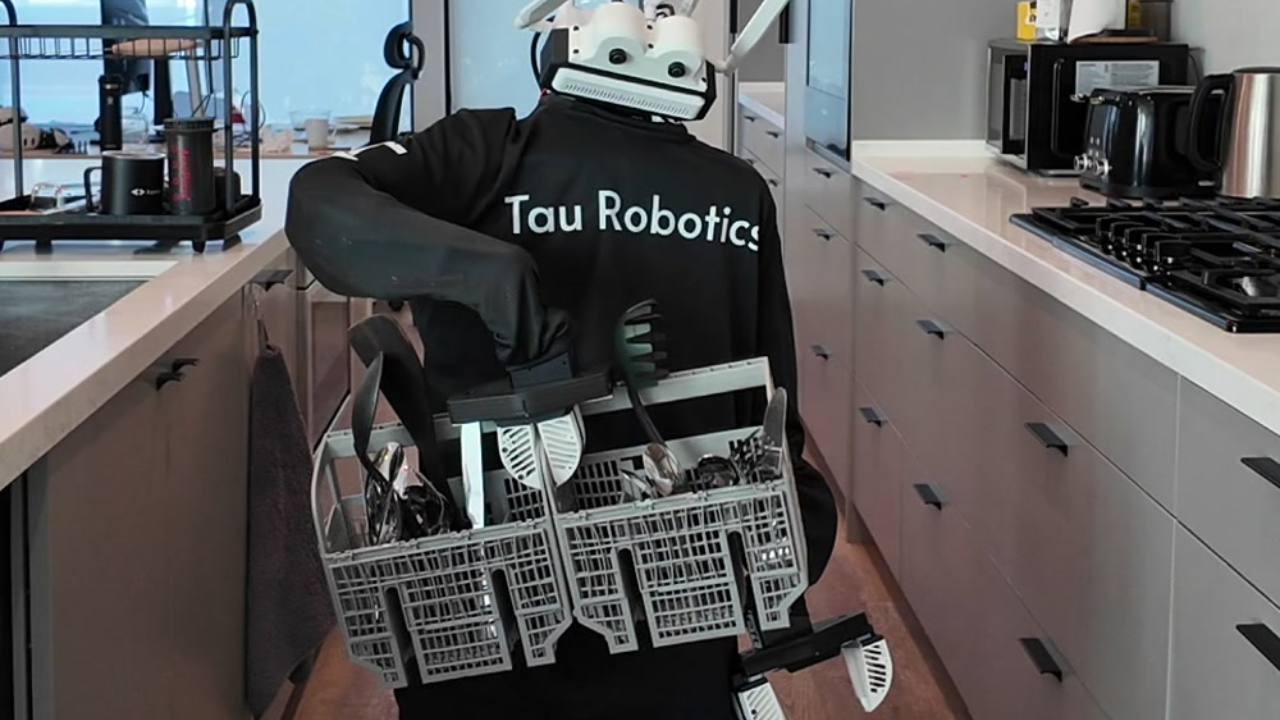
Everybody wants a robot butler. Silicon Valley keeps promising that a metallic servant will soon scrub your floors while you sleep, but the reality on the ground looks a lot less like science fiction and a lot more like a Zoom call with extra steps.
Take Tau Robotics, a startup operating out of San Francisco that recently started marketing humanoid cleaning robots for thirty dollars an hour. Sounds like the future has finally arrived, right? Not quite. Look under the hood and you will find that these machines aren't actually running themselves. Instead, a human operator controls the robot remotely from a central office while artificial intelligence handles the background safety checks.
If you thought you were paying thirty dollars an hour for a fully autonomous machine to clean your kitchen, you've fallen for the marketing hype. Let's look at what is actually happening behind the scenes, why roboticists are rolling their eyes, and why physical automation is proving much harder than tech founders want to admit.
The Man Behind the Metal Curtain
When Tau Robotics CEO Alex Koch announced the pilot service, he made it clear that current artificial intelligence isn't sophisticated enough to let a humanoid robot loose in a stranger's house unsupervised. The machines rely heavily on teleoperation.
A human worker sits somewhere else, viewing a camera feed, handling the complex movements while the software stitches together basic stabilization and obstacle detection. You aren't buying pure automation. You are essentially hiring a remote cleaner who happens to be wearing a heavy, expensive metal avatar miles away.
This setup exposes a massive gap in modern robotics. Building a bipedal robot that looks impressive in a promotional video is easy. Getting that same machine to reliably navigate a cluttered apartment, figure out where a rogue sock went, and scrub a sticky spill without tipping over is an engineering nightmare.
What These Robots Can (And Cannot) Do
If you manage to clear the waitlist in San Francisco, what do you actually get for your thirty bucks?
Right now, the capabilities are pretty narrow. According to company disclosures and operational guides, the humanoid cleaning robots are mostly sticking to basic, low-stakes chores:
- Vacuuming hardwood floors and basic rugs, including edge cleaning along baseboards.
- Wiping down flat kitchen counters and tabletops.
- Clearing simple debris or trash off the floor.
- Taking out household garbage bags.
Notice what is missing? Deep cleaning, moving heavy furniture, handling delicate items without crushing them, or navigating a house filled with children's toys and stray cords. Ken Goldberg, a robotics engineering professor at UC Berkeley with decades of experience in the field, has publicly expressed major skepticism. He notes that picking random objects off a messy floor remains a profound challenge for modern robotics. Sweeping under low-clearance furniture is even worse.
Promotional clips look smooth, but you never quite know if the footage has been sped up, if a human operator was working overtime to mask a glitch, or if the entire room was staged down to the millimeter to ensure a single clean run.
Why Companies Keep Pushing the Humanoid Trend
Why bother building a humanoid form factor at all if a human has to pilot it? Simple physics and marketing psychology.
Most homes are built for human bodies. Door handles, staircases, counters, and vacuum cleaners are designed around our dimensions. If you want a machine to navigate a typical human living space without remodeling the entire house, giving it two arms, two legs, and a torso makes some operational sense.
At the same time, venture capitalists love the word "humanoid." A boxy vacuum cleaner on wheels doesn't pull in millions of dollars in funding the way a sleek, walking robot does. The aesthetic sells the dream of general-purpose automation, even if the software backend is decades away from delivering it.
The company frames its service not as a replacement for human housekeepers, but as an expansion of the market—reaching people who wouldn't normally hire traditional cleaners. But when you break down the economics, paying thirty dollars an hour for a remotely piloted machine operated by a human worker raises obvious questions about labor efficiency and overhead costs.
The Reality Check You Need
If you are waiting for autonomous robots to take over your household chores, don't hold your breath. We are a very long way from plugging in a mechanical maid that tidies up while you go on vacation.
Right now, teleoperation is a stepping stone. Companies are using remote-human control loops to gather training data, hoping that millions of hours of human-piloted footage will eventually teach AI how to navigate the physical world on its own. Until that breakthrough happens, your thirty dollars is mostly paying for human labor routed through an expensive piece of hardware.
Skip the hype. Real automation still has a long way to go.