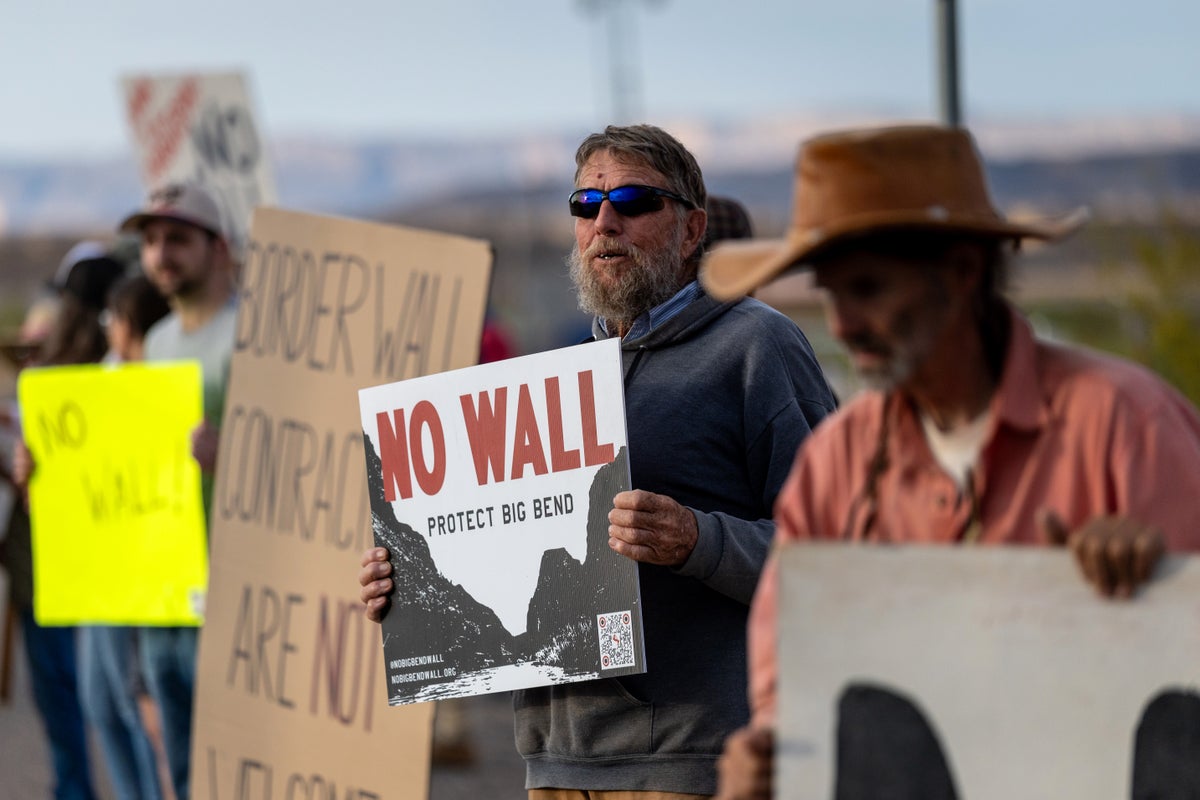
Federal contractors recently rolled bulldozers into Big Bend National Park to clear native vegetation and build access roads for new border barriers, setting off a sharp clash between federal enforcement strategies and local preservationists. U.S. Customs and Border Protection defends the move as a necessary tactic to ward off cartel activity and secure a rugged section of the southern border. On the ground, however, local officials, park advocates, and residents are pointing out a glaring contradiction. Why spend billions of dollars on heavy infrastructure in a desert wilderness that already acts as its own natural fortress?
Let's look at the actual numbers. The Big Bend sector covers a massive stretch of the U.S.-Mexico border, yet it consistently records some of the lowest unauthorized crossing rates anywhere in the country. In 2025, apprehensions in the entire region accounted for about 1.3 percent of the national total, while crossings directly inside the national park itself hovered near a minuscule 0.045 percent. The terrain here isn't an open invitation to traffic. It features 1,000-foot riverbank cliffs, unforgiving deserts, and steep mountain canyons along the Rio Grande. Nature already built the wall.
Bypassing Bedrock Laws to Speed Up Construction
To push these projects forward, Department of Homeland Security Secretary Markwayne Mullin signed off on sweeping waivers that bypass environmental and cultural protection statutes. Contractors are legally allowed to ignore regulations like the National Historic Preservation Act, the Endangered Species Act, and the National Park Service General Authorities Act.
Archaeologists and historians warn that this fast-track approach threatens thousands of years of rich Native American history buried around La Junta de los Rios. When you exempt major construction projects from foundational federal oversight, you open the door to permanent environmental degradation without public recourse. Local communities in gateway towns like Terlingua rely heavily on the natural beauty and ecotourism of the park. When you industrialize a national treasure, you risk choking out the local economy that depends on it.
The Real Opposition on the Ground
It isn't just national environmental groups pushing back against the bulldozers. Opposition spans across local political lines. All five sheriffs in the Big Bend border region have spoken out against the wall construction, and county judges across Texas border districts argue that the billions being pumped into remote desert barriers would be much better spent elsewhere. Even federal lawmakers like Texas Senator John Cornyn have urged DHS leadership to meet with local stakeholders before tearing up pristine federal land.
The administration's broader funding initiative, fueled by billions in federal allocations, has targeted multiple sections of the Texas border. But turning a pristine crown-jewel national park into an active industrial construction zone raises serious questions about resource allocation. When local law enforcement and regional experts agree that unauthorized vehicle crossings in this specific sector are practically non-existent, pouring resources into concrete and steel feels less like a calculated security strategy and more like an expensive exercise in box-checking.
If you want to understand how federal border policy often disconnects from geographic reality, Big Bend is the textbook case. Massive multi-billion-dollar contracts get awarded in Washington, but the long-term ecological and economic scars are left for Texans to manage.
Take a close look at how infrastructure projects bypass local public input in your own region, and support conservation groups actively fighting to protect public lands before permanent damage is done.