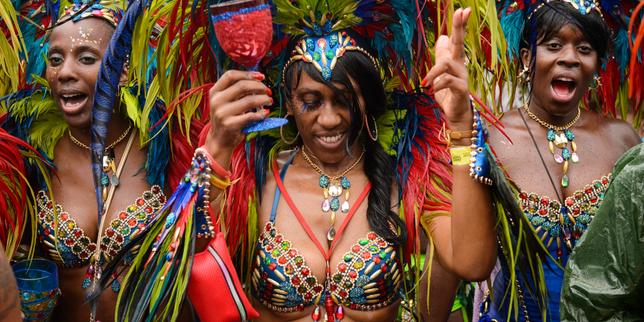
Millions fill the streets of London every August for the Notting Hill Carnival. You hear the deep thrum of heavy bass, taste jerk chicken, and watch dancers in feathered costumes move down Ladbroke Grove. Most partygoers view it simply as Europe's biggest street party. They miss the heavy history underneath the music. The event wasn't born out of corporate sponsorship or local council planning. It emerged from racial violence, bitter housing struggles, and the fierce resilience of the Windrush generation.
The Dark Reality of 1950s London
To understand why the carnival exists, you have to look at the ugly social climate of post-war Britain. Following the arrival of the Empire Windrush in 1948, hundreds of people moved from the Caribbean to fill massive labor shortages. Many settled in Notting Hill and North Kensington.
Housing conditions were abysmal. Landlords exploited new arrivals, and extreme poverty defined the neighborhood. Far-right agitators capitalized on the tension. They launched campaigns with slogans like "Keep Britain White."
In August 1958, racial tensions boiled over. White gangs, including groups known as Teddy Boys, launched violent attacks on Caribbean residents. Petrol bombs were thrown, and homes were vandalized. The situation turned fatal in May 1959 when Kelso Cochrane, an Antiguan carpenter, was murdered in a racially motivated attack on Southam Street.
Claudia Jones and the Indoor Seed
The community needed a way to heal, resist, and show solidarity. Enter Claudia Jones. A brilliant Trinidadian journalist, activist, and founder of the West Indian Gazette, Jones organized the first indoor Caribbean carnival on January 30, 1959, at St Pancras Town Hall.
Because of the harsh British winter, it had to happen indoors. It featured steel bands, dance troupes, and a beauty contest. Broadcast by the BBC, it served as a defiant cultural celebration in the face of hostility. Jones basically planted the seed. She proved that Caribbean culture had a permanent, powerful home in London.
Rhaune Laslett and the Streets of 1966
While Jones handled the indoor cultural front, the street festival took shape a few years later through a different local figure. Rhaune Laslett, a social worker and community activist of Native American and Russian descent, wanted to bridge the deep cultural gaps in West London. She envisioned a multi-cultural festival for local children and families.
Laslett invited Trinidadian musician Russell Henderson and his steel band to perform. When Henderson and his bandmates walked down Portobello Road playing their instruments, something magical happened. Local Caribbean residents heard the familiar notes, stepped out of their houses, and spontaneously joined the procession.
That casual street fair in 1966 morphed into the first true outdoor iteration of the festival. It wasn't purely a Caribbean event at first; it was an eclectic community gathering meant to unite Irish, African, and West Indian neighbors who barely spoke to one another.
The Evolution Into a Giant
By the 1970s, the festival evolved rapidly. Organizers like Leslie Palmer injected pan-Caribbean energy into the lineup, bringing in more masquerade bands, elaborate costumes, and static sound systems that blasted Jamaican reggae, dub, and ska.
The growth wasn't smooth. Clashes with the police in 1976 highlighted deep systemic issues regarding heavy-handed policing and unfair stop-and-search tactics. Yet, the community stood firm. They protected their festival, transforming it into a massive symbol of Black British identity and multiculturalism.
If you plan to attend next August, look past the food stalls and sound systems for a moment. Listen to the steel pans. They echo a history of survival, community organizing, and fierce resistance against hate.
Support local Caribbean-led arts initiatives, buy your food from independent vendors at the event, and respect the roots of the neighborhood that made it all happen.