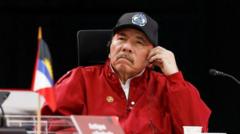
Daniel Ortega stopped pretending a long time ago, but now he is dropping the illusion entirely.
In July 2026, Nicaragua's National Assembly started formal moves to legally outlaw opposition parties and candidates from participating in future elections. Ortega, along with his wife and co-president Rosario Murillo, declared openly that dissenting groups will never hold power again. National Assembly President Gustavo Porras confirmed that discussions between the legislature and the Supreme Electoral Council are designed to close every single legal loophole so "coup-mongers" and foreign influence can't touch the ballot box.
This isn't just another routine political maneuver in Central America. It marks the formal transition of Nicaragua from an authoritarian state that staged staged elections to a total single-party regime. If you've been watching Latin American politics over the last decade, you saw this train coming down the tracks. What makes this moment critical is how openly the regime is codifying its absolute control without worrying about international backlash.
The systematic death of competitive voting in Managua
To understand why this legislative push matters, you have to look at how Ortega managed to stay in office for nearly two decades. He didn't lock down power overnight. He did it step by step, using legal maneuvers, judicial packing, and outright state violence.
Back in 2018, massive anti-government protests rocked Managua and other major cities. The regime responded with lethal force. More than 300 people died, thousands were injured, and a massive exodus of Nicaraguans began. When the 2021 presidential election rolled around, Ortega didn't take any chances. He simply jailed seven potential presidential candidates before the voting even started. Prominent figures like Cristiana Chamorro, Juan Sebastián Chamorro, and Félix Maradiaga were locked up on fabricated treason charges.
Ortega claimed a landslide victory in 2021, but almost no international body recognized the vote as legitimate. The European Union, the Organization of American States, and the United States called it a sham. Yet, Ortega didn't care. He spent the next few years stripping hundreds of political prisoners of their citizenship, seizing their assets, and expelling them from the country.
Now, the regime is taking the logical next step. Instead of going through the trouble of arresting candidates months before an election, they are changing the law so no opposition candidate can register in the first place.
How the new legislative push seals the door shut
The machinery in the National Assembly is moving fast. Gustavo Porras made it clear on government-aligned news outlets that the new measures will leave no room for dissenting voices. The goal is to build an unscalable legal wall against opposition parties.
Here is what the proposed legislation actually does:
- It gives the Supreme Electoral Council explicit power to disqualify any party or candidate accused of lacking loyalty to the Sandinista revolution.
- It formalizes long-term bans against anyone who has ever supported civil protests or accepted foreign non-profit assistance.
- It classifies any organized political critique as an act of foreign-backed aggression or treason.
- It aligns the electoral framework with recent constitutional changes that extended presidential terms from five to six years.
Because Ortega's Sandinista National Liberation Front controls the legislature, the Supreme Court, and the electoral council, this bill will pass without any real debate inside the country. Elections originally scheduled for November were already pushed to 2027 under the constitutional term extension passed a year and a half ago. By the time 2027 comes, there won't be a single independent party left on the ballot.
Why Ortega feels completely invincible right now
Why make this move now? The short answer is that Ortega and Murillo feel zero domestic or regional pressure that could actually force them to stop.
Domestically, civic space in Nicaragua has been completely erased. Over 5,000 non-governmental organizations, religious groups, and charity organizations have been forcibly shuttered since 2018. Catholic priests and bishops have been arrested, stripped of citizenship, or forced into exile. Independent newsrooms no longer operate inside the country; journalists report exclusively from abroad under heavy security risks. The regime even purged the legal profession, revoking the law licenses of hundreds of attorneys who dared represent political dissidents.
Internationally, sanctions from Washington and Brussels haven't weakened the regime's grip. Ortega learned from other long-standing autocracies that economic isolation can be survived if you secure alternative geopolitical backers.
In recent years, Nicaragua built tight security and economic ties with Russia and China. Beijing has stepped in with infrastructure loans, while Moscow provides security cooperation and diplomatic backing at the United Nations. With these alliances secured, Western trade pressure simply doesn't carry the bite it used to.
What this means for stability across Central America
When a nation transitions into a permanent one-party dictatorship, the consequences don't stay contained within its borders. The regional fallout from Ortega's latest push will be felt across Central America for years.
First, expect the exodus of citizens to accelerate. When people realize that peaceful political change through the ballot box is mathematically impossible, they leave. Hundreds of thousands of Nicaraguans have already fled to Costa Rica, the United States, and Spain. Costa Rica’s asylum system has been strained for years trying to absorb the influx. An outright ban on opposition parties will push thousands more families to make the tough decision to pack up and leave.
Second, Ortega’s success provides a blueprint for other regional strongmen. When a regime proves that you can jail opponents, strip critics of citizenship, ban opposition parties, and still maintain complete control without collapsing, neighboring authoritarian-leaning leaders take notes.
Third, security coordination in Central America becomes far more complicated. With Nicaragua deeply aligned with foreign powers opposed to Western interests, cross-border intelligence sharing on organized crime, human trafficking, and regional security is broken beyond quick repair.
Realities the international community must face
For years, foreign diplomats held out hope that electoral pressure or economic incentives could coax Managua back toward a democratic process. That strategy is dead. You cannot negotiate electoral fairness with a regime that openly declares elections off-limits to political rivals.
If international policymakers want to respond effectively, they need to abandon outdated frameworks and look at concrete steps:
- Target individual enforcers within the National Assembly and the Supreme Electoral Council who draft and enforce these ban laws, rather than relying solely on broad economic statements.
- Direct financial and logistical support toward independent media and human rights monitors operating in exile, ensuring accurate information still flows into Nicaragua.
- Strengthen asylum capacity in neighboring countries like Costa Rica, which bear the immediate brunt of displacement caused by political crackdowns.
- Increase scrutiny on financial networks and corporate supply chains that continue to fund state-controlled enterprises in Managua.
Ortega and Murillo are making their intentions crystal clear. They are building a dynastic political model meant to outlast them both. Pretending that Nicaragua will naturally swing back toward competitive elections in 2027 is wishful thinking. The legislative shutdown happening in Managua right now proves that the regime has chosen total control over legitimate governance, and the rest of the world needs to adjust its approach accordingly.