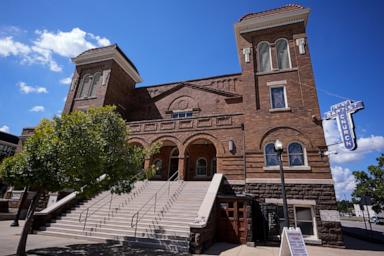
History isn't neatly locked away in dusty textbooks. It breathes, it burns, and sometimes, it demands a physical space where people can finally confront the uncomfortable truths of America's past. Sixty-three years after dynamite tore through the steps of the 16th Street Baptist Church in Birmingham, Alabama, church leaders and community members gathered to mark that solemn anniversary by opening a brand-new Education and Visitor Center.
It's a necessary expansion. If you've ever visited the historic site, you know the heavy weight that hangs in the air. On September 15, 1963, a Sunday morning just weeks after the historic March on Washington, Ku Klux Klan members planted dynamite beneath the church steps. At 10:22 a.m., the blast ripped through a downstairs washroom.
Four young girls lost their lives that morning: 11-year-old Denise McNair, along with Cynthia Wesley, Carole Robertson, and Addie Mae Collins, all 14. Nearly 20 others suffered injuries. A fifth girl, Sarah Collins Rudolph, survived the blast despite sustaining severe wounds.
The bombing galvanized the civil rights movement, injecting fierce urgency into the fights that eventually secured the Civil Rights Act and the Voting Rights Act. Yet, decades later, preserving that memory requires more than a casual glance at a plaque.
What the New Education and Visitor Center Offers
The newly opened center is designed to be much more than a quiet museum. Run independently by the church—even though the building sits within the bounds of Birmingham's National Park Service civil rights monument—the space features dedicated areas for rotating exhibits, oral history archives, artist residencies, public speaker series, and community quilting projects.
Rev. Arthur Price Jr., the pastor of 16th Street Baptist, put it bluntly during the opening: history isn't just something that happened yesterday. It is actively present. When you walk through the doors, the goal is to make you realize that systemic inequities and social challenges didn't vanish with the 1960s.
Equal Justice Initiative Founder Bryan Stevenson delivered the keynote address at the memorial service. He didn't mince words about the current political climate. Stevenson pointed out that the 63rd-anniversary milestone arrives during a tense narrative struggle where various politicians push to strip historical context out of public spaces and museums, all while attacking key pillars like the Voting Rights Act.
Stevenson reminded the crowd that the tragedy wasn't simply the isolated act of a few rogue Klansmen. A whole network of elected officials created the toxic, segregationist climate that enabled the bombing in the first place, eight months after then-Governor George Wallace famously pledged segregation forever. Three Klansmen—Robert Chambliss, Thomas Blanton, and Bobby Frank Cherry—were eventually convicted decades later in 1977, 2001, and 2002, respectively. But accountability took generations.
Facing the Politics of Division
Today's pushback against honest historical education makes spaces like the new visitor center vital. Federal policies and executive orders aimed at defunding museum programs deemed to promote "divisive narratives" have created an atmosphere of uncertainty.
Lisa McNair, whose sister Denise was killed in the blast, captured the sentiment shared by many families during the commemoration. She noted that if we choose to ignore our shared history, we are bound to repeat its darkest chapters. Her message to Christians and everyday citizens alike was straightforward: channel that anger into constructive resistance against injustice, rather than letting it cause further harm.
How to Engage with the History
If you plan to visit Birmingham or want to support the preservation of civil rights landmarks, you have to approach it with intent.
- Plan a purposeful visit: Walk through the 16th Street Baptist Church and take time to explore the new visitor center's oral history archives.
- Engage with local programming: Support community workshops, artist residencies, and public speaker events hosted by the church to understand how past civil rights battles connect to modern social justice work.
- Support truth in education: Push back locally against efforts to sanitize history curricula in schools and public institutions.
Don't treat civil rights history as a relic. Protect it, study it, and use it to hold today's power structures accountable.