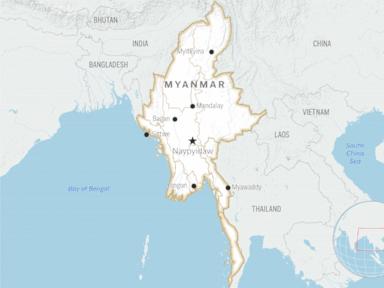
Planes appear in the clear blue sky, and seconds later, lives vanish. Myanmar's ruling military junta relies heavily on its air force because it is losing control on the ground. Independent investigators, human rights monitors, and United Nations bodies confirm a brutal shift in tactics. When ground troops stumble against armed resistance forces, the generals send in jets and helicopter gunships.
Civilians pay the highest price for this desperation. Schools, religious festivals, displacement camps, and medical clinics face direct aerial bombardment. Investigators document a steady climb in fatal strikes that target non-combatants with alarming frequency.
The Ground Reality Behind the Air War
Ever since the February 2021 military coup ousted the elected government led by Aung San Suu Kyi, the country has bled. Popular opposition crystallized into local People's Defense Forces (PDFs) and allied with seasoned ethnic armed organizations. Together, these groups carved out large swaths of territory, leaving junta soldiers isolated and demoralized.
Unable to win infantry battles or hold territory against determined resistance fighters, the military relies entirely on its technological advantage: air power. Fighter jets supplied by foreign partners drop heavy ordnance on civilian villages under the flimsy pretext of targeting terrorists.
The destruction is absolute. Communities in regions like Sagaing, Kachin State, and Rakhine experience sudden bombings that crush buildings into dust. Survivors describe weapons so powerful that bodies are instantly obliterated, leaving families to collect fragments of their loved ones instead of holding traditional funerals.
How Investigators Track the Atrocities
Documenting war crimes inside a locked-down dictatorship is dangerous work. Local journalists, human rights investigators, and international monitors piece together evidence from charred craters, unexploded ordinance fragments, and witness testimony.
Investigators analyze serial numbers on weapon parts, satellite imagery of flattened neighborhoods, and hospital records of wounded children. Their findings point to a systematic strategy. These aren't accidental stray bullets or errant misfires. They are deliberate, calculated attacks meant to terrorize populations suspected of supporting the pro-democracy movement.
Consider the strike on the Mung Lai Hkyet displacement camp in Kachin State, where dozens of displaced civilians died when a massive bomb tore through a refugee settlement. Or look at the brutal bombing of a school in Sagaing's Tabayin township, which killed children and teachers during morning classes. State-run media routinely denies these events, claiming opposition forces caused the explosions or labeling victims as combatants. Video evidence and independent on-the-ground reporting flatly contradict those official lies every single time.
Why the International Response Falls Short
The United Nations regularly issues strong condemnations. Global human rights organizations publish massive dossiers detailing potential war crimes. Yet, the airstrikes continue. Why?
The junta maintains access to foreign military aircraft, maintenance equipment, and aviation fuel despite international sanctions. Global supply chains leak. Neighboring and allied nations continue commercial and military ties with the generals, shielding them from total diplomatic isolation. Without a strict, universally enforced embargo on aviation fuel and spare parts, the air force keeps flying.
Diplomatic stagnation leaves millions of people completely unprotected. Communities live with a constant psychological trauma, scanning the horizon for the hum of a jet engine day and night.
What Needs to Happen Now
Stopping the slaughter requires targeted, aggressive action from the international community. Vague expressions of concern do nothing to protect children sitting in village schools.
First, governments must choke off the aviation fuel supply lines feeding the military's jets. Cutting off the fuel grounds the planes. Second, financial networks supporting the junta's arms purchases need absolute blockage. Third, cross-border humanitarian aid must reach displaced populations directly, bypassing corrupt central channels that weaponize relief supplies.
The people of Myanmar show incredible resilience, fighting for a democratic future against overwhelming odds. But they cannot stop fighter jets with bare hands. Exposing these air attacks is just the first step. Holding the commanders accountable in international courts is the only way to break the cycle of impunity.