For twenty-five years, the search for Peter Falconio has been paralyzed by a massive lie.
The lie isn't about who killed him. We know Bradley John Murdoch did it. The lie is about the map. For decades, the public and the police have treated the Australian outback as an infinite, unsearchable void. They call it a needle in a haystack. They say that because the red dirt stretches on for thousands of miles, finding the British backpacker is impossible without a deathbed confession.
But killers don't behave the way we think they do. They get tired. They panic. They make fast, lazy decisions.
Dr Mark Harrison, the former British government search advisor who built his career on "no-body" homicides, thinks the search has been looking completely at the wrong horizon. He believes the answer isn't deep in the desert. It's sitting right under our noses, just eight kilometers from the original attack site at Barrow Creek. Specifically, an old abandoned racetrack that was never properly treated as a crime scene.
If you want to understand why Peter Falconio has never been found, you have to throw out the myth of the vast outback and look at how human panic actually functions on a dark highway.
The Myth of the Infinite Outback
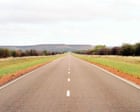
When Peter Falconio and his partner Joanne Lees were ambushed on the Stuart Highway in July 2001, the world focused on the sheer scale of the Northern Territory. It's easy to see why. The area where Murdoch attacked them is brutal, hot, and seemingly endless.
Police logic dictated that Murdoch, an experienced interstate drug runner who knew the highway like the back of his hand, must have driven deep into the bush to hide the evidence. They assumed he spent hours, maybe days, burying the body in some remote, inaccessible ridge.
This assumption broke the investigation.
When you assume a body can be anywhere in an area the size of the United Kingdom, you stop looking methodically. You start waiting for information. You wait for a tip-off. You wait for the killer to talk.
But Bradley Murdoch never talked. Even as throat cancer destroyed him in an Alice Springs hospital in 2025, he aggressively maintained his innocence. Newly released police bodycam footage shows him launching into a foul-mouthed tirade weeks before his death, shouting "I know nothing" at detectives trying to secure a final confession. He took his secrets to the grave, leaving the investigation exactly where it was two decades ago.
Harrison argues that relying on a confession was always a fundamentally flawed strategy. His behavioral profile showed Murdoch would never confess. More importantly, Harrison points out that even if Murdoch wanted to tell the truth, he probably couldn't have pointed to an exact spot on a map. The disposal wasn't a planned, calculated burial. It was a frantic, functional reaction to a crime that had spun completely out of control.
Why the Abandoned Barrow Creek Racetrack is the Prime Location
Look at the geography of the night of July 14, 2001. Murdoch didn't plan to murder Peter Falconio right there, right then. He was an opportunist. He intercepted the couple's campervan, staged a breakdown, shot Falconio, and tied up Lees.
Then his plan fell apart. Joanne Lees fought back. She hid in the dense saltbush for hours while Murdoch searched for her with a flashlight and his dog. She escaped his grasp, meaning the clock was ticking loudly in Murdoch's head. He had a dead body in the back of his vehicle, a living witness hiding nearby, and the permanent risk of another truck driving down the Stuart Highway at any moment.
He didn't have time to drive for three hours into the wilderness. He needed cover, and he needed it immediately.
This is where the abandoned racecourse comes into focus. Located just eight kilometers from the attack site, it offered exactly what a panicked killer required:
- Immediate physical concealment: The old racetrack had structures, old buildings, and a canopy cover. It allowed a vehicle to pull off the main highway and disappear from view.
- Geographical uniqueness: Aside from this specific location, that stretch of the Stuart Highway is mostly just an open, exposed road flanked by low scrub. There are very few places where you can hide a large vehicle quickly.
- The proximity rule: In cold case forensics, there's a golden rule: clear the ground under your feet. The closest, most logical location must be thoroughly exhausted before you assume the killer drove into the horizon.
Harrison notes that the old racecourse was visited briefly by police during the initial search, but it was never processed with the rigorous, centimeter-by-centimeter detail required of a primary crime scene. It was crossed off the list too quickly because the search teams were blinded by the scale of the surrounding desert.
The Flawed Search History of the Northern Territory Police
It turns out the Northern Territory police have had this information for a long time. Harrison produced two massive search strategy reports for the Australian authorities back in 2007 and 2008. He used geoforensic profiling, soil analysis, and behavioral data to narrow down the entire outback to five high-probability sites.
They didn't thoroughly search them.
A recent review revealed that the recommendations in those reports were never fully implemented. The Northern Territory police department defended themselves by stating that resources are finite and they simply couldn't execute the full scope of the technical searches at the time.
Instead of using advanced ground-penetrating radar, soil sampling, and forensic recovery teams on these specific pockets of land, the investigation defaulted back to waiting. They spent fifteen years hoping Murdoch would experience a moment of clarity or remorse. It was a cheaper strategy, but it was one that guaranteed failure.
When you look at the soil profiling done by forensic experts on some of these sites, the earth remains largely undisturbed. The abandoned racecourse sits frozen in time, its dirt holding the same secrets it held in 2001.
Modern Forensic Tools Can Fix This
We aren't living in 2001 anymore. The technology available to search teams today makes the "infinite desert" argument completely irrelevant. You don't need thousands of volunteers walking in lines with sticks.
If a serious search is launched at the Barrow Creek racetrack, it requires a completely different tactical approach than what was used twenty-five years ago.
Airborne LiDAR and Drone Mapping
Before anyone digs up a single handful of dirt, high-density LiDAR (Light Detection and Ranging) mounted on drones can map the entire racetrack area. LiDAR penetrates vegetation, stripping away the canopy cover and old scrub on a digital map. It reveals subtle depressions or anomalies in the earth that indicate where trenches were dug or ground was disturbed decades ago. Even after twenty-five years of wind and rain, the earth remembers a burial.
Ground-Penetrating Radar (GPR)
Once LiDAR identifies specific anomalies around the old racecourse buildings and tracks, ground teams can deploy GPR. This technology sends radar pulses into the soil and measures the reflections to detect subsurface changes, such as bone density, disturbed soil layers, or foreign objects. It removes the guesswork entirely.
Forensic Soil and Vegetation Analysis
Human decomposition changes the chemistry of the soil permanently. Specialized botany and soil science experts can sample the dirt at the racetrack to look for specific nitrogen spikes or alterations in native plant root systems. These changes persist for decades in arid environments.
What Needs to Happen Next
The Northern Territory police claim that ongoing assessment and review of the data continues. That sounds like bureaucratic code for doing nothing.
The Falconio family has spent a quarter of a century without a body to bury, denied closure by a combination of Murdoch's stubborn malice and institutional inertia.
The path forward is simple but requires political will.
- Fund a targeted forensic operation: Stop funding massive, generalized sweeps of the highway. Allocate a tight, dedicated budget specifically for a high-tech forensic sweep of the Barrow Creek racecourse.
- Bring in international search assets: If local police lack the specific geoforensic expertise or equipment, they need to accept outside help. Experts like Harrison have already laid out the blueprints.
- Stop waiting for a miracle: Bradley Murdoch is dead. There is no secret diary. There is no hidden accomplice who is suddenly going to walk into a police station. The physical landscape is the only witness left.
We know exactly where the most logical crime scene sits. It's an abandoned piece of dirt eight kilometers down the road from where Peter Falconio lost his life. It's time to stop looking at the horizon and start looking under our feet.


