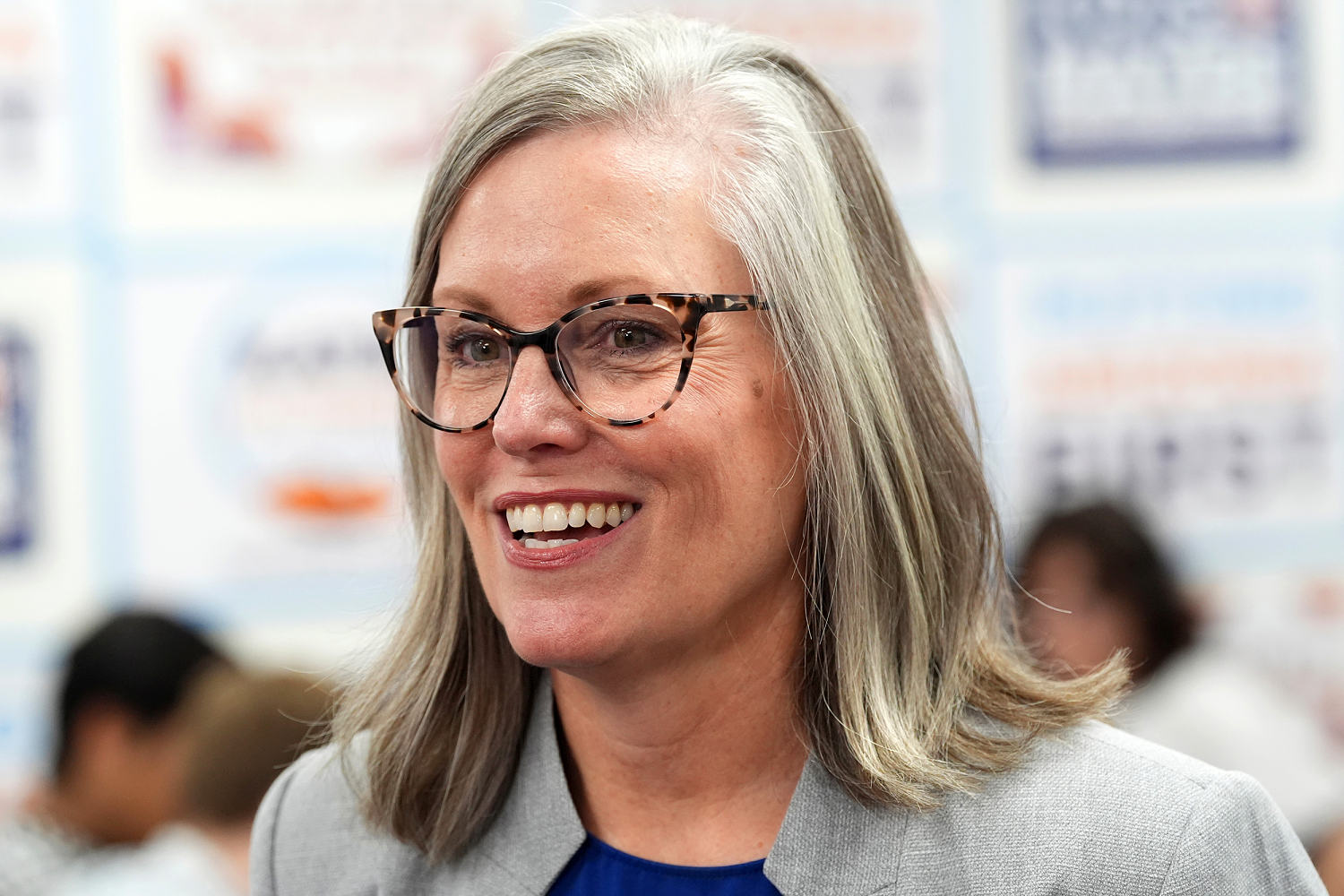
Arizona politics defies easy math. Democratic Governor Katie Hobbs just selected former Mesa Mayor John Giles, a Republican-turned-independent, as her running mate for the state's very first election featuring a joint ticket for governor and lieutenant governor.
It is a high-stakes gamble. Hobbs faces a tough reelection fight in a state where Republican voter registration leads continue to climb. By pairing up with Giles—who famously spoke at the Democratic National Convention and endorsed national Democrats—Hobbs wants to brand herself as the ultimate moderate. She wants conservative independents and disaffected Republicans.
Critics on the right aren't buying it. The campaign of her Republican challenger, U.S. Representative Andy Biggs, jumped on the announcement instantly. They argue that Giles isn't a moderate; he's just a Democrat in disguise.
The Arithmetic of Bipartisanship
Why take this risk? Arizona has changed. While Hobbs eked out a narrow victory over Kari Lake in 2022, the political winds remain volatile. Republicans hold registration advantages, and conservative voters are fired up.
Hobbs believes the center wins elections here. Her newly launched "Arizona Over Party" coalition attempts to prove she can bridge tribal political divides.
Enter John Giles. He served as the mayor of Mesa, Arizona's third-largest city, for a decade. He spent most of his life as a registered Republican before switching his affiliation to independent. He openly voted for Joe Biden in 2020, backed Mark Kelly, and campaigned for Kamala Harris in 2024.
Giles claims he didn't leave his party. He insists his party left him.
That message plays well in affluent Phoenix suburbs. It preaches to voters who lean fiscal conservative but reject the nationalized culture wars. But it infuriates the base.
What the Opposition Is Doing
Biggs isn't playing the moderate game. He tapped former state Senator Sine Kerr, a traditional conservative and working farmer from Buckeye, to anchor his side of the ticket. Biggs chose to lock down the rural vote and cement his base among hardcore party loyalists.
The Biggs campaign immediately weaponized the Giles pick. They argue Hobbs and Giles form an out-of-touch liberal alliance. They point to Giles' prime-time appearance at the DNC as proof that the incumbent governor is thumbing her nose at mainstream conservative values.
They also share a religious demographic challenge. Both Giles and Biggs are members of the Church of Jesus Christ of Latter-day Saints. LDS voters represent a crucial voting bloc in Arizona, making this matchup an intra-faith battleground as much as a partisan one.
The Real Danger for Democrats
Paring up with a high-profile defector sounds clever in a strategist's boardroom. On the ground, it alienates the progressive wing. Left-leaning activists wonder why a Democratic governor is elevating a man who spent decades championing conservative tax policies and traditional platforms.
Hobbs dismisses the friction. She argues that voters don't care about rigid party purity labels. They care about fixing water scarcity, managing growth, and funding public education.
Yet, history suggests cross-party tickets rarely deliver clean math. When you try to please everyone, you often end up energizing your opponent's base while dampening your own.
Keep a close eye on voter turnout in Maricopa County. That region decides everything in Arizona. If independent suburbanites respond to the unity pitch, Hobbs looks like a genius. If they stay home or swing back toward Biggs, this gamble will go down as the defining blunder of the cycle.