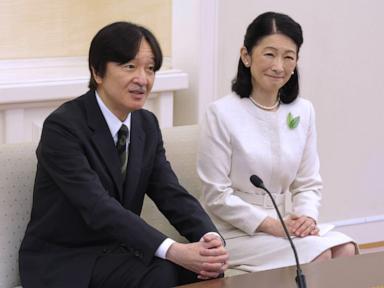
Royal families usually hide behind scripted silence, but Japan's Crown Prince Akishino just cracked the door open on a rigid tradition. Speaking openly ahead of an overseas trip, Akishino admitted he holds "mixed feelings" about the government's insistence on preserving a strictly male-only imperial succession law. That phrase might sound like diplomatic code, but in the context of Japan's tightly managed monarchy, it is a bombshell.
You see, the Chrysanthemum Throne is facing an existential bottleneck. Prime Minister Sanae Takaichi's conservative administration recently locked down revisions to the Imperial House Law, ensuring that only males in the paternal line can inherit the crown. Meanwhile, Emperor Naruhito’s fiercely popular daughter, Princess Aiko, remains barred from ruling simply because of her gender. Akishino's candid remarks drag a taboo conversation straight into the daylight.
The Reality of a Shrinking Monarchy
Let's look at the numbers. Japan's royal family is getting dangerously small. Under current rules, female royals lose their status the moment they marry a commoner. This drains active members from the institution at an alarming rate.
The government’s fix for this shortage isn't to let women inherit or pass down royal status. Instead, the revised law permits unmarried male descendants from long-distant imperial branches—relatives detached from modern royal life for generations—to be adopted back into the core family to father future heirs.
To many outside observers, this feels like an elaborate legal gymnastics routine designed to avoid an obvious solution: letting Princess Aiko take the throne. Akishino himself pointed out the absurdity of drawing hard gender lines when executing royal duties. He noted that in day-to-day public life, public service, and responding to modern social needs, men and women perform the exact same functions with no practical difference.
Walking the Tightrope of Imperial Diplomacy
Members of the Japanese imperial family are constitutionally barred from engaging in active politics. They cannot lobby parliament, endorse political parties, or outright demand legislative overhauls. Akishino knows this line better than anyone.
When reporters asked him about the succession revisions during his press conference, he didn't launch into a fiery political rant. Instead, he gave a masterclass in reading between the lines. He remarked that it would be rather strange if he didn't have mixed feelings, adding that while it is a complicated issue, society must keep progressing and different viewpoints need space to breathe.
That is about as close to an institutional critique as you will ever hear from a crown prince. He is caught in an impossible position. As next in line to the throne, followed by his 19-year-old son Prince Hisahito, Akishino sits directly inside the system benefiting from the male-only rule. Yet, watching the public frustration and the strain placed on younger generations of royals clearly weighs on him.
What Public Sentiment Tells Us
Public opinion polls in Japan have consistently shown strong backing for female emperors. Historically, Japan actually saw eight female monarchs across its long imperial history, though succession later shifted to strict agnatic primogeniture during the Meiji era under heavy Western and domestic patriarchal influences.
Modern citizens look at Princess Aiko's grace, intelligence, and deep connection with the public and wonder why antiquated legal barriers are blocking a capable leader. By forcing a male-only rule that relies on distant adoptions rather than direct descendants, lawmakers are out of step with everyday social expectations.
Akishino’s admission forces the administration to acknowledge that unanimity inside the palace walls does not exist. Even the people closest to the throne recognize that the institution must adapt to survive.
Watch how political pressure builds over the coming months. If senior royals are willing to signal their discomfort with rigid laws, the debate won't quiet down anytime soon. The Chrysanthemum Throne cannot insulate itself from the modern world forever.