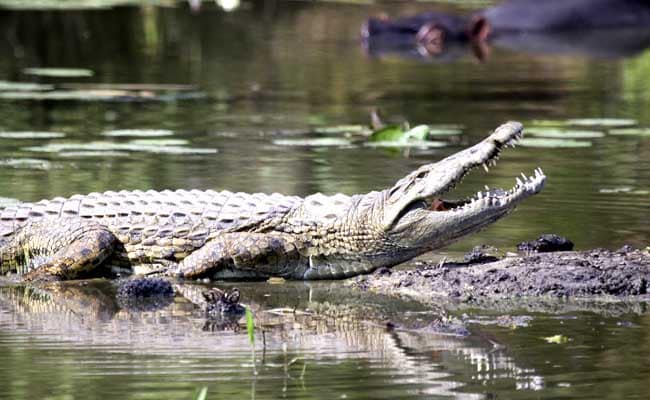
Think twice before trying to escape an Israeli high-security jail. That's the blunt message from Israel's far-right National Security Minister, Itamar Ben Gvir, who just pushed through a legal change allowing the state to encircle detention facilities with crocodile-filled moats.
It sounds like something straight out of a campy James Bond movie, but it's completely real. Environmental Protection Minister Idit Silman officially signed a decree reclassifying Nile crocodiles from "protected wild animals" to "specially managed wild animals". This subtle shift in legal jargon strips away the protections that kept these massive reptiles restricted to zoos and research facilities, effectively greenlighting their deployment by security agencies.
The target for this bizarre security upgrade is Ketziot Prison, a sprawling facility located in the Negev Desert that holds thousands of Palestinian security prisoners, including Hamas members captured after October 7, 2023.
The Logistics of a Reptilian Perimeter
Let's look at how this is supposed to work. Ben Gvir got the idea from Florida's history, pointing to a detention facility in the Everglades nicknamed "Alligator Alcatraz". The Israel Prison Service has already taken the plan seriously enough to send officials to the Hamat Gader crocodile farm in northern Israel to study the care, feeding, and handling of the apex predators.
Proponents of the plan claim it's a cost-effective way to beef up security. According to local reports, buying a young Nile crocodile runs around $8,000, while a fully grown adult costs up to $20,000. The theory is that once you dig the moat and buy the reptiles, the cost of maintaining a traditional guard perimeter drops significantly.
But managing a pack of 1,000-pound carnivores isn't like handling a unit of guard dogs. Nile crocodiles are highly territorial, aggressive, and require specific environmental conditions to survive. The prison service argued that its experience running canine units qualifies its staff to handle crocodiles—a claim that legal and environmental experts quickly shot down.
Why Experts Say the Plan is Total Stupidity
When Ben Gvir first floated the idea during a security meeting, prison service officers reportedly laughed out loud. Since then, the pushback has turned serious, coming from environmentalists, legal advisers, and human rights groups alike.
First, there's the glaring biological flaw. Crocodiles are ectothermic cold-blooded animals. Environmental groups point out that during the winter months, their metabolism slows to a crawl. They become incredibly sluggish and stop eating altogether. A security barrier that goes to sleep for three months out of the year doesn't exactly scream high security.
Second, the Environmental Protection Ministry's own legal adviser, Neta Drori, vehemently opposed the decree, warning that it lacked any professional or legal basis. The Israel Nature and Parks Authority also fought the move, arguing that security should rely on actual technology and human intelligence, not on exploiting captive wildlife. Silman signed the order anyway, completely bypassing her own ministry's internal legal guidance.
Finally, critics point out the political theater of it all. Eylon Levy, a former Israeli government spokesman, pointed out that Israel doesn't actually have a massive crisis of prisoners escaping. Instead, the country faces a severe shortage of physical prison cells. Levy publicly criticized the plan, noting that it's much cheaper to lean into Bond-villain populism than to actually fund and build functional infrastructure.
What Happens Next
The decree has been signed, but you won't see crocodiles in the Negev Desert tomorrow.
Before any dirt is dug or any reptiles are moved, the Israel Prison Service must clear several hurdle layers, including logistical feasibility assessments, safety approvals, and inevitable legal challenges from wildlife preservation groups. The Israel Nature and Parks Authority is already planning meetings to challenge the minister's circumvention of legal counsel.
If you want to track how this bizarre intersection of geopolitics and wildlife management unfolds, keep an eye on the upcoming Israeli High Court filings, where environmental NGOs are expected to challenge the legality of the reclassification decree.