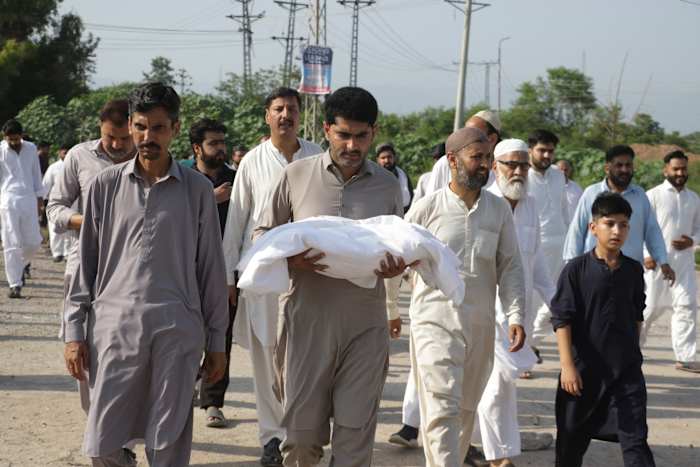
Fourteen newborns didn't stand a chance when flames tore through the third-floor nursery at the Pakistan Institute of Medical Sciences. Early morning on a Wednesday in Islamabad, an air-conditioning compressor reportedly blew out, sparking a fast-moving fire inside the maternity ward. Out of fifteen fragile infants receiving intensive care, only one baby was dragged to safety by a doctor. The rest perished.
Now, investigators are crawling over the charred remains of the ward. Prime Minister Shehbaz Sharif has demanded accountability, and a multiagency committee has been handed a strict 24-hour deadline to produce answers. But for grieving families standing outside the gates, inquiries feel hollow. We've seen this script before. An avoidable disaster strikes a public institution, officials express profound shock, heads roll temporarily, and the underlying systemic rot remains untouched.
The Anatomy of an Avoidable Disaster
Public healthcare infrastructure in South Asia's major government facilities faces immense strain. Hospitals like PIMS handle thousands of patients daily on thin budgets. When you crowd a neonatal intensive care unit with vulnerable infants, every single variable matters.
Initial reports pointed fingers at a short circuit or a blown AC compressor. But electrical faults don't turn into mass casualty events overnight unless compounding failures let them. Medical experts note that oxygen-rich environments in neonatal wards act like accelerants. If fire suppression systems are outdated, alarms fail, or evacuation protocols don't account for infants trapped in incubators, disaster becomes a matter of when, not if.
You cannot simply hustle a dozen newborns out of a burning room the way you evacuate an office building. They need continuous respiratory support, specialized handling, and immediate power backups. When smoke fills a corridor and the power cuts out, seconds stretch into eternity.
Accountability Versus Institutional Rot
Politicians are scrambling to look proactive. Prime Minister Sharif called the loss an irreparable tragedy and the health ministry saw immediate high-level changes, including the removal of top civil servants. Police lines have been drawn around the hospital to keep angry crowds back while distraught parents wait for paperwork to claim the small bodies of children they held just hours prior.
Punishing a few bureaucrats or sacking a secretary doesn't fix the country's systemic safety deficit. Pakistan has a grim history of fatal structural fires. Earlier in the year, dozens died when a crowded shopping complex in Karachi went up in flames. Safety codes exist on paper, but enforcement is virtually nonexistent. Corruption, ignored maintenance schedules, and substandard electrical wiring routinely turn public buildings into death traps.
What Real Reform Looks Like
If investigators want to stop future tragedies, they need to look beyond the burnt wires of a single AC unit.
- Mandatory safety audits must happen across every public hospital ward nationwide, with zero tolerance for compromised wiring.
- Neonatal units require isolated, independent fire barriers and emergency ventilation systems that prevent smoke from blinding staff during the critical first two minutes.
- Hospital staff need mandatory, rigorous evacuation drills specifically designed for non-ambulatory patients.
Right now, grieving parents in Islamabad aren't interested in political posturing or multiagency committees. They want justice for children who barely had time to experience the world. Until structural corruption and institutional neglect are treated as the lethal threats they truly are, hospital nurseries will remain dangerously vulnerable.
Pakistan investigates fire that killed 14 newborns in intensive care
This video report covers the aftermath of the hospital fire in Islamabad and details the growing public outrage and demands for accountability from grieving families.