Imagine surviving illegal wildlife traffickers, cruel captivity, and brutal habitat destruction, only to face an advancing wall of fire just meters from your sanctuary. That is the terrifying reality facing more than 60 rescued orangutans in Indonesian Borneo right now.
Intense forest fires are tearing through Indonesia, and they are not stopping at the edge of the wilderness. They are pushing right up to the front lines of conservation.
The Epicentre of the Crisis in West Kalimantan
West Kalimantan is burning. Months of dry weather combined with a powerful El Niño cycle have turned the region into a tinderbox. Official data shows that the first half of the year saw staggering amounts of land scorched across the country. By August, the number of hotspots spiked to more than three times the levels seen during the same period last year.
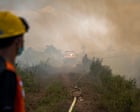
At the heart of this emergency is the YIARI orangutan rehabilitation center in Ketapang district. Staff watched in horror as a blaze tore through the landscape, moving from a kilometer away to right up against the facility's perimeter.
When the smoke rolled in, routine care stopped instantly. Emergency protocols kicked in hard. Workers rushed to move vulnerable animals from outer forest enclosures into safer concrete and iron compounds near the center.
Dr. Karmele Llano Sánchez, the center's director, spent grueling shifts battling the flames. Teams fought the fire late into the night, only to watch it reignite with the morning heat. Exhausted staff, local police, military personnel, and government agencies formed a makeshift line of defense to keep the disaster at bay.
Why These Fires Are Different
Most people assume these disasters are acts of purely natural misfortune. They are not.
While the dry spell and El Niño create the spark and the spread, human actions drive the scale. Land clearing for plantations sets the stage. When commercial agriculture burns brush or edges too close to primary ecosystems, the fires easily break containment.
The consequences ripple across the entire region. Wild orangutans like a male named Wak, fleeing the smoke and heat, are forced out of shrinking canopies and straight into human agricultural areas. That triggers immediate human-wildlife conflict. Farmers panic. Animals get cornered. Rescuers are forced to step into dangerous situations to pull displaced wildlife out of plantations before locals harm them.
It creates a vicious cycle. Deforestation triggers fires, fires displace wildlife, and displaced wildlife ends up in rehabilitation centers that are themselves threatened by more fires.
The Heavy Toll on Conservation Work
Rehabilitating an orangutan isn't a quick fix. It takes years of behavioral training, medical care, and psychological healing to get a victim of the illegal pet trade ready for a return to the wild.
When fires threaten these facilities, years of painstaking work hang in the balance. Staff members aren't just protecting enclosures; they are defending the fragile future of a critically endangered species.
The air quality alone creates a massive health hazard. Thick, toxic haze blankets the rehabilitation compounds, stressing animals that already carry the physical scars of abuse and neglect.
What Needs to Happen Next
Stopping this emergency requires more than temporary buckets of water and round-the-clock shifts from exhausted rescue workers.
- Strict Zero-Burn Enforcement: Authorities must aggressively penalize illegal land-clearing practices during dry seasons. Letting small agricultural fires rage unchecked is an environmental crime.
- Direct Funding for Frontline Gear: Facilities like YIARI survive on thin margins. They need immediate financial backing for heavy-duty firefighting hardware, localized water pumps, and early-warning detection systems.
- Buffer Zone Protection: Governments must establish legally protected, fire-resistant buffer zones around all wildlife sanctuaries and rehabilitation centers.
The dry season peak typically hits in September and October. The danger facing Indonesia's rescued orangutans is far from over. If support doesn't scale up to match the climate reality on the ground, the very sanctuaries built to save them could become their final trap.