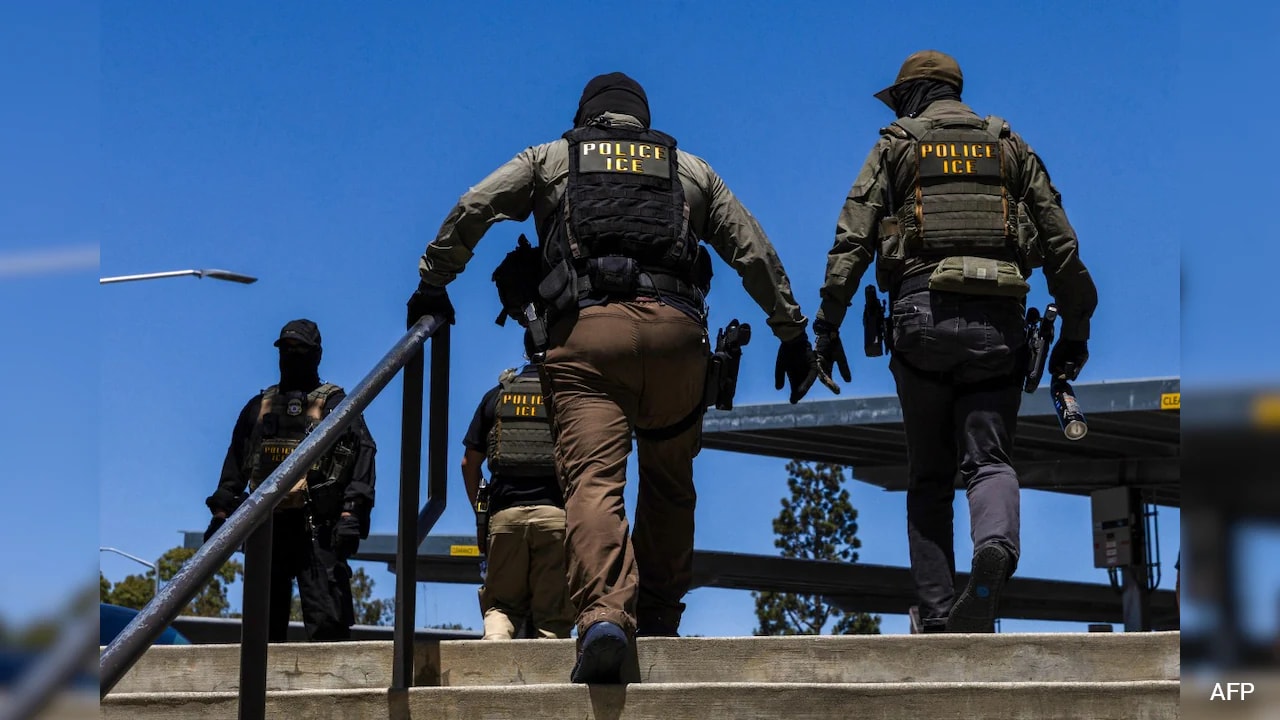
Immigration and Customs Enforcement is planning to spend up to $20 million on a brand-new tool for its agents: gloves that deliver painful electric shocks.
Known officially as the G.L.O.V.E., which stands for Generated Low Output Voltage Emitter, these standard-looking patrol gloves turn deadly serious the moment an officer presses a button. They send electrical pulses directly through a person's skin to force compliance. Unlike traditional Tasers, they don't leave distinct burn or contact marks.
That lack of physical evidence is precisely why civil rights advocates, former law enforcement officials, and state attorneys general are sounding the alarm. When a weapon leaves no trace, accountability disappears right along with it.
The Scale of the Procurement Plan
According to acquisition notices published by the Department of Homeland Security, ICE is eyeing a massive contract valued between $10 million and $20 million. The sheer size of this budget tells you everything you need to know. This isn't a pilot program for a specialized tactical unit. It's a rollout large enough to outfit most, if not all, ICE officers and agents operating in the field.
The plan targets personnel within Enforcement and Removal Operations as well as criminal investigative divisions. As immigration enforcement intensifies across the country—frequently involving forceful vehicle extractions and street-level confrontations—agents will soon have a high-voltage compliance tool sitting right on their hands.
How the Technology Works and Where It Fails
The manufacturer, Compliant Technologies, markets the gear as a safe "conductive distraction and de-escalation device". The idea is to stimulate sensory nerves beneath the skin to break a subject's resistance without deploying lethal force or firing a projectile.
Yet, real-world applications tell a much darker story. Look at the legal record. A pending lawsuit filed in Kentucky reveals that a 43-year-old man died in 2024 after being shocked 27 times with these exact gloves, alongside multiple Taser deployments. An internal investigation at the facility found that officers held the electrical current down for 45 and 99 seconds at a time—shattering the manufacturer's safe-use limit of 15 seconds.
Other legal challenges, though ultimately dismissed, detail individuals with heart conditions being shocked at trade shows and defendants being humiliated by unnecessary activations in court.
The user manuals come with strict warnings. They explicitly state that these devices shouldn't be used on vulnerable groups like pregnant women, small children, the elderly, or people with severe disabilities. They also prohibit using them in response to mere verbal backtalk.
Critics point out a glaring problem. If an agent is already facing a heated, chaotic street confrontation, will they remember safety protocols? Or will these gloves become a lazy substitute for basic de-escalation?
Immediate Pushback From State Officials
Elected leaders aren't waiting to see how this plays out. New York Attorney General Letitia James didn't mince words during a recent press briefing, calling the acquisition outrageous and warning that any ICE officer who misuses the technology within her state boundaries will face swift civil and criminal consequences.
Congressional Democrats, including Representatives Pramila Jayapal, Maxwell Frost, and Delia Ramirez, have taken to social media to denounce the purchase. They argue that giving immigration agents another compliance weapon will only increase the danger for citizens and immigrants alike.
Former agency leadership shares these deep anxieties. Former ICE acting director John Sandweg noted publicly that the threshold for misusing such an accessible tool is far too low. When a pain-compliance device is worn like ordinary winter wear, the temptation to use it prematurely spikes dramatically.
What Happens Next
The Department of Homeland Security defends its purchasing choices by claiming it constantly evaluates field equipment to keep operations safe. But critics see a clear disconnect between public safety rhetoric and the reality of expanding aggressive enforcement tools.
With the solicitation moving fast toward a finalized contract, accountability measures must be established before these gloves hit the streets. Oversight bodies and state prosecutors are gearing up for a fight. If federal agents operate with tools that inflict pain silently and leave no marks, the burden of proof in future abuse cases will rest squarely on the victims.
Watch how local and state jurisdictions respond as the contract deadline approaches. The legal battles over federal use-of-force standards are only just beginning.