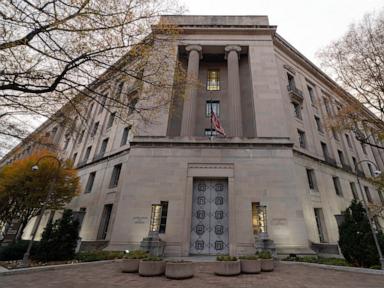
For thirty years, a specific legal body existed in total obscurity. No judge sat in its courtroom. No defendants walked through its doors. That changed abruptly when the Justice Department dusted off the Alien Terrorist Removal Court to target an Afghan woman living in Texas.
Nazira Haji Zada, a resident of Fort Worth, was arrested by FBI agents at her home and thrust into an unprecedented legal battle. She faces deportation not through standard immigration proceedings, but via a specialized tribunal built during the mid-1990s that has never handled a single case until now. If you liked this article, you should check out: this related article.
If you are wondering why the government bypassed traditional criminal courts or standard immigration boards, you are looking at the core controversy of this unprecedented case.
Inside the Thirty Year Silence of the Alien Terrorist Removal Court
Congress established the Alien Terrorist Removal Court back in 1996 under the Antiterrorism and Effective Death Penalty Act. Lawmakers designed it to handle deportations of individuals flagged as alien terrorists without exposing sensitive intelligence sources in open criminal trials. For another look on this story, see the recent update from NPR.
Yet, the mechanism sat completely dormant. Administrations came and went. National security threats evolved. Prosecutors relied on regular federal courts, military commissions, or standard immigration removal procedures instead.
Until this month, the court was basically a ghost ship in the federal judiciary. The Justice Department filed an application targeting Zada, setting off alarms among civil liberties advocates who argue that a tribunal lacking historical precedent creates a dangerous constitutional vacuum.
The Allegations and the Family Connection
Zada has not been charged with any traditional crimes. Instead, the government's push relies heavily on an internal FBI memo outlining severe national security concerns.
According to federal filings, Zada is the mother and mother-in-law of two Afghan men previously convicted in Oklahoma for their involvement in an ISIS-inspired plot targeting the 2024 Election Day. Her son, Abdullah Haji Zada, received a 15-year prison sentence, while her son-in-law, Nasir Ahmad Tawhedi, also faced federal prosecution for conspiring to provide material support to the terrorist group.
The FBI memo alleges that Zada acted as an Islamic State supporter who encouraged her family members and had her children pledge loyalty to the organization. Prosecutors contend she backed the plot to launch a mass-casualty attack.
Her defense team tells a very different story.
Why Defense Attorneys Call the Proceeding Unconstitutional
During the tribunal's historic first public hearing in Washington, federal public defender Matthew Farley pushed for an immediate dismissal. He argued that the entire legal framework violates due process guarantees.
"This entire scheme is in violation of due process and unconstitutional," Farley told Chief Judge Joan Ericksen. He characterized the proceeding as an administrative workaround designed to sidestep the standard constitutional protections afforded to defendants in regular criminal trials.
Because Zada is a lawful permanent resident who has not faced formal criminal charges for these specific allegations, her defense team argues she is being subjected to an untested shadow system.
Judge Ericksen, a senior jurist appointed to oversee the specialized panel, acknowledged the lack of historical precedent. "We probably read the same law review articles. There aren't that many," she noted during exchanges with counsel, admitting the court is operating without a conventional blueprint.
What Happens Next in This Uncharted Legal Territory
The judge denied the immediate motion to dismiss, keeping Zada detained while allowing her lawyers to file further challenges as the litigation unfolds.
Government attorneys made it clear that classified evidence will play a major role behind the scenes. While federal courts handle classified data routinely, doing so within the framework of this specific removal statute remains completely untested terrain.
This case sets a major precedent for modern immigration enforcement and national security policy. Watch how appellate courts handle these due process challenges, because this won't be the last time a dormant federal power gets a second life.