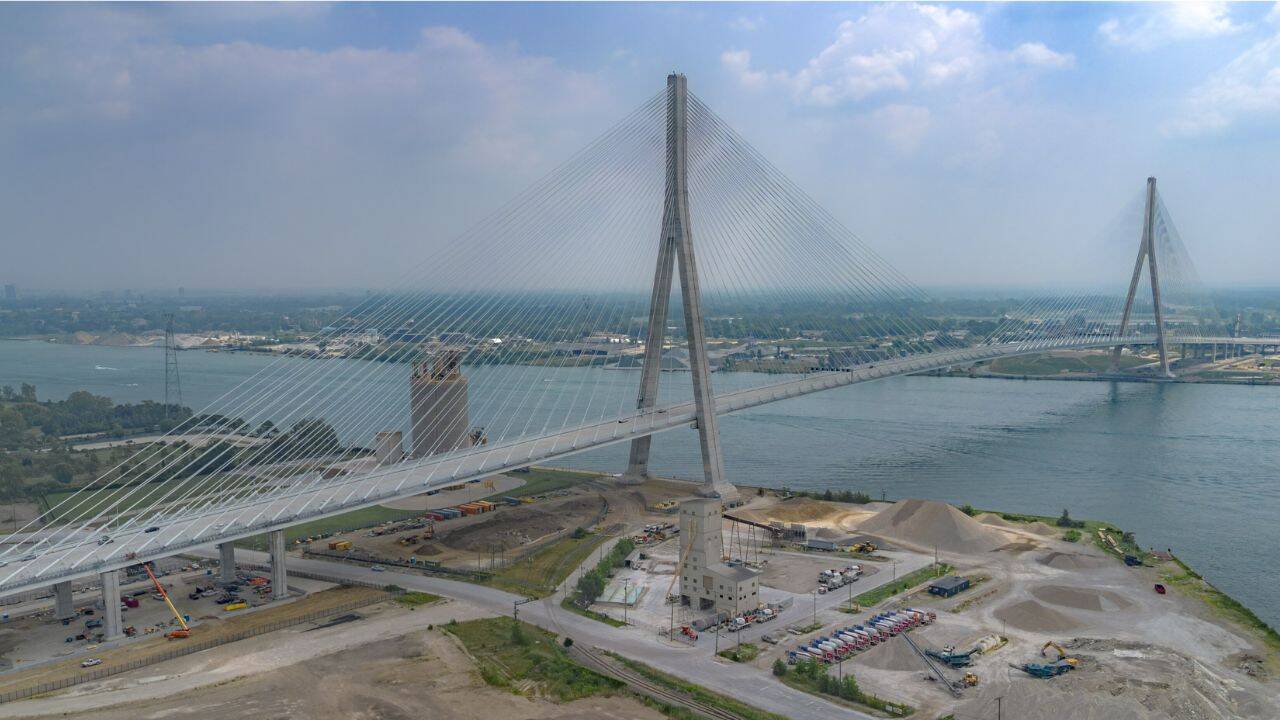
Drivers crossing the border between Detroit and Windsor have dealt with frustrating bottlenecks for decades. That gridlock just changed forever. The Gordie Howe International Bridge is officially open, bringing North America’s longest cable-stayed bridge into service with a massive 853-metre main span.
If you've ever sat in bumper-to-bumper traffic near the aging Ambassador Bridge, you know why this project matters. It's not just another piece of concrete. It's a massive upgrade to a corridor that handles nearly 30 percent of all truck-borne trade between the United States and Canada.
Let's look at what actually went into building this giant, why the engineering is impressive, and what it means for your next road trip across the border.
The Scale of North America's Longest Cable-Stayed Bridge
Building a structure of this magnitude takes serious commitment. Construction kicked off back in October 2018. Over the course of nearly eight years, a massive workforce logged roughly 20.1 million hours to bring the project across the finish line.
The primary specs are staggering:
- The total length of the crossing stretches about 2.5 kilometres (1.6 miles).
- The centerpiece is an 853-metre main span, making it the longest cable-stayed bridge of its kind on the continent.
- Two towering pillars rise 220 metres into the air, acting as the structural anchors for 216 individual stay cables.
- The main deck sits roughly 42 metres above the Detroit River.
Crucially, designers managed this feat with zero piers standing in the water. That means cargo ships move freely underneath without dodging underwater obstructions.
Engineering for Extreme Weather and Heavy Traffic
Building across the Detroit River sounds straightforward until you factor in the local climate. Winter weather brings brutal temperature swings and high winds that can trigger dangerous cable vibrations.
To prevent structural fatigue, engineers integrated custom damping systems into the stay cables. Each cable bundles anywhere from 38 to 122 high-strength steel strands, protected against corrosion and ice-galloping.
At night, the structure puts on a show. Over 6,000 programmable white LEDs illuminate the towers and cables, making it a striking landmark on the skyline between Michigan and Ontario.
Direct Freeway Connections Make a Real Difference
Old border crossings often force drivers off high-speed freeways and onto cramped local city streets. The Gordie Howe project avoids that trap completely.
On the Canadian side, the bridge links directly to Ontario's Highway 401 via the Rt. Hon. Herb Gray Parkway. On the American side, it ties straight into Interstate 75. Drivers experience an uninterrupted freeway flow.
The approach facilities are built for massive volume too. Border processing features 16 toll lanes alongside 60 combined inspection lanes for both US and Canadian customs. This layout aims to slash wait times and keep commercial supply chains moving without expensive delays.
What This Means for Travelers and Trade
Trade efficiency drives this entire operation. The Windsor-Detroit corridor remains the busiest commercial land crossing between the two nations. Relying entirely on older infrastructure created a single point of failure for manufacturers, logistics firms, and everyday drivers.
With six full traffic lanes—three in each direction—plus a dedicated multi-use path for pedestrians and cyclists, the new crossing spreads out the volume. You're getting a faster, cleaner route that bypasses local downtown congestion entirely.
Pack your passport, check the current toll rates, and experience the new corridor yourself on your next cross-border trip.