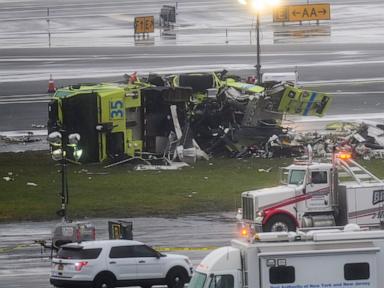
Two air traffic controllers at New York's LaGuardia Airport are facing termination after federal investigators found they left their shifts early on the night a commercial jet slammed into a fire truck, killing two pilots. The March 22 tragedy has ignited a fierce debate over internal workplace culture, chronic staffing strains, and accountability within the nation's aviation infrastructure.
The Federal Aviation Administration is taking aggressive steps to fire the workers. Transportation Secretary Sean Duffy drew a hard line against the practice, calling out behavior that burdens fellow workers and compromises public safety. If you liked this article, you might want to look at: this related article.
What actually happened on that stormy March night? How did an informal industry habit transform into a federal disciplinary crisis?
The Night of the Crash and the Early Departures
On March 22, severe weather battered the Northeast. Rain and thunderstorms forced LaGuardia to handle heavy traffic volumes. An Air Canada Express regional jet, operating a flight from Montreal carrying 72 passengers and four crew members, touched down shortly before midnight. For another angle on this event, see the recent coverage from The Washington Post.
Minutes before the accident, the jet collided with a Port Authority fire truck crossing runway 4. The emergency vehicle had been dispatched to respond to a separate cabin-odor report on a United Airlines flight. The crash killed Capt. Antoine Forest and First Officer Mackenzie Gunther, while injuring six other people on the ground.
National Transportation Safety Board Chair Jennifer Homendy confirmed that only two controllers were working in the tower cab during that midnight shift. However, sources familiar with the matter revealed that two other controllers assigned to the shift had left the facility roughly an hour before their official hours ended.
This practice has a name in the industry. Controllers call it an "early shove."
What Is an Early Shove and Why Does It Matter
Inside many air traffic control facilities across the United States, leaving early has long functioned as an informal perk. When a shift slows down or tasks wrap up, colleagues sometimes let coworkers head out a bit early.
The FAA sees it differently. Agency leadership categorizes the habit as timecard fraud. Under federal rules, clocking out early without utilizing proper leave procedures or accurately recording hours violates agency policy.
The political pressure is real. Over ten controllers have faced disciplinary actions or termination this year alone for timecard irregularities and leave policy abuse.
Transportation Secretary Sean Duffy didn't mince words regarding the crackdown. Most air traffic controllers are dedicated professionals showing up day after day under immense pressure, he noted. Yet, when a fraction of employees game the system, it shifts unfair burdens onto peers and disrupts airspace integrity.
The Broader Staffing Crisis in American Skies
You cannot look at this disciplinary action without examining the backdrop of acute staffing shortages plaguing the aviation sector.
The FAA has worked aggressively to hire new personnel, bringing on over 2,000 controllers this year to hit roughly 94 percent of its 2026 targets. Even so, burnout remains widespread. Towers frequently rely on mandatory overtime and combined positions to keep traffic moving.
When controllers abandon posts early, the remaining crew absorbs the fallout. At LaGuardia that night, the rain-soaked airspace already required intense focus. Losing personnel early left the remaining team stretched thin while managing complex runway movements under hazardous conditions.
The National Air Traffic Controllers Association acknowledged discussions with FAA leadership regarding the allegations. Union representatives have emphasized the grueling conditions ordinary controllers face daily. They urge caution against broad generalizations while internal reviews move forward.
Where the Investigation Stands Now
The NTSB investigation into the LaGuardia disaster remains active. Investigators continue parsing radio transmissions, radar data, and internal facility logs to determine every contributing factor to the runway collision.
The push to fire the two workers sends a clear message. Federal regulators want to signal zero tolerance for policy breaches that intersect with safety-critical environments.
Accountability in aviation cannot be optional. Whether the fallout leads to stricter clock-in audits or sweeping cultural shifts inside tower cabs, the message is unmistakable. Cutting corners at the console is no longer a hidden perk. It's a career-ending risk.