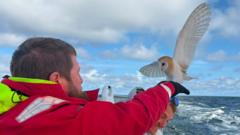
Picture yourself miles away from dry land, surrounded by nothing except open ocean. Now imagine a barn owl fighting for its life against the waves.
That is exactly what happened during the grueling RORC Round Britain and Ireland Race. The Army Offshore Racing Team, competing aboard the Fujitsu British Soldier, found an unexpected passenger about 70 nautical miles off the coast. The bird was completely exhausted, having fallen into the sea multiple times before managing to reach the yacht.
The Brutal Reality of Open Ocean Wildlife Stranding
Wild birds do not belong seventy miles out at sea. When migrating or coastal birds get blown off course by harsh weather systems, they face an almost impossible battle. Exhaustion sets in quickly. Once their feathers become waterlogged, swimming is impossible, and they drown within minutes.
This specific barn owl made a desperate, chaotic bid for survival. According to Sergeant Mark Petherbridge of the 2nd Battalion, The Parachute Regiment, the bird failed its initial landing attempts. It tumbled from the mast and hit the water three separate times.
Most animals would have quit. This one did not.
"We thought we'd lost her, but she kept fighting her way back up and to the boat," Petherbridge noted.
How the Crew Handled the Emergency
Sailors are used to high-pressure situations, but nursing a drowning raptor back to health is a new category of challenge. Skipper Will Naylor and his crew suddenly found themselves running an impromptu wildlife rescue ward while racing around the British Isles.
They secured the collapsed bird with a towel on deck, bringing it out of the wind to stabilize its core temperature. Initially christened "Little Reg" (short for regiment), the crew later discovered their stowaway required a quick name update to "Little Regina".
For twenty-four straight hours, the military crew shared their floating workspace with the bird. They kept it safe while navigating the demanding 1,805-nautical-mile course.
The Handover to Wildlife Specialists
You cannot just release a rehabilitated sea-weary owl back into the middle of the ocean. Logistics required precision.
As the yacht sailed closer to the English coast near Norfolk, coordination kicked into high gear. The Caister Independent Lifeboat intercepted the racing yacht at sea, taking the bird safely ashore. From there, Marine and Wildlife Rescue drove the owl to the RSPCA East Winch Wildlife Centre in King's Lynn.
Initial reports from veterinary staff showed encouraging signs. The bird displayed strong defensive behavior immediately—a great indicator of wild spirit—and quickly rehydrated while devouring a mouse.
What This Rescue Teaches Us About Resilience
Stories like this capture our attention because they defy the odds. A fragile creature, completely out of its element, matched the grit of a British Army racing crew.
If you ever find an exhausted or injured wild animal, the steps taken by the crew provide a clear template. Keep the animal dry, minimize human contact to prevent shock, and contact local wildlife rescue organizations immediately instead of attempting long-term care yourself.
Little Regina is currently recovering out of harm's way, while the soldiers finished their historic race.
Owl aboard! British Army rescue Barn Owl
This short video captures the actual footage and highlights the stark reality of how the military sailing crew managed to pull the exhausted bird out of harm's way.
http://googleusercontent.com/youtube_content/1



