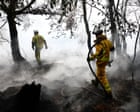
We need to stop pretending that simply hitting climate goals will save our forests. A new study from the Potsdam Institute for Climate Impact Research makes this painfully clear: even in the absolute best-case climate scenario, Europe is staring down a 39% increase in wildfire activity by the end of this century.
If you think the current scorched-earth scenes across the continent are just a bad run of luck, you're missing the bigger picture. We aren't just looking at a few hot summers. We are looking at a fundamental shift in the continent’s ecology.
The dangerous myth of climate mitigation alone
Most people assume that if we curb carbon emissions, the wildfire problem magically vanishes. It doesn't. While reducing emissions is absolutely essential for global survival, wildfire management is a completely different beast.
The study highlights a grim reality. Even if we limit global heating to 1.8C—an optimistic target by any measure—the increase in hot, dry, and windy conditions will continue to drive fires. The climate has already "baked in" a certain amount of volatility. We’re currently at roughly 1.4C of warming. The system has significant momentum.
Fire suppression is a double-edged sword
Here is the part most news reports skip over. We’ve spent decades getting better at putting out fires. It sounds like a success, right? Actually, it’s created a massive, hidden liability.
By aggressively suppressing every small blaze, we’ve allowed forests to become overgrown. These areas are now thick with "residual fuel." When a fire finally does break out—and in this climate, it eventually will—it has enough fuel to turn into an unmanageable monster.
Think of it like a neglected campfire that’s been constantly damped down until the wood pile is massive. Once the spark hits, you’re not dealing with a fire you can put out; you’re dealing with an explosion. Researchers like Víctor Resco de Dios have noted that our obsession with total suppression is counter-productive. We’re creating a landscape that is primed to burn with more intensity than anything we’ve seen in the last century.
Beyond the numbers
The 39% figure is scary, but the worst-case scenario is catastrophic. If we continue on our current path—projected to hit 3.6C of warming—the area burned by wildfires could nearly triple.
You’re probably wondering if there is any way out. The research suggests that improved fire management—better technology, more strategic planning, and more proactive land management—can reduce these impacts by over 70%. But it’s not a silver bullet. You cannot manage your way out of a climate that is fundamentally incompatible with the forests we have today.
What actually needs to happen
If we want to stop these fires from defining the next few decades, we have to change our approach entirely. It’s not just about more water bombers or better sirens.
- Rethink land use: We need to move away from the idea that every acre of forest must be untouched. In some areas, controlled burning and clearing are necessary to prevent the mega-fires that are currently leveling towns in France and Spain.
- Accept the new normal: We have to build infrastructure that assumes a fire will happen. That means changing building codes, creating defensible space around communities, and stopping the push for development in high-risk zones.
- Move past the blame game: Politically, wildfires are treated as an excuse to shout at opponents. It’s an easy way to score points, but it solves nothing. We need a coordinated European strategy that treats wildfire risk as a permanent, systemic threat rather than a seasonal emergency.
The current fire season is already the third-worst on record. If we keep relying on the same outdated playbooks, that won’t be an anomaly. It will be the start of a permanent decline. We aren't just waiting for the climate to change. We’re living through it. Adjusting our expectations and our strategy is the only way to avoid the worst of what's coming.