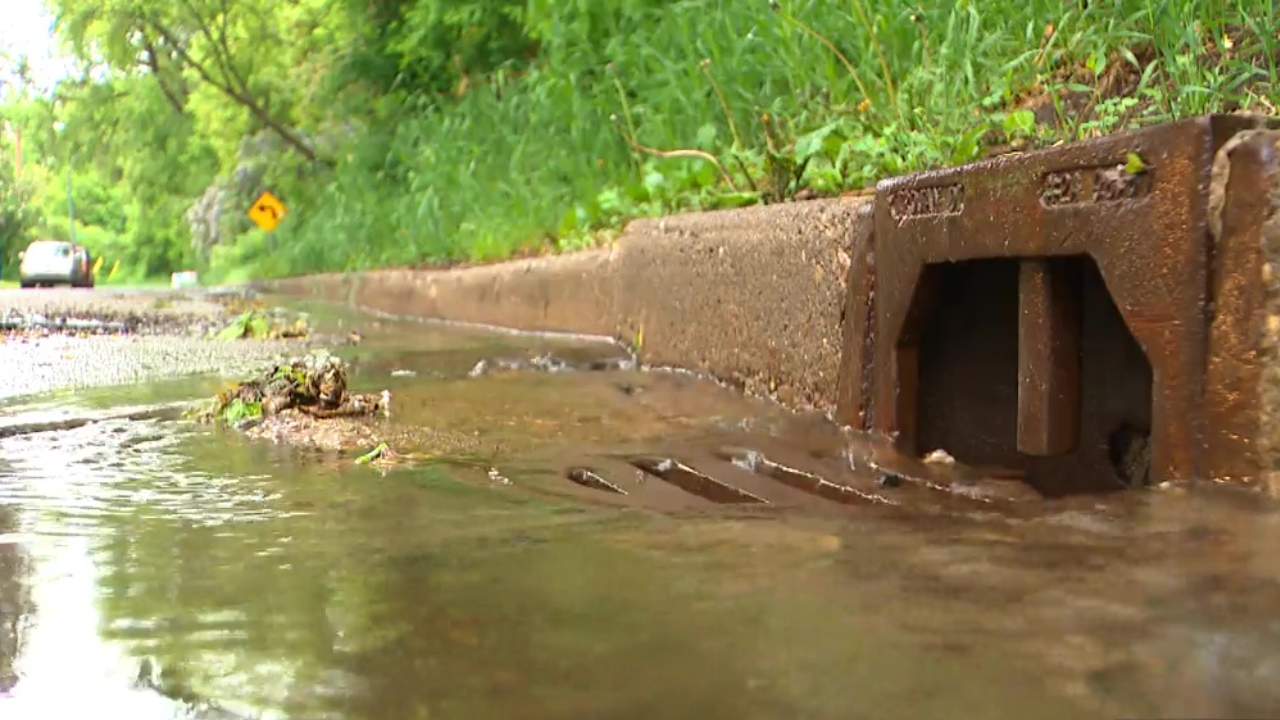
When two straight months of relentless summer rain batter the Prairie landscape, even a well-engineered city starts showing its limits.
You see flooded underpasses along Whitemud Drive and Yellowhead Trail. Manhole covers lift under pressure. Puddle-weary homeowners stare anxiously at basement floor drains, wondering if today is the day their sump pump gives out.
It’s easy to look at a flooded road and blurt out the obvious complaint: Why aren't our sewers big enough?
The actual answer is a lot more complicated than missing pipes or poor maintenance. What Edmonton is experiencing right now isn't just a sudden surge of water from a single thunderstorm; it's the compounding mathematical nightmare of saturated ground.
The Physics of Ground Saturation
Urban stormwater management relies on a basic balance: a portion of rainfall sinks into lawns, parks, and green spaces, while the rest runs off hard pavement into catch basins and storm pipes.
When it rains continuously over weeks—like the historic precipitation Edmonton saw in June and July 2026—the natural soak-away process stops cold. Soil behaves like a sponge. Once every pocket between dirt particles fills with water, the ground hits 100% saturation.
At that stage, lawn turf behaves almost like concrete.
Every drop of rain falling on grass turns instantly into overland runoff. Instead of filtering through soil, millions of extra liters wash straight onto residential streets, cascading down city slopes and overwhelming neighborhood storm drains that were never designed to absorb a whole lawn's worth of water.
Dry Conditions:
[Rain] ---> 60% Absorbed by Soil / 40% Street Runoff

Saturated Conditions:
[Rain] ---> 0% Absorbed by Soil  / 100% Street Runoff
This rapid accumulation creates localized flooding in "trapped lows"—those low-elevation dips in neighborhood roads meant to temporarily hold water while sewers catch up.
Why Modern Cities Don't Build Massive Sewer Systems
A common suggestion during flood season is simply digging up the city to bury bigger pipes everywhere. In practice, that approach fails both economically and structurally.
Designing underground infrastructure to handle extreme, historic downpours without any surface pooling would require pipe diameters the size of subway tunnels running under every single street. The financial cost would bankrupt a city, and for 350 days of the year, those giant pipes would sit nearly empty, accumulating sediment and creating serious maintenance problems.
Instead, civil engineers design modern stormwater networks on a controlled-delay principle.
The goal isn't to make water disappear the second it touches the ground; it's to collect, slow down, and gradually release that water into local rivers or creeks.
- Stormwater Ponds: Retention basins collect immediate run-off, letting sediment settle while regulating release rates into nearby waterways.
- Dry Ponds: Open green spaces and sports fields double as overflow basins during massive storms, keeping water away from basements.
- Trapped Lows: Intentional dips along roadways store excess surface water for brief windows so sewers don't blow out downstream.
When torrential rains hit day after day, these holding systems don't get the dry window they need to drain fully. The next storm arrives while ponds and pipes are still half-full, leaving nowhere for the new water to go.
The $1.6 Billion Race Against Climate Shift
Edmonton isn't sitting on its hands while the rain falls.
Through EPCOR's 20-year Stormwater Integrated Resource Plan—a massive $1.6-billion initiative launched in 2019—the city is actively retrofitting older neighborhoods built under outdated 1960s and 70s building codes.
Older communities were built around combined sewers, where rainwater and household wastewater shared the exact same pipe. During heavy rains, those combined lines would fill fast, creating high risks for basement sewage backups. Modern engineering separates these networks completely, but replacing or retrofitting mid-century infrastructure takes decades of continuous construction.
What used to be considered a 1-in-100-year storm event is happening much more frequently now. As rain patterns shift toward short, intense bursts of severe weather, cities must balance massive capital upgrades with everyday maintenance, like clearing leaves and debris from the city's 64,000+ catch basins.
How to Protect Your Own Property Right Now
When public stormwater networks run at total capacity, individual home defense becomes critical. You don't have to wait for city workers to dig up your street to protect your home.
1. Extend Your Downspouts
Check where your roof water empties. Downspouts discharging right next to your foundation force thousands of gallons directly into your weeping tile, overloading your home's sump pit. Extend downspout tails at least 1.8 meters (6 feet) away from foundation walls, aiming water toward rain gardens or well-graded lawns.
2. Install and Test a Backwater Valve
A backwater valve acts as a one-way check gate in your main sewer line. If the street main overfills and pushes back toward your neighborhood, the valve automatically closes to block raw sewage from surging up through basement floor drains.
3. Maintain Your Sump Pump System
A sump pump is your foundation's last line of defense.
- Test it before major storms by pouring a bucket of water into the pit to verify the float switch engages instantly.
- Get a battery-backup power supply. Severe summer storms often trigger power outages right when your pump needs to run continuously.
4. Check Your Grade
Look around the perimeter of your house. Soil around foundations settles over time, creating a slope that channels water right against your walls. Add dense soil to ensure the ground slopes away from your home by at least 2.5 centimeters per meter (1 inch per foot) for the first two meters.
What to Do Next
If you own a home in Edmonton, check EPCOR's RainWise Rebate Program.
The program offers financial rebates to help offset costs for flood-prevention upgrades—including downspout disconnections, rain garden installs, permeable paving, and soakaway pits. You can also sign up for a free home flood prevention inspection through EPCOR to pinpoint weak spots around your property before the next storm rolls through.


