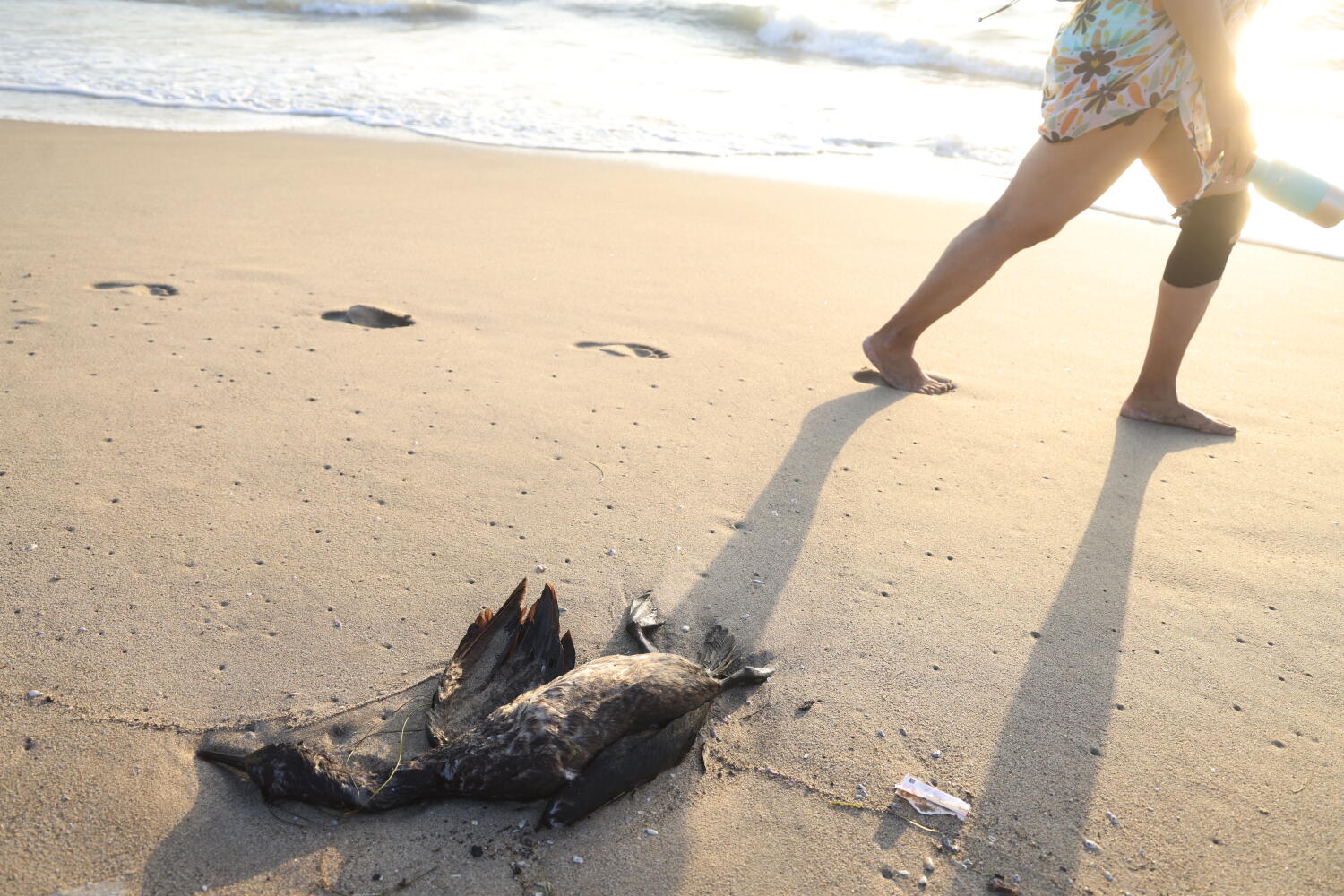
More than forty dead cormorants suddenly littered the sand at Venice Beach, sparking immediate concern among beachgoers and wildlife advocates alike. When a cluster of black, pelican-like seabirds washes ashore en masse, it is never a random occurrence. It is an alarm bell.
Yet, the immediate response from local authorities left a massive blind spot in environmental monitoring. Crews from the L.A. County Department of Beaches and Harbors quickly removed the carcasses through standard sanitation protocols before the county Department of Public Health could evaluate or test them. Short-staffed cleanup operations often prioritize immediate public tidiness over scientific autopsy, meaning crucial data about local marine health vanished into a landfill.
The Broader Coastal Crisis
While the specific cause of the Venice incident remains officially undetermined due to the disposal of the carcasses, these coastal strandings do not happen in a vacuum. International Bird Rescue tracking data shows that California centers have received nearly four hundred starving seabirds since March alone, including dozens of Brandt's cormorants.
Scientists and groups like the California Department of Fish and Wildlife are currently monitoring a widespread marine stress event. Shifting ocean temperatures disrupt how and where schooling fish gather, forcing coastal birds to fly further, expend more energy, and ultimately risk starvation just to stay alive.
Ruling Out the Worst-Case Scenarios
Whenever multiple dead birds appear on a public beach, public health fears spike instantly. Avian influenza is usually the first suspect on people's minds.
Fortunately, testing on Southern California birds during this ongoing mortality wave has consistently returned negative results for the H5N1 avian influenza strain. Local public health officials confirmed that the Venice Beach incident posed no elevated direct risk to human visitors. The threat here is ecological rather than infectious, pointing straight back to food web disruptions and environmental stress in the Pacific.
What You Should Do If You Find a Distressed Seabird
If you walk along the Southern Coast and spot a stranded or struggling bird, your reaction matters. Do not touch or attempt to handle weakened wildlife on your own. Stressed birds carry sharp bills and can transmit secondary pathogens or parasites.
Instead, look for clusters or unusual mortality patterns. If you see three or more dead wild birds, report the sighting immediately to the L.A. County Department of Public Health Veterinary Public Health unit or the state Dead Bird Hotline.
For live animals that appear exhausted or unable to fly, professional intervention offers the only real lifeline. Contact local wildlife rehabilitation networks, or reach out directly to specialized response lines like International Bird Rescue at 1-866-SOS-BIRD. Quick reporting gives starving marine birds their only fighting chance at recovery before shifting ocean conditions claim another casualty.