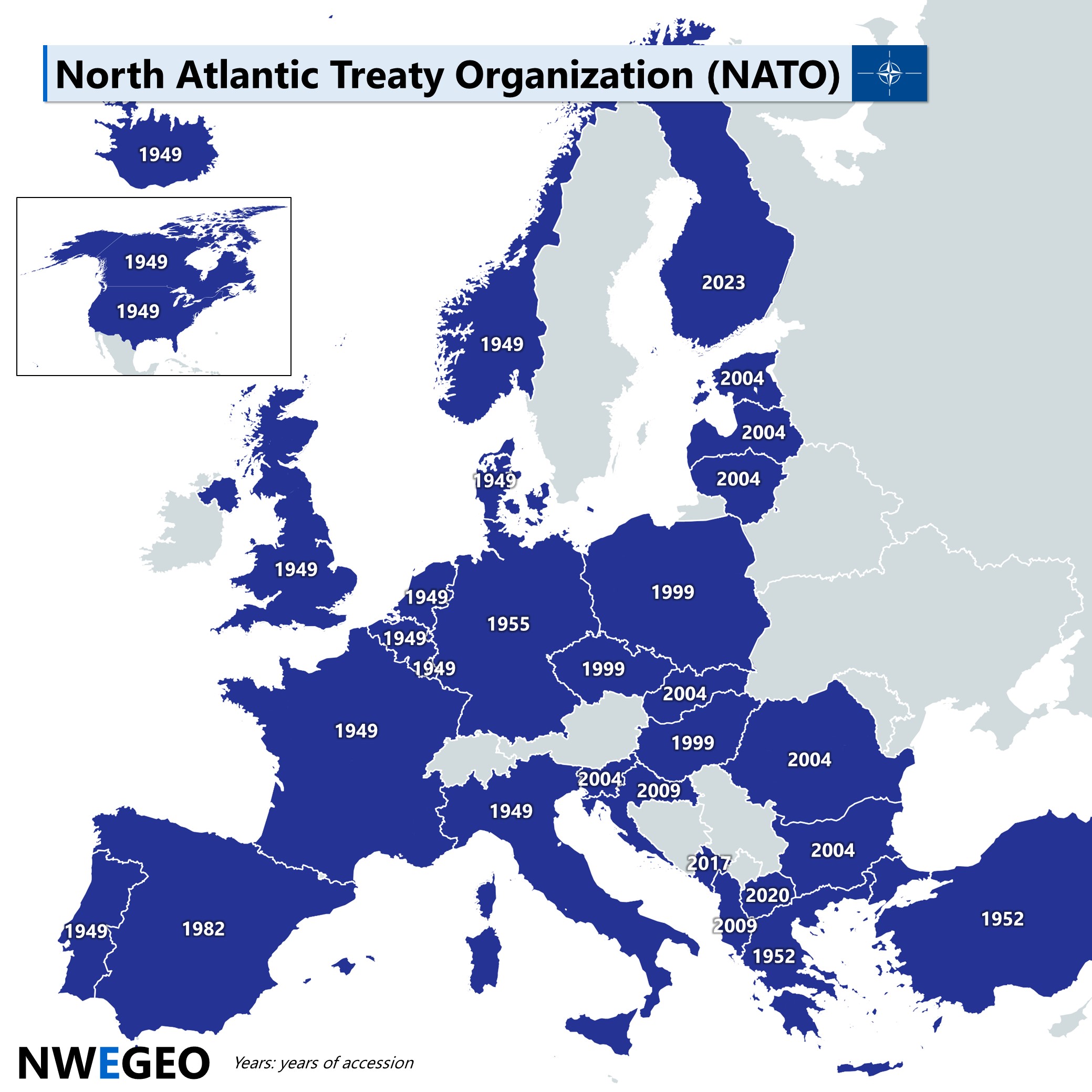
An Italian air force Eurofighter Typhoon on a quick-reaction alert intercepted and destroyed an unmanned aerial vehicle flying over central Lithuania. This wasn't just another routine airspace violation. It marks the first time NATO combat aircraft have actively shot down a drone over Lithuanian territory, turning a slow-burn border friction into an active combat engagement right on the alliance's eastern flank.
If you've been watching the eastern European frontier, you know these incursions have crept up in frequency. But crossing from passive radar tracking to kinetic interception crosses a major psychological and military line. Let's look at what actually happened in the skies near Pratkūnai, why this specific incident is rattling capitals from Vilnius to Berlin, and what it means for the shifting calculus of the war next door.
What Actually Happened Over Lithuania
Shortly after midnight, sensors picked up an unidentified track crossing the border from Belarus. The drone loitered or drifted through Lithuanian airspace for roughly thirty minutes, tracking near populated sectors and the Kaunas reservoir before a NATO jet scrambled from Šiauliai Air Base terminated the flight.
Lithuanian President Gitanas Nausėda and local crisis management officials confirmed the engagement immediately. When bomb-disposal teams reached the crash site near Pratkūnai, they found an explosive payload attached to the aircraft and neutralized it.
Italian Defense Minister Guido Crosetto stated that the hardware most probably originated from Russia. Later context from Lithuanian leadership pointed toward a specific probability: it was likely a long-range Russian decoy drone, such as a Gerbera, which had been thrown completely off course by Ukrainian electronic warfare systems before wandering deep into NATO airspace.
The Electronic Warfare Spillover Problem
You don't need a deliberate attack to spark a regional escalation. Modern airspaces near active war zones are saturated with electronic countermeasures. When Ukrainian defense grids jam Russian drones, those cheap, foam-and-plywood craft don't always self-destruct safely. They lose their navigation links, drift on upper-level winds, and cross international borders.
This creates a massive operational dilemma for alliance planners. A stray decoy carrying explosives looks identical on radar to a targeted provocation. NATO pilots can't wait around to check the serial numbers or ask for a flight plan. They have minutes to decide whether an unidentified radar contact poses a threat to civilians on the ground.
When you look at the broader regional picture from mid-September 2026, the noise level is deafening. Just as the drone came down in Lithuania, a Russian warship in the Baltic Sea fired flares dangerously close to a Danish military helicopter conducting routine surveillance. Meanwhile, Poland recovered a Russian-origin drone washed up near its coast.
The Economic Asymmetry of Air Defense
Shooting down a cheap reconnaissance or decoy drone with an advanced jet fighter creates an ugly math problem for defense budgets. A basic long-range decoy costs next to nothing to manufacture. A missile fired from a Eurofighter Typhoon or an F-16 costs hundreds of thousands, if not millions, of dollars.
NATO air policing missions are burning through high-end stockpiles to deal with low-end threats. Military analysts have warned about this imbalance for months. If Moscow or its proxies continue testing alliance airspace with waves of cheap aerial hardware, the financial and logistical strain on front-line states will compound rapidly.
Yet, doing nothing is not an option. Leaving unverified drones to drift over major cities or critical infrastructure like hydroelectric reservoirs invites disaster. Lithuania's leadership made it clear that readiness is non-negotiable.
Where the Alliance Draws the Line
NATO Secretary-General Mark Rutte recently pointed out that these frequent border spills are designed to sow fear and test alliance resolve. Every time a stray aircraft crosses into Poland, Romania, Latvia, or now Lithuania, Moscow gauges the speed and hesitation of the response.
The swift intercept by the Italian detachment proves that the quick-reaction alert system works as intended. But it also highlights how fragile regional stability has become. European foreign ministers are openly warning that the war in Ukraine cannot be cleanly contained inside Ukrainian borders.
Expect tougher rules of engagement, faster scrambling protocols, and heavier air defense reinforcement across the Baltic states in the coming weeks. The buffer zone is shrinking, and the margin for error is gone.