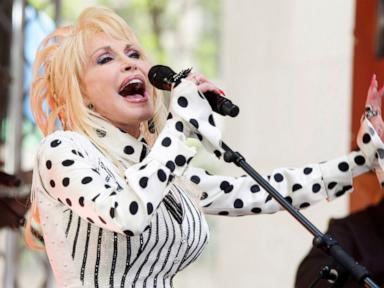
Dolly Parton dodged the feminist label for decades. Whenever interviewers pressed her on the subject, she smiled, sidestepped the question, and reminded everyone that she just liked people. She didn't want to alienate her core country music audience. She didn't want a political box. Yet her fans heard the message loud and clear.
They heard it every time she sang about equal pay, workplace exploitation, or the double standards placed on women's bodies. She built an empire, maintained complete ownership of her creative work, and refused to let anyone else steer her ship. You don't have to adopt a specific word to embody its absolute core. Parton proved that daily.
Look past the rhinestones and the towering blonde wigs. Those visual choices weren't just for show. They served a strategic purpose. Music critics have long pointed out that Parton weaponized her exaggerated appearance. She knew people would underestimate a woman who looked like a cartoon pin-up. So she let them do it, all while quietly signing contracts, writing every hit song she owned, and taking control of her financial destiny.
The Armor of Extreme Femininity
Why did Dolly embrace such an over-the-top, hyper-feminine aesthetic? It was a shield. When you lean so hard into traditional stereotypes that you become a caricature, nobody expects the sharp executive mind hiding underneath.
Author Evelyn McDonnell once described Parton's look as a magic cloak. It allowed her to walk into old-boy boardrooms and write progressive anthems without triggering an immediate defensive backlash. She sang "Just Because I'm a Woman" back in 1968, directly taking aim at sexual double standards long before the mainstream culture caught up. When she performed that track live decades later at the Newport Folk Festival, she looked at the crowd and delivered a blunt truth. Women aren't expected to be pure as snow, and society's rules on sex are completely rigged.
She made the point with a wink. That was her superpower. She could challenge deeply entrenched patriarchal structures while making the audience laugh.
Gloria Steinem Saw the Truth Early
Feminist icon Gloria Steinem understood this game completely. Back in January 1987, Steinem featured Parton in Ms. magazine as one of the Women of the Year. Critics might have scratched their heads at the pairing. Steinem saw the obvious synergy.
Steinem wrote that people unfamiliar with both Parton and feminism might be surprised by how well they fit together. She highlighted how the country star used her business acumen to uplift other women and impoverished communities. If feminism means helping others discover their own power, Steinem argued, Dolly checked every box.
Parton didn't just talk about economic empowerment in abstract terms. She brought it to life. Her movie 9 to 5 alongside Jane Fonda and Lily Tomlin wasn't just a box-office smash. It became a cultural rallying cry against abusive male bosses and corporate inequality. The catchy theme song remains an anthem for workers fighting for fair treatment.
Owning the Master Tapes
The ultimate proof of Parton's independence sits in her vault of master recordings. In the brutal machinery of the music industry, artists get chewed up and spit out without owning their copyright. Parton fought smart. She bought her publishing rights. She kept total control over her catalog.
When Elvis Presley wanted to record "I Will Always Love You," Colonel Tom Parker demanded half of her publishing rights. Parton said no. It was a terrifying financial risk for a rising artist to turn down the King of Rock and Roll. But she held her ground, kept her song, and decades later made a fortune when Whitney Houston covered it.
That move takes sharp business sense and supreme self-confidence. You don't survive in a male-dominated industry for over six decades by being passive.
Actionable Takeaways From Her Legacy
If you want to apply the Dolly Parton philosophy to your own career and life, stop worrying about labels and focus on the execution.
- Protect your leverage: Never give away ownership of your work or your intellectual property just to secure a quick win.
- Use perception to your advantage: If people underestimate you based on your appearance or background, let them. Use that lowered guard to your strategic benefit while you do the hard work behind the scenes.
- Lift others as you climb: Real power isn't about hoarding success. It's about funding literacy programs, creating jobs, and opening doors for people who come from where you started.
Parton never needed a badge or a movement to validate her actions. Her entire existence challenged the status quo. She walked her own path, made her own rules, and left a blueprint for independence that speaks louder than any speech ever could.