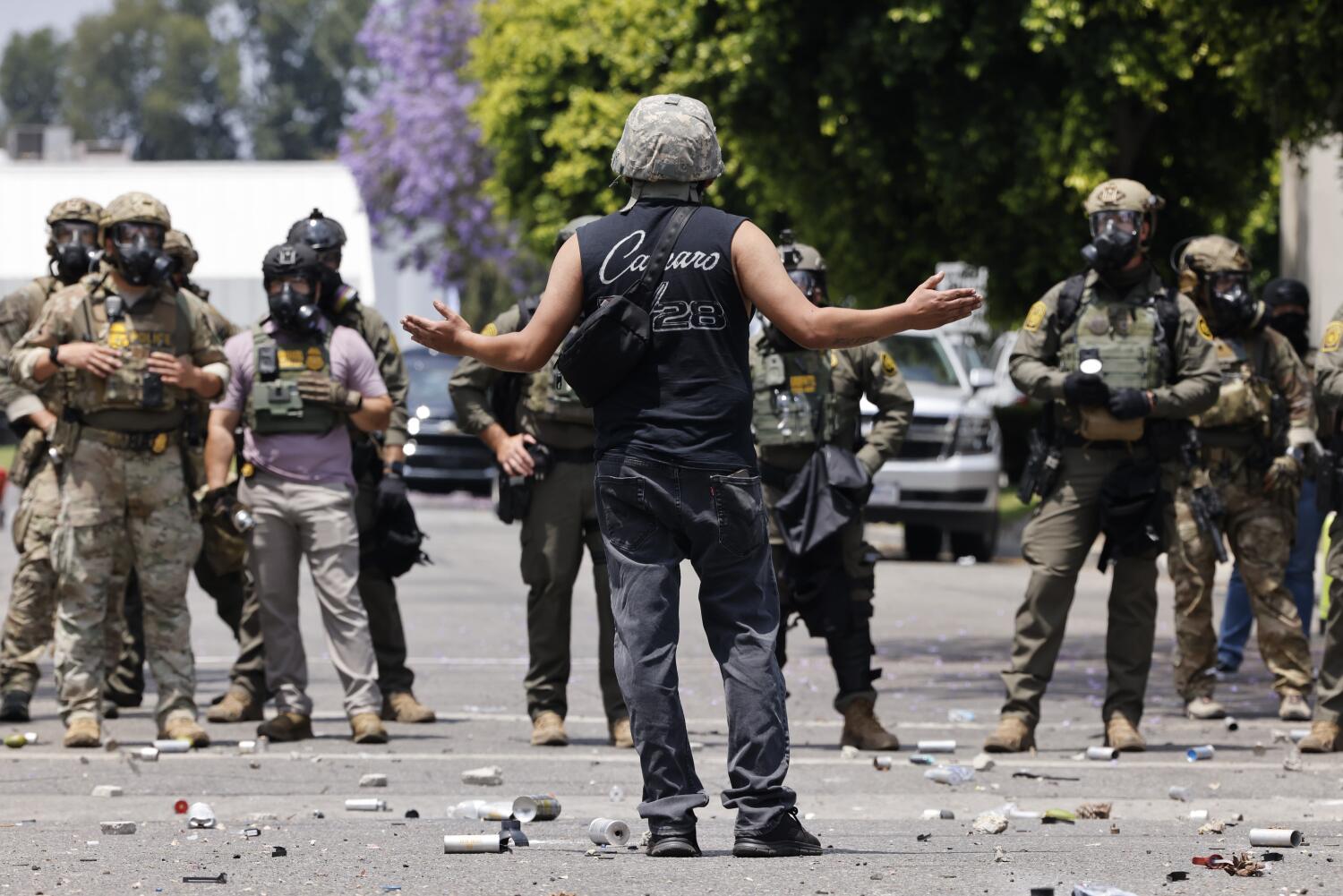
Federal agents in Los Angeles didn't care about specific targets. They operated on a simple, brutal philosophy captured in internal messages: "See bodies, chase bodies."
Newly unsealed court documents from a federal lawsuit filed against immigration authorities pull back the curtain on the chaotic sweeps that shook Southern California. If you thought these operations followed careful intelligence and precise target matching, court files from the Vasquez Perdomo vs. Noem case prove otherwise.
Civil rights attorneys unearthed months of discovery, including body camera footage and agent depositions ordered by U.S. District Judge Maame Ewusi-Mensah Frimpong. The evidence paints a picture of indiscriminate street detentions, reliance on racial slurs, and a total disregard for constitutional protections.
The Reality Behind the Baseball Cards
For months, federal authorities defended their tactics by pointing to target sheets—summaries containing photos and backgrounds meant to guide enforcement. But depositions tell a different story.
Agents increasingly deployed what officers referred to as baseball cards. In practice, these cards didn't filter out innocent people. Instead, they served as loose justifications for sweeping low-income Latino neighborhoods, Home Depots, and car washes.
Intelligence teams frequently scouted locations to pick an arbitrary number of potential arrests. When the time came for the actual sweep, agents often rushed out without checking whether the actual targets were even present.
The strategy was straightforward. Get out of the vehicles and grab people.
What Body Cameras and Text Messages Show
The most damning evidence comes directly from the digital devices and uniforms of the agents themselves. Body camera footage and internal text threads reveal a workplace culture driven by raw quotas rather than individualized suspicion.
In one text message thread cited in the court filings, an agent casually wrote, "Yeah, just plug us in wherever you see some tonks and we'll jump out." Another message described spotting targets selling food on the street. Body camera footage from a Hollywood Home Depot catch a Border Patrol agent explicitly saying, "There was a guy, I'm pretty sure he's wet he was just sitting in that minivan."
These weren't isolated slip-ups. Plaintiffs' attorneys argue this behavior reflects an agency-wide operational model endorsed from the top.
Lawyers for the American Civil Liberties Union pointed out that ICE expanded its field teams using aggressive recruitment methods. Many individuals swept up in these dragnets turned out to be U.S. citizens or legal residents who had done nothing wrong.
The Legal Battle Continues
The unsealed records emerged as part of an ongoing preliminary injunction motion scheduled for a hearing before Judge Frimpong. Plaintiffs want a definitive bar against suspicionless and discriminatory stops.
Yet, getting to the truth hasn't been easy. Court proceedings revealed severe delays in evidence production. Out of roughly 1,400 Border Patrol agents deployed during the Los Angeles operations, many used personal cell phones. Government attorneys admitted to imaging only a few devices every couple of weeks, leaving hundreds of phones uninspected.
When law enforcement operates without accountability, civil liberties vanish overnight. The documents expose a system built on snap judgments and systemic profiling, leaving communities to deal with the fallout.
Check local civil rights resources if you want to track upcoming court dates or understand your constitutional rights during federal encounters. Know what protections apply to you before an encounter happens.



