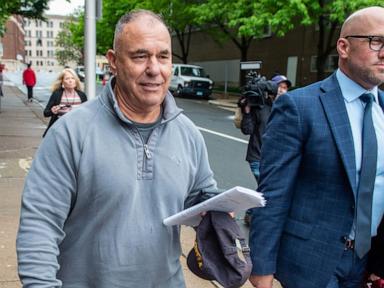
Konstantinos "Kosta" Diamantis didn't want to go to prison. So, he packed up, skipped the country, and left federal judges holding an empty courtroom.
If you've followed political corruption scandals, this vanishing act is wild. Diamantis, a 70-year-old former high-ranking budget official in Connecticut, managed to slip past American authorities just hours before he was scheduled to hear his prison sentence. He is now sitting comfortably as a fugitive in Greece. Prosecutors wanted him locked away for over a decade. Instead, they got a 10-page angry email blaming everyone from the governor to the federal government.
How did a convicted felon escape the United States while facing a federal alert list? Let's look at the actual logistics and why getting him back is nearly impossible.
The Escape Route That Fooled Federal Authorities
Diamantis knew the net was closing. Convicted by a federal jury on 21 counts of bribery, extortion, and conspiracy, he was staring down a sentence between 10 and 12 years.
Instead of waiting for U.S. District Judge Stefan Underhill to hand down the penalty in Bridgeport, Diamantis executed a classic evasion playbook. Federal prosecutors pieced together his movements after his lawyer, Norman Pattis, received a shocking phone call around 6:30 p.m. on a Wednesday night.
Here is how he pulled it off:
- Drove down to Florida weeks ahead of time.
- Hired a private boat to cross open water into the Bahamas.
- Caught a commercial flight out of Nassau to London.
- Connected onward to Greece, utilizing his dual citizenship and a Greek passport.
He was on a domestic flight restriction list, but he exploited blind spots by leaving the mainland via watercraft. It's a bold move that turned a legal crisis into an international diplomatic headache.
The Envelopes of Cash and School Construction Schemes
Why was Diamantis facing severe prison time? It wasn't minor paperwork errors. As the director of Connecticut's Office of School Construction Grants and Review, he held massive leverage over millions in taxpayer funds.
Between 2018 and 2021, Diamantis used that power as a personal ATM. Prosecutors proved he squeezed private contractors working on school projects in cities like Hartford, New Britain, and Tolland. If companies wanted their $8.5 million in contracts protected or paid out, they had to pay up.
Witnesses at trial didn't point to complex offshore bank accounts. They talked about handing over physical envelopes of cash in remarkably mundane spots. We are talking about transactions happening in a high-end restaurant's men's room, a local doughnut shop, and even his own home. They disguised the bribes using bizarre code words like "birthday cards," "pars," and "birdies."
Diamantis claimed on the stand that the money was just legitimate consulting work. The jury didn't buy it for a second.
Why Extradition to the US Is Unlikely
Now he's in Greece, and the legal reality gets messy. Diamantis holds dual citizenship in the U.S. and Greece.
Greek constitutional courts have a long-standing policy: they generally forbid the extradition of their own nationals to foreign countries. Because Diamantis secured a Greek passport, he effectively weaponized his dual nationality. U.S. federal authorities are exploring their options, but legal experts note that forcing Athens to ship a Greek citizen back to face an American prison sentence is an uphill battle.
Meanwhile, Connecticut officials aren't just sitting back. State Comptroller Sean Scanlon immediately halted the direct deposit of Diamantis' state pension. Attorney General William Tong moved quickly to strip away retirement benefits that paid him $75,000 last year. State lawmakers and opponents are demanding answers from Gov. Ned Lamont's administration about how someone with this level of corruption made it into such a high-trust position in the first place.
The Final Countdown and What Happens Next
Judge Underhill didn't cancel the sentencing hearing. He rescheduled it to proceed with or without Diamantis present in the room. A federal bench warrant is active, meaning the moment Diamantis steps foot anywhere outside of safe-haven jurisdictions, handcuffs click instantly.
He also still faces a separate federal trial regarding Medicaid fraud allegations, where witnesses claimed he took bribes to squash a state audit of an eye doctor.
If you are tracking white-collar accountability, this case proves that high-ranking officials will burn down their remaining reputations rather than accept accountability. Diamantis might be drinking coffee in Greece right now, but his legal troubles are far from over.
Take a close look at how public oversight fails. When loopholes exist in travel monitoring and asset protection, corrupt actors exploit them instantly.
Check your local state spending transparency laws, demand rigorous background vetting for political appointees, and hold public officials to actual standards before they catch a boat to the Bahamas.