You set up a temporary swimming pool in the middle of a concrete square, and suddenly it triggers a national culture war. That is exactly what happened in Germany's capital.
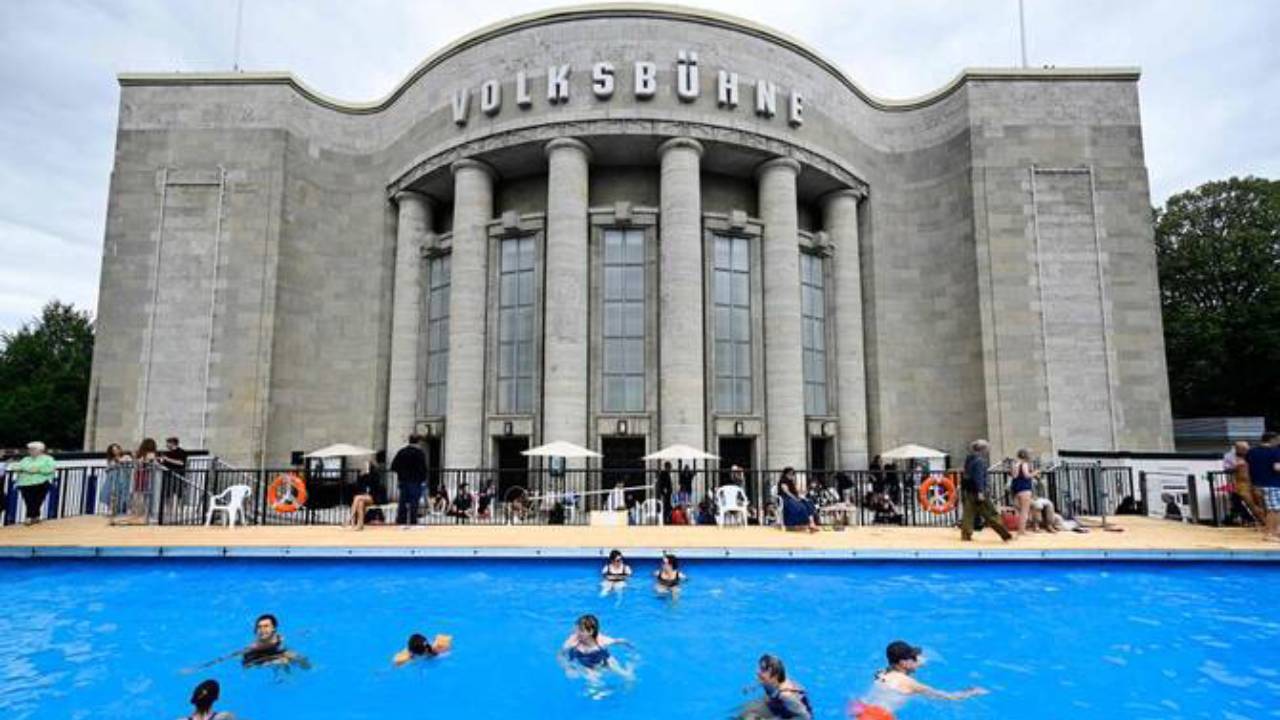
Berlin's historic Volksbühne theatre recently installed a 25-metre pop-up pool outside its doors, costing around €300,000 for an eight-week summer run. The goal seemed simple enough: give hot city residents a free place to cool off. But things derailed quickly when the theatre partnered with Each One Teach One (EOTO), a prominent Black-led anti-discrimination group, to reserve the water for a single afternoon.
The plan was to host a dedicated session for Black children, teenagers, and their families. It was supposed to be a secure environment for a marginalized group. Instead, it drew an intense wave of hostility, ferocious social media backlash, and severe security threats.
Organizers pulled the plug. They stated explicitly that they could no longer guarantee the safety of the participants.
How a Summer Swim Sparked a Political Firestorm
The backlash didn't stay quiet. Far-right politicians jumped on the announcement almost immediately. Alice Weidel, co-leader of the Alternative for Germany (AfD) party, took to social media to blast the initiative. She asked whether apartheid was making a comeback in Germany because white people were temporarily denied access to a tax-funded project.
Mainstream conservative politicians echoed that discomfort. Local district figures questioned why a publicly funded space needed to exclude anyone. To critics, carving out exclusive hours looked like reverse discrimination.
However, that argument ignores the reality of how public spaces are actually experienced.
The Reality Behind Safe Spaces in Public Infrastructure
If you have ever spent a summer in Berlin, you know public pools are intense. They are crowded, heavily policed, and frequently sites of tension. For Black residents and people of color, public leisure spots aren't always neutral territory. Harassment happens. Microaggressions happen.
EOTO and the Volksbühne artistic director, Matthias Lilienthal, designed the event to offer temporary respite. Other organizations—including youth social work groups and urban initiatives—had booked time slots at the pop-up pool without drawing national outrage. The moment an initiative centered Black youth, however, the response shifted from ordinary scheduling to aggressive political theater.
Berlin anti-discrimination commissioner Cansel Kiziltepe pointed out the obvious after the cancellation. She noted that racism and exclusion remain a daily reality for Black people in the city. Creating a six-hour window of comfort for kids was treated as an existential threat to the majority.
What Happens Next for Public Art and Inclusion
The cancellation leaves a bitter aftertaste. It shows how easily online outrage and right-wing agitation can shut down community-building efforts. The pop-up pool itself remains open for the rest of its summer run, but the larger conversation about who public space belongs to is far from resolved.
When cultural institutions try to address social inequality, they step onto a minefield. If they do nothing, they maintain an unequal status quo. If they try targeted inclusion, they face accusations of division.
Berlin's swimming pool experiment proved that building a physical lane for swimming is easy. Bridging the social divide around who gets to feel safe in the water is much harder.
Check local community calendars for ongoing public forums regarding urban inclusion policies, or support grassroots anti-discrimination organizations working to secure safe public spaces across European cities.