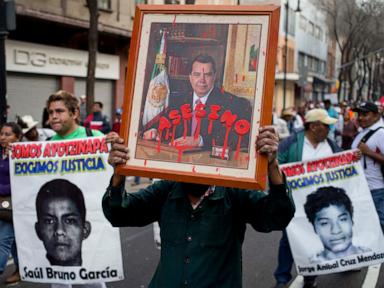
Twelve years is a long time to wait for the truth. When 43 students from the Ayotzinapa Rural Teachers' College vanished in southern Mexico back in September 2014, the shock wave rattled the global conscience. It wasn't just a localized tragedy. It laid bare the rotten machinery where local cartels, municipal police, state officials, and federal military units operated as a single, terrifying ecosystem.
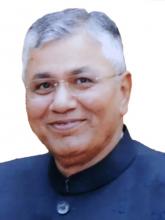
Now, the legal landscape is shifting again. Federal authorities have arrested Ángel Aguirre, the former governor of Guerrero state, accusing him of orchestrating a malicious cover-up. Prosecutors claim Aguirre directly ordered the destruction and concealment of critical security camera footage from the night of the attacks.
Yet, for the families who have spent over a decade marching through the streets of Mexico City, an arrest at the top feels less like a triumph and more like a very late, heavily calculated political maneuver. Let's break down what actually happened, why this recent detention matters, and why true accountability remains painfully out of reach.
The Anatomy of a State-Level Conspiracy
To understand why Aguirre's arrest is making waves, you have to look back at the chaotic night of September 26, 2014, in Iguala, Guerrero. The students had commandeered buses—a common practice among rural student activists heading to a political protest—unaware that one of those buses was allegedly loaded with heroin destined for the United States.
Local police, acting in lockstep with a local drug cartel, ambushed the students across multiple locations. Security forces stopped buses in plain sight, including right outside the Palace of Justice. Cameras rolled, recording the forced disappearances in real-time.
Then came the systematic erasure.
According to Mexico's current federal prosecutor's office, Aguirre didn't just passively look away. Fresh testimonies gathered indicate that the former governor demanded control of the security tapes and actively ordered high-level officials to destroy any visual evidence. Independent investigators from the Inter-American Commission on Human Rights pointed out these missing recordings years ago. For over a decade, official state narratives insisted the footage never existed. Now, the government admits it was a deliberate, executive-level concealment.
High-Profile Falls And Empty Hands
Aguirre is not the first heavy hitter to face charges, but the timeline of accountability is painfully sluggish. Former federal Attorney General Jesús Murillo Karam was locked up earlier on charges of forced disappearance, torture, and obstruction of justice. Murillo Karam was the architect of the infamous "historic truth"—a fabricated official narrative claiming the students were executed and incinerated in a municipal trash dump, a theory thoroughly debunked by international forensic experts.
Despite these high-profile detentions, the core physical reality remains devastating. Out of 43 missing young men, bone fragments belonging to only three have ever been positively identified. Families are left with fragments of bone and mountains of bureaucratic evasion.
When the news of Aguirre's arrest broke, the Agustín Pro Juárez Human Rights Center—representing the parents—released a sharp critique noting that neither the lawyers nor the parents had been given advance notice. This violated explicit commitments made by the federal government to keep families informed first. Clemente Rodríguez, father of one of the missing students, put it bluntly: Aguirre has to talk and tell everything he knows.
Why the Political Fallout Runs Deep
You can't separate these judicial developments from Mexico's shifting political power structures. Aguirre governed under a party lineage that eventually birthed Morena, the current ruling political movement. When administrations change—from Enrique Peña Nieto to Andrés Manuel López Obrador, and now under President Claudia Sheinbaum—the official stance on Ayotzinapa evolved from active obstruction to labeling it a "state crime".
Yet, translating political rhetoric into airtight criminal convictions is remarkably difficult. Prosecutors are relying on newly surfaced testimonies to crack open doors that were welded shut years ago. Sheinbaum's administration reopened lines of investigation that ultimately enabled this recent move against Aguirre. But critics wonder why it took nearly twelve years to act on evidence that independent watchdogs flagged from the start.
The Missing Piece Is Still the Truth
An arrest warrant or a jail cell doesn't automatically reconstruct a shattered justice system. The deeper architecture of corruption—involving military units stationed in Iguala that night and institutional networks that still protect cartels—remains largely intact.
When state power is used to wipe security footage, fabricate mass graves, and silence grieving parents, locking up an aging ex-governor a decade later feels like closing the barn door long after the horses have bolted. The families of Ayotzinapa aren't looking for symbolic scalp-hunting. They want to know where their sons are, who gave the final kill orders, and why the Mexican state spent twelve years protecting the guilty.
Until those questions are answered with verifiable facts rather than political theater, the ghost of Ayotzinapa will continue to haunt every tier of Mexican governance.