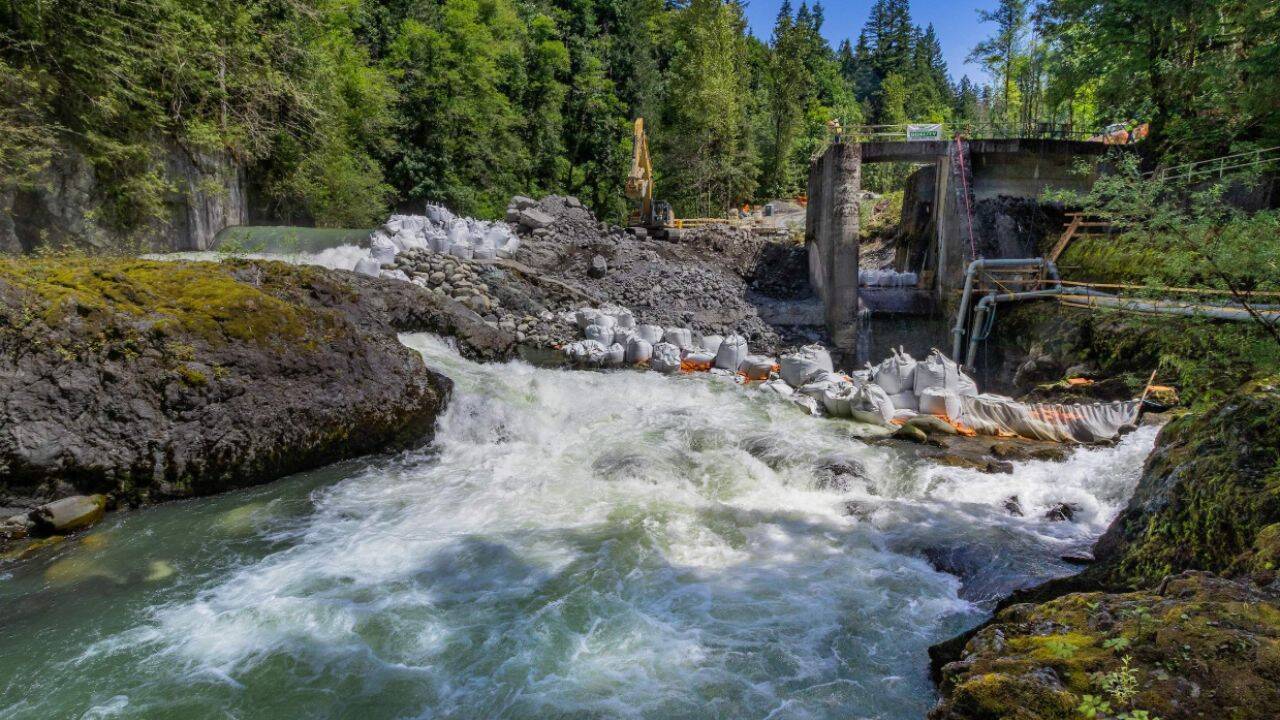
We built concrete walls across nearly every major waterway in America, and now we are spending millions to tear them back down. If you look at what happened last year, the scale of this turnaround becomes glaringly obvious. According to data tracked by American Rivers, the United States removed 100 outdated dams across 30 states in 2025. That single-year effort reconnected more than 4,893 miles of river, setting an all-time record for upstream habitat restoration.
Most people assume concrete infrastructure stands forever as a monument to human engineering. They don't realize that over half a million aging barriers choke our natural waterways, many of them crumbling, abandoned mill dams or obsolete flood controls built over a century ago. When these structures break down, they stop generating power and stop providing utility. Instead, they transform into ticking ecological time bombs and dangerous public safety hazards.
The Real Cost of Obsolete Concrete
Driving this national movement isn't just a vague desire to green up the map. It's raw necessity. For decades, local municipalities ignored aging river obstructions because tearing them down felt radical or expensive. But the calculus changed.
When a river gets boxed in by concrete, the water warms up, oxygen levels drop, and natural sediment flow halts. Migratory fish like salmon, shad, and trout hit a literal brick wall during spawning season. They can't reach historical breeding grounds, and populations crash.
Ecological restoration drove 59 of the 100 removals completed in 2025. Communities are waking up to the reality that dead rivers hurt local economies. Clean, free-flowing water brings back recreational tourism, kayakers, anglers, and stable fisheries.
Killer Low-Head Dams
Beyond environmental concerns, public safety is forcing local leaders to act. More than a quarter of the structures pulled out in 2025 were low-head dams. If you've never seen one, they look deceptively harmless—just a low wall spanning the river where water flows evenly across the top.
Emergency responders call them "drowning machines" for a reason. The water tumbling over the drop creates a violent, recirculating hydraulic current right at the base. If a swimmer or kayaker goes over, the churning water traps them underwater, pushing them down and refusing to let go. Dozens of people lose their lives at these exact sites every single year. Tearing them out eliminates a permanent death trap.
State-Level Leadership That Actually Works
Not every state treats decaying infrastructure the same way. Pennsylvania led the nation in 2025 by taking out 14 outdated structures, bringing its historic total to 433 removals since 1912. Massachusetts removed 11 dams, while Vermont accounted for nine.
In Vermont, severe flooding crises forced lawmakers to rethink how water moves through local valleys. Undersized culverts and crumbling barriers worsen flood damage during heavy storms. By passing forward-thinking laws like the Flood Safety Act, states are putting financial weight behind hazard mitigation. They are realizing that giving rivers room to breathe protects nearby towns better than concrete walls ever could.
Meanwhile, projects like the Forest City Dam removal on Iowa's Winnebago River opened up 99 miles of upstream passage for fish while actively lowering flood risks for local parks. In Virginia, taking out the Georges Mill Dam on the South Mayo River erased a notorious drowning spot while reviving habitat for the endangered orangefin madtom.
What Happens Right After the Wall Falls
People often worry that removing a dam will turn a beloved local water body into an unmanageable muddy ditch. But nature rebounds with astonishing speed.
Within days of a breach, aquatic insects return to newly scoured gravel beds. Within weeks, native fish populate sections of the watershed they haven't seen in generations. Fresh currents wash away stagnant sludge, and natural riverbanks start stabilizing themselves.
Groups like American Rivers have set a target to remove 30,000 dams by 2050. Hitting that mark will take sustained local pressure, grant funding, and cooperation across state lines. If 2025 proved anything, it's that communities are ready to let the water flow.
Check your local watershed maps. Find out if your nearest stream is blocked by an obsolete, crumbling barrier, and support local conservation efforts pushing to clear it out.
America broke a dam removal record in 2025 and nobody's talking about it
This video provides a concise breakdown of the record-breaking 2025 dam removals and how local communities are successfully restoring free-flowing rivers.
http://googleusercontent.com/youtube_content/1