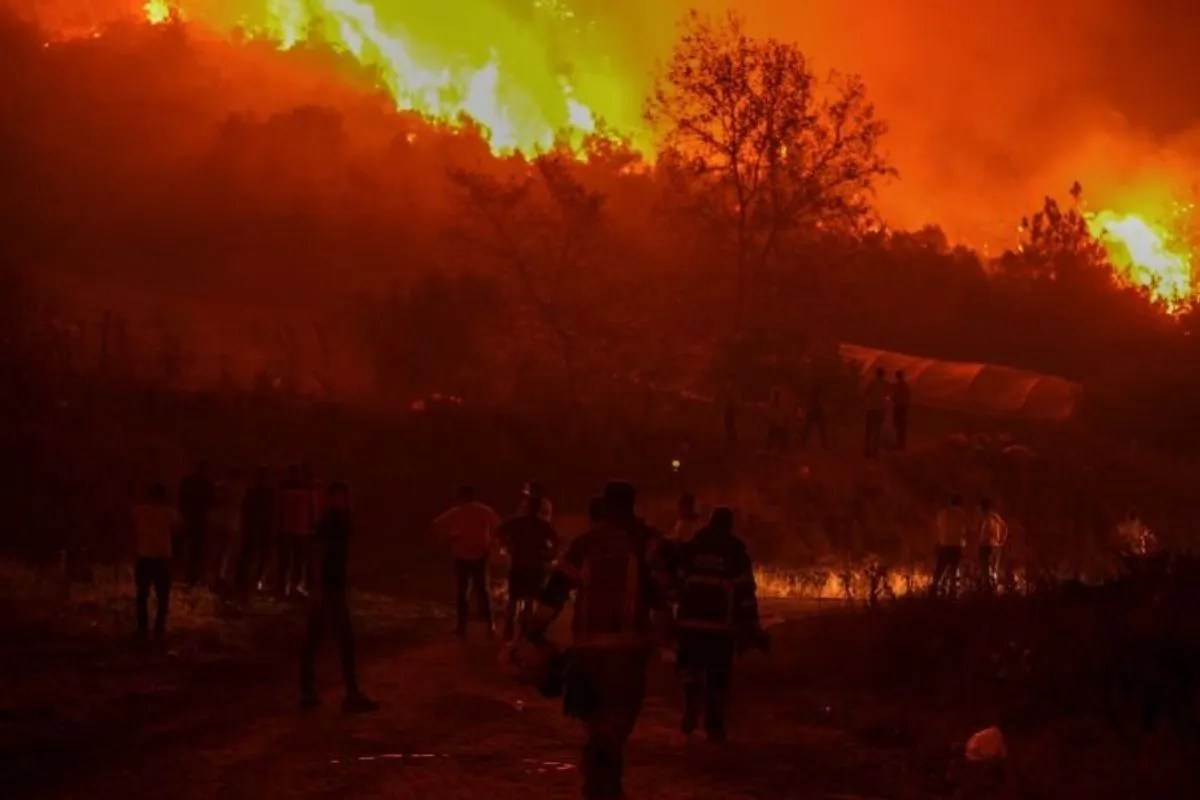
Twelve people are dead. Fifty-four others are nursing severe burns and smoke inhalation in hospital wards across northern Algeria. Behind those grim numbers lies an escalating environmental disaster that strikes the Mediterranean coastline year after grueling year.
When Interior Minister Said Sayoud stepped in front of television cameras late Wednesday, the scale of the devastation was staggering. Civil protection units had logged 154 separate vegetation fires tearing across northern and northeastern provinces simultaneously. In Jijel, five lives were lost. In Béjaïa, four people perished. In Tizi Ouzou, three more died.
If you live anywhere near the Mediterranean basin right now, you know the suffocating weight in the air. A punishing heatwave has baked Algeria and neighboring Tunisia, turning dense forests and rural brush into tinderboxes. Strong winds whip through the mountainous terrain, turning minor sparks into unstoppable walls of fire within minutes.
Families have packed what they can carry and fled into the night. Footage from local outlets showed terrified residents huddling inside a post office in Jijel as thick, apocalyptic gray smoke swallowed entire neighborhoods. Emergency crews are stretched to their absolute breaking point, battling dozens of active hotspots while trying to protect vulnerable villages.
The Deadly Geography of North African Wildfires
Why do these specific regions bear the brunt of the destruction? Look at a map of Algeria's northern provinces and you will see a dangerous collision of geography, climate, and human proximity.
Béjaïa and Jijel sit directly along the forested Mediterranean coastline. They feature steep slopes, dense vegetation, and rural communities nestled deep inside wooded valleys. When temperatures spike past seasonal averages and severe drought dries out the soil, these landscapes become primed for disaster.
On Wednesday alone, Béjaïa recorded 36 distinct fire outbreaks. While firefighters managed to bring half of them under control, active hotspots continued threatening homes well into the evening. Other provinces like Skikda, El Tarf, Bouira, and Tébessa faced similar onslaughts.
It is a cruel cycle that residents know all too well. This is not an isolated shock. Algeria has endured catastrophic wildfire seasons in recent years, including devastating losses in 2021, 2022, and 2023 that cost dozens of lives and wiped out thousands of hectares of farmland, livestock, and homes. The frequency has accelerated, leaving communities with barely enough time to rebuild before the next wave hits.
Climate Pressures and the Mediterranean Hotspot
You cannot talk about these fires without looking at the broader climate reality shaping North Africa. Science points to a harsh truth: the region is warming significantly faster than the global average.
According to assessments by meteorological authorities, North Africa has experienced rapid temperature anomalies over recent decades. The Mediterranean coast of Algeria and Tunisia records some of the strongest warming trends on the continent, with aridity and drought risks compounding year over year.
Higher baseline temperatures mean vegetation dries out earlier in the season and stays dry longer. When a heatwave locks over the region, relative humidity plummets and winds pick up. Under these conditions, an ordinary spark from machinery, agricultural burning, or a discarded cigarette transforms into a multi-front inferno that overwhelms standard firefighting resources.
Yet climate change is only half the equation. The human footprint plays a massive role. Rural populations live close to forested areas, and power grids running through rugged terrain remain vulnerable. When high winds knock down aging lines or dry brush catches fire near roadways, the speed of local spread leaves little time for evacuation.
What Emergency Responders Are Facing Right Now
Fighting 154 simultaneous fires requires logistics on a scale that tests any government. Algerian civil protection teams, forestry workers, and security forces have mobilized heavily, deploying personnel and heavy equipment to the hardest-hit zones.
Minister Sayoud's hospital visits in Béjaïa highlighted the human cost behind the operational reports. Six of the 54 injured victims remain in critical condition, fighting for their lives in intensive care. Smoke inhalation and severe burns require specialized medical intervention, placing immense pressure on regional healthcare facilities.
Evacuations remain chaotic by necessity. When fires sweep down a mountain corridor, warning times shrink to minutes. Local authorities have had to pull families out of harm's way on short notice, relying on community networks and local shelters to house the displaced.
The immediate priority is containment. Keeping flames away from population centers stops the death toll from climbing higher. But once the smoke clears, the deeper questions remain about long-term preparedness, forest management, and early-warning infrastructure.
Preparing for a More Volatile Future
The reality on the ground demands a shift in how vulnerable nations approach seasonal fire threats. Relying solely on emergency response once a heatwave peaks is no longer enough.
Experts emphasize the need for enhanced preventative clearing around residential perimeters, modernized early-detection sensor networks, and rapid-response aerial firefighting fleets capable of hitting remote mountain outbreaks before they spread. Communities need regular evacuation drills, and aging rural infrastructure must be upgraded to withstand extreme weather shocks.
The fires raging across Algeria right now serve as a stark reminder of how fragile human settlements are when pitted against extreme climate shifts. As global temperatures continue their upward climb, the margin for error narrows every single year.
Protecting vulnerable regions requires sustained investment, rigorous land management, and honest recognition of the risks ahead. For the families mourning loved ones in Jijel, Béjaïa, and Tizi Ouzou, the cost of inaction has already proven far too high.