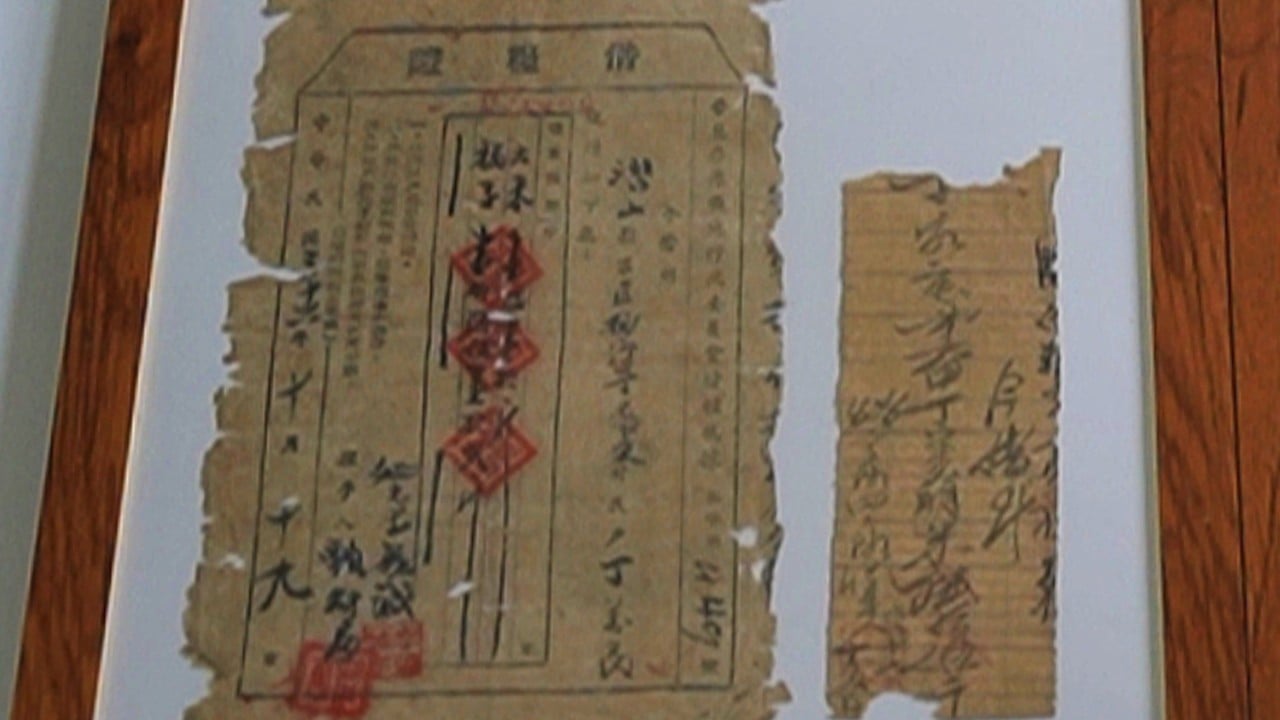
Paper rots. Ink fades. Memories disappear. But sometimes, a scrap of paper survives eight decades to settle a historical score.
In 1947, a Chinese farmer named Ding Wanmin handed over 850 kilograms of grain—his family's entire reserve—to a starving military unit moving through the Dabie Mountains. That unit belonged to the People's Liberation Army during a brutal counteroffensive against Kuomintang forces. Instead of taking the food by force, which was common practice for retreating or advancing armies of the era, the soldiers asked, documented the transaction, and left a handwritten IOU.
Most people assume wartime IOUs are worth nothing more than the pulp they are printed on. History is written by the victors, and small debts to peasants usually vanish in the smoke of civil war. Yet, nearly eighty years later, this specific debt was formally honoured.
How an 80 Year Old Paper Survived
The document didn't stay in a safe deposit box. It lay forgotten, wedged tightly between bricks inside the walls of an old family home.
During the 1990s, the Ding family tore down their ancestral structure. As the masonry came apart, a yellowed paper packet tumbled out. It was the original grain loan certificate, remarkably legible despite decades of dampness and neglect.
Keeping such a receipt during the turbulent mid-20th century was dangerous. If opposing forces found proof that a family had fed Communist troops, the consequences could be fatal. The Ding family kept quiet. Neither Ding Wanmin nor his immediate descendants made a public fuss about the debt. They tucked the paper away, treating it as an unspoken family secret rather than a lottery ticket.
It wasn't until recently that Ding's grandson, Ding Guangyi, handed the artifact over to local authorities as part of a historical preservation drive. He didn't ask for money. He just wanted the local museum to preserve the history.
The Math Behind Settling a Decades Old Debt
When local officials examined the document, they realized the government never actually cleared this specific ledger. State archives show that Communist authorities routinely honoured these wartime grain certificates after founding the People's Republic of China in 1949, converting them into cash or fresh grain for citizens who came forward.
This one simply slipped through the cracks because the family never asked.
To make things right, the government calculated a payout based on historical grain valuations, inflation metrics, and the cultural weight of the document, awarding the family 70,000 yuan, roughly 10,300 US dollars.
Instead of pocketing the windfall, Ding junior immediately donated 20,000 yuan of it to a foundation supporting military veterans. He noted that his grandfather originally trusted the troops because they showed discipline and respect for ordinary citizens when everyone else was plundering. For the family, the public recognition of that trust mattered more than the currency.
Why This Story Went Viral Online
Social media users across China latched onto the story instantly. In an age where financial cynicism runs high and institutional trust feels scarce, a literal eight-decade-old receipt getting paid out hits a psychological sweet spot.
People discussed the sheer risk involved in 1947. Giving away your entire food supply meant staring starvation in the face. It required immense faith to back an army that had no guaranteed future.
The story illustrates a broader pattern of how historical accountability functions in local Chinese archives, where rural contributions from the civil war era are tracked and occasionally compensated when descendants unearth physical proof.
Check your own family heirlooms, old books, and attic storage. You probably won't find a revolutionary grain voucher worth thousands of dollars, but history has a habit of hiding right inside the walls.