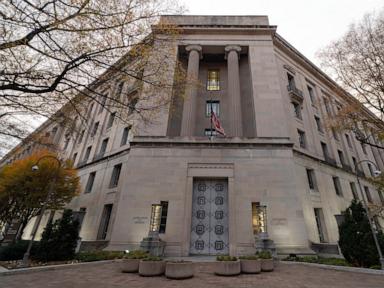
The federal government just dusted off a judicial relic that sat entirely untouched for three decades. On July 15, 2026, the Justice Department quietly filed its first-ever application with the Alien Terrorist Removal Court. Most people have never even heard of this institution. It has no permanent building, no daily docket, and until last week, it had exactly zero cases on its record.
Congress built this mechanism back in 1996. It was part of a wave of hardline legislation following the Oklahoma City bombing. The goal was simple. Give the executive branch a fast-track method to deport non-citizens suspected of terrorism without forcing prosecutors to hand over sensitive, classified intelligence to the defense. But for thirty years, attorneys general from both parties looked at this specialized court and chose to ignore it. They relied instead on standard immigration hearings or traditional criminal prosecutions.
That streak is officially over. The current administration is moving with unprecedented speed on deportations, and they are willing to test every legal boundary on the books. This move marks a significant shift in national security enforcement. It opens up an entirely untested arena of constitutional law.
The Secretive Machinery of the ATRC
To understand why this development matters, you have to look at how this body functions. The Alien Terrorist Removal Court is modeled explicitly after the Foreign Intelligence Surveillance Court. Chief Justice John Roberts selects five sitting federal district judges from different circuits to serve five-year terms. They are called in only when the attorney general or deputy attorney general signs off on a specific national security emergency.
The legal mechanics are heavily tilted in favor of the government. The Justice Department files its initial removal application completely under seal. A single judge reviews the classified files in secret. If the judge agrees that standard deportation channels would compromise national security, the application is granted.
Next comes the hearing. By law, this part of the process is supposed to be public, and the targeted individual has a right to counsel. But there is a massive catch. The defense does not get to see the actual classified evidence. Instead, the government provides an unclassified summary of the intelligence. The judge has to approve this summary, certifying that it gives the accused enough information to mount a defense.
That is where the system gets messy. Legal scholars have long argued that this setup violates basic Fifth Amendment protections. How do you defend yourself against an anonymous tip or a redacted satellite transcript? You cannot check the credibility of an informant you do not know exists. You cannot point out flaws in a wiretap you are not allowed to listen to. It is an evidentiary black box.
A Striking Rebuke From the Bench
The government clearly expected a smooth ride when they submitted their single-page document. They did not get one.
Chief Judge Joan N. Ericksen, a federal judge from Minnesota who leads the panel, did not just rubber-stamp the request. She held an immediate hearing on July 16, 2026. No sworn testimony was taken, but the court pushed back hard on the prosecution's arguments.
Ericksen issued a blunt order following the session. She noted that the court had serious questions about the connection the government was trying to draw. Specifically, she pointed to the lack of a clear nexus between the actions of the anonymous respondent and the exact statutory definitions of terrorism invoked by the state.
Her order did not mince words. She wrote that the answers provided during the hearing persuaded the court that the government could benefit from more thoughtful consideration. She gave the Justice Department a hard deadline of July 22, 2026, to supplement its application with deep factual and legal analysis.
This initial speed bump shows that the judiciary is not going to let the executive branch turn this dormant tool into an administrative rubber stamp. Ericksen is demanding receipts. If the Justice Department wants to use an extraordinary national security court, they must meet the statutory obligations perfectly.
Why Resurrect This System Now
This sudden move does not exist in a vacuum. It is the direct result of an aggressive, year-long campaign to test the absolute outer limits of immigration enforcement law.
Over the past year, the executive branch has been searching for alternative legal paths to bypass traditional immigration courts. The standard system is bogged down by backlogs, appeals, and procedural safeguards. The administration wants swift results. They have already invoked the Alien Enemies Act of 1798, a wartime law, to target and remove Venezuelan migrants linked to criminal syndicates.
During a federal court battle over those wartime deportations, Washington Judge James Boasberg dropped a major hint. He openly questioned why the government was trying to bend old war statutes when Congress had already built a dedicated national security forum. Boasberg noted that if the government had legitimate national security concerns that prevented standard hearings, they could always go to the Alien Terrorist Removal Court. He called it the natural forum.
The Justice Department took the hint. They realized that if they want to defend their high-profile deportation push against inevitable constitutional challenges, using a court specifically designed by Congress for this exact purpose gives them a much stronger legal footing.
The High Stakes of Secret Evidence
The definition of who qualifies as an alien terrorist under the 1996 statute is remarkably broad. It does not just cover individuals who plant bombs or hijack planes. It includes anyone who has endorsed or espoused terrorist activity. It covers people who belong to political or social groups that encourage violence.
This breadth creates a dangerous potential for mission creep. If the government can classify a foreign gang or a political dissident group as a terrorist organization, they can suddenly use this secret court to bypass standard immigration judges entirely.
The core issue comes down to transparency. In a regular criminal trial, the Confrontation Clause ensures you can see the evidence against you. In a standard immigration court, you still have a right to examine the government's proof. The 1996 law deliberately strips that away under the guise of protecting national security methods.
Defenders of the court argue that the system balances safety and rights. They claim that because the judges are independent Article III federal judges, they act as a neutral check against overreach. They say the requirement for an unclassified summary protects the core of due process.
The counterargument is obvious. A judge looking at a one-sided presentation of classified data cannot possibly know if the underlying intelligence is flawed, mistranslated, or manufactured by a political rival overseas. The adversary system breaks down when one side is blindfolded.
What to Watch Next
The immediate next step happens on July 22, 2026. The Justice Department has to deliver its supplemented application to Judge Ericksen.
If the government fails to convince her that there is a tight, undeniable link between the individual's conduct and the legal definition of terrorism, she could deny the application. If that happens, it will be a humiliating defeat for the administration's legal team. They will have revived a sleeping giant only to be knocked down on day one.
If she approves it, the court will move toward its first-ever public removal hearing. That event will be a media circus and a legal battleground. Civil liberties groups are already preparing to intervene. The moment a formal removal order is issued under this statute, the case will head straight to the U.S. Court of Appeals for the District of Columbia Circuit. From there, it is on a fast track to the Supreme Court.
This is no longer a theoretical debate in law school textbooks. The machinery is moving. If you want to track where immigration enforcement and national security are heading for the rest of this decade, ignore the standard political talking points. Watch what happens in this obscure courtroom over the next few weeks. The future of executive power and due process is being rewritten in real-time.