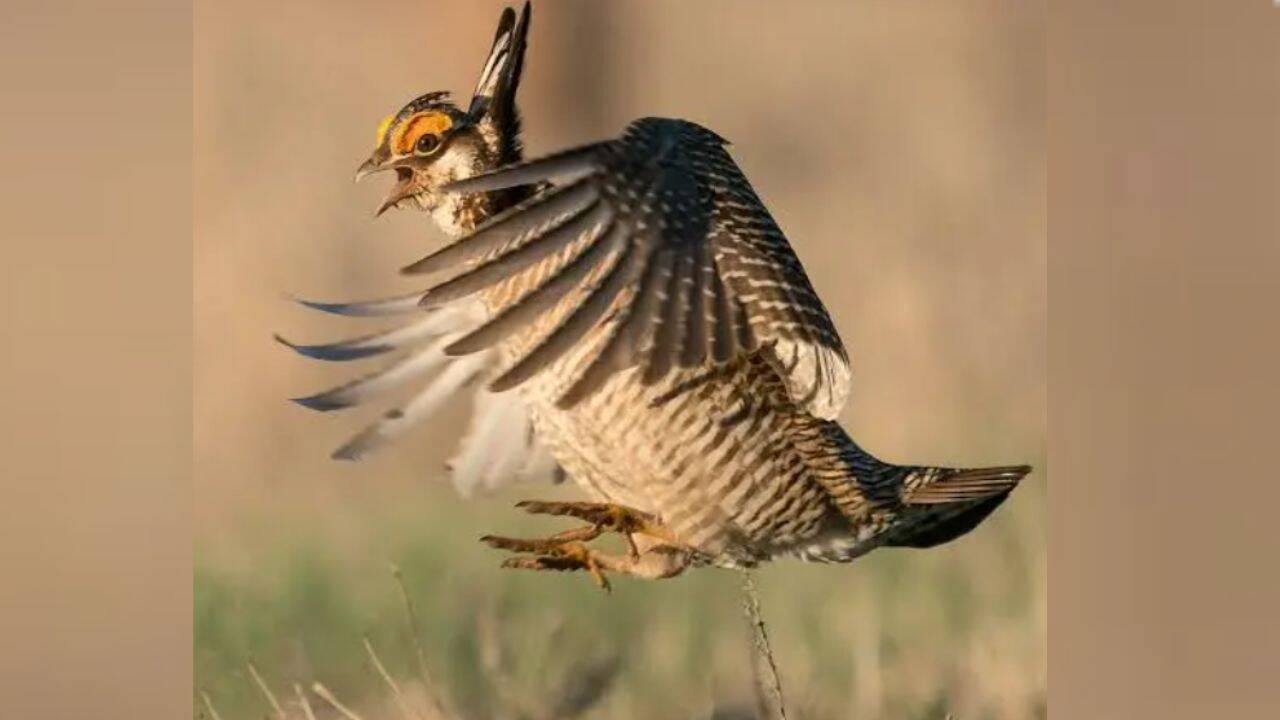
Back in 1975, counting lesser prairie-chickens across Colorado felt like a routine wildlife survey. You could find more than 80,000 of these ground-dwelling birds populating the southeastern plains. Fast forward to recent tallies, and reality hits hard. Biologists managed to count just 89 breeding males in the state.
That is not a slow decline. That is an absolute freefall.
When a species drops by over 99 percent in a few decades, standard conservation speeches don't cut it anymore. That is why the Southern Plains Land Trust stepped up and dropped nearly two million dollars to buy a 2,100-acre private ranch in Kiowa County. The property sits right next to the Sand Creek Massacre National Historic Site, tucked deep inside the fragile Sand Sagebrush Ecoregion.
Understanding the Lesser Prairie-Chicken Crisis
If you've never seen one, lesser prairie-chickens look like soccer-ball-sized packages of brown and white feathers. During spring mating season, males turn into absolute showmen. They gather on traditional breeding grounds called leks, inflate bright orange air sacs on their necks, and stomp their feet to catch the attention of females.
It is a fascinating ritual, but it requires a very specific home turf. The birds depend on intact bunchgrasses and micro-habitats for nesting. Overgrazing, agricultural expansion, energy infrastructure, and recurring droughts have ripped those crucial patches of cover right off the map. Henry Pollock, executive director of the Southern Plains Land Trust, points directly at habitat loss and overgrazing as the main culprits driving the birds toward the edge of extinction.
Buying a ranch isn't just about owning dirt. It is about hitting the reset button on a battered ecosystem.
Why This Specific Land Purchase Matters
The newly acquired ranch sits within ten miles of an active lesser prairie-chicken lek. That proximity changes everything. Instead of trying to force wildlife into an unfamiliar foreign zone, conservationists are banking on natural recolonization.
The strategy is simple in theory and brutal in execution. You buy the land, lock out destructive grazing practices, and let the native grasses heal. When the bunchgrasses return, the micro-habitats for nesting reappear.
Of course, letting nature heal itself takes time. Conservation groups and Colorado Parks and Wildlife plan to begin restoration work during the coming winter and spring months. If natural movement falls short, future translocation projects remain on the table. Colorado Parks and Wildlife has tried moving birds before. Back between 2016 and 2019, wildlife workers relocated 411 birds from Kansas into the Comanche National Grasslands and Cimarron National Grasslands. That effort showed early promise, establishing 20 active leks. Consecutive years of drought eventually battered those populations back down, proving that moving birds is only half the battle. You have to keep the habitat resilient.
The Legal and Political Backdrop
This land purchase unfolds against a shifting backdrop of federal protection. The U.S. Fish and Wildlife Service removed both the northern and southern distinct population segments of the lesser prairie-chicken from the federal Endangered Species Act list in 2026 following a court order.
That federal status change left environmental advocates frustrated. While legal classifications shift on paper, biologists on the ground emphasize that federal status doesn't change reality. The lesser prairie-chicken remains arguably the most endangered bird in the Southern Great Plains. Private land trusts stepping in with direct acquisitions fills a massive gap where paperwork falls short.
What Actually Needs to Happen Next
Saving grassland species from slipping into extinction requires money, patience, and aggressive land management. You can't just draw lines on a map and walk away.
- Fund ongoing ecological restoration to bring back native bunchgrasses.
- Monitor active leks closely to track breeding male numbers year over year.
- Secure private and public grants to acquire adjacent overgrazed parcels before they get converted for heavy agriculture.
- Build collaborative agreements between private ranchers and state wildlife agencies to manage grazing sustainably.
The clock is ticking for Colorado's prairie-chickens. With numbers hovering around double digits for breeding males, every single acre of restored grassland counts.